

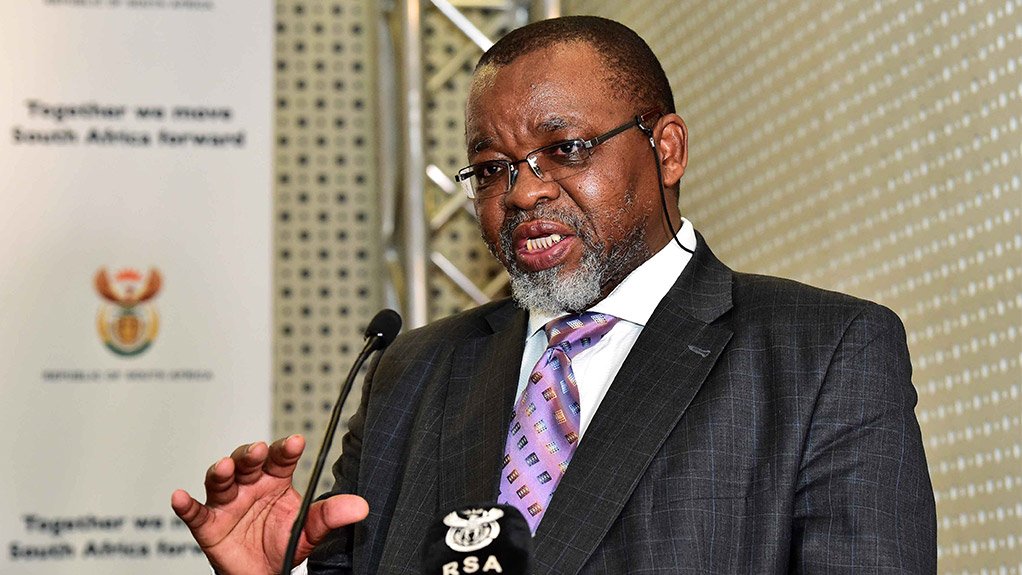
Mineral and Petroleum Resources Minister Gwede Mantashe has announced plans to accelerate the establishment of a new state-owned energy company as South Africa grapples with unprecedented fuel price increases of R6.29/litre for petrol and R12.60/litre for diesel over the past two months.
The minister tabled his department’s R2.86 billion budget in Parliament on Tuesday, positioning the proposed South African National Petroleum Company (SANPC) as a strategic response to global energy supply disruptions caused by a two-month war in the Middle East and the closure of the Strait of Hormuz.
“Petroleum security is not a theoretical debate, but an economic necessity and a national imperative,” Mantashe told Parliament during his budget vote speech on 19 May.
The minister called for urgent processing of the South African National Petroleum Company Bill to enable full operationalisation of the SANPC as a strategic state-owned entity.
“It is imperative that we accelerate processing of the SANPC Bill to enable meaningful and strategic state participation in the oil and gas sectors, as envisioned in the Upstream Petroleum Resources Development Act,” he said.
The proposed company would allow government to participate directly in South Africa’s upstream petroleum industry at a time when global fuel supply chains face severe disruption.
Mantashe acknowledged the catastrophic impact of recent fuel price increases on South African consumers and the economy, attributing the surge to global supply bottlenecks stemming from Middle East conflict.
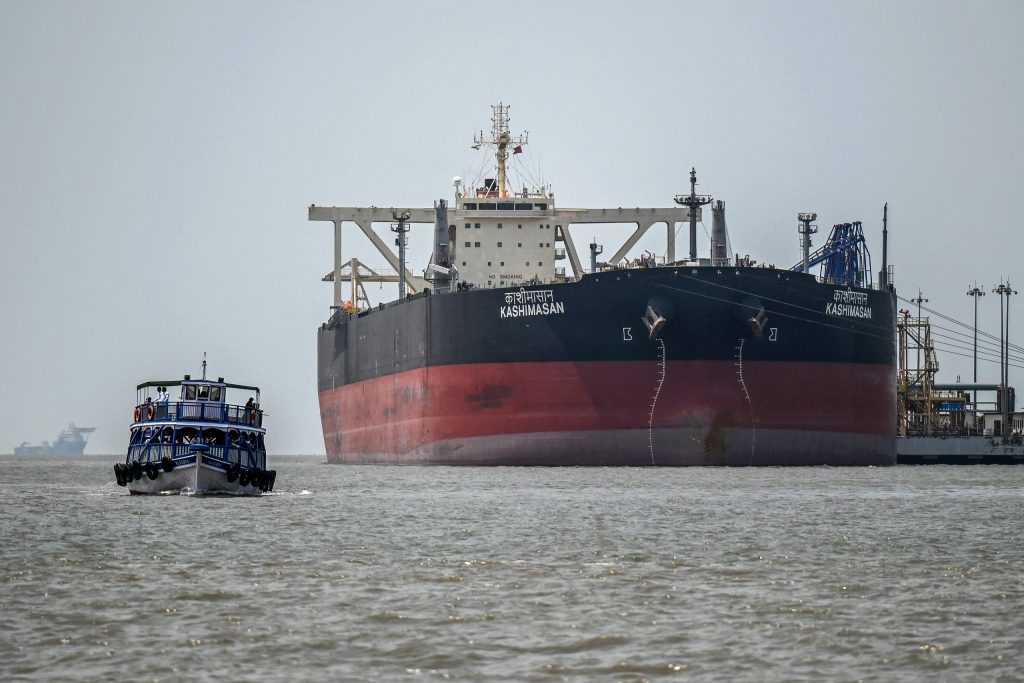
“We are tabling this Budget Vote during a difficult period in the global economy. A time when conflict rages in the Middle East with its tremors felt far beyond its frontlines, destabilising global energy supply chains and casting a long shadow over our own economic recovery,” the minister said.
Despite the global challenges, Mantashe moved to reassure South Africans about fuel availability.
“While global fuel supply challenges persist, I would like to assure the people of South Africa that we have sufficient fuel supply to meet demand, and that our fuel supply remains stable,” he said.
The minister said government is working closely with industry stakeholders to monitor the supply situation and maintain transparency.
Central to the department’s strategic response is an acceleration of the upstream petroleum industry and expansion of South Africa’s refining capacity, despite what Mantashe described as “persistent pressure from certain environmental lobby groups”.
The R2.86 billion budget includes operational allocations of R94.98 million for the Petroleum Agency South Africa, R666.9 million for the Council for Geoscience, R328.7 million for Mintek, R70.46 million for the South African Diamond and Precious Metals Regulator, and R4.89 million for the Mine Health and Safety Council.
Project-specific funding includes R140.87 million for rehabilitation of derelict and ownerless mines, R48.1 million for implementation of the Shale Gas Project, R33.83 million for the Mine Water Ingress Project, R31.12 million for the Artisanal and Small-Scale Mining Project, and R23.48 million for the Mine Rehabilitation Research Project.
Mantashe said the budget represents government’s commitment to protecting livelihoods, securing energy futures, and anchoring the economy against international instability and price volatility.
“In this era, where energy security is intrinsically linked to national stability, we cannot stand on the sidelines and be passive observers. This budget is our strategic response to these geopolitical realities,” he said.
ALSO READ: Fuel prices: June set to bring mixed news for South African motorists
The minister reported that South Africa’s mining sector reached a gross value add of R477 billion in 2025, contributing approximately 6.3% to the country’s gross domestic product. Mining royalties collected into the fiscus totalled approximately R11.8 billion in 2025, marking an increase of 11% from the R10.6 billion recorded in 2024.
However, rising electricity costs continue to place severe operational pressure on mining companies, particularly deep-level gold and platinum group metal operations.
ALSO READ: Long-distance Eastern Cape trips see significant price hikes
On mine safety, Mantashe told Parliament that the sector recorded a historic 41 fatalities in 2025. The Ekapa disaster, which claimed five lives, remains under investigation.
The Mine Health and Safety Bill, aimed at embedding compliance as a core business function, is currently before Parliament. The Mineral Resources Development Bill is undergoing legal certification at the Office of the Chief State Law Advisor before heading to Cabinet for approval, with introduction to Parliament anticipated in the second quarter.
ALSO READ: Mantashe calls for domestic oil exploration amid Middle East fuel supply concerns



You must be logged in to post a comment.