


Madagascar ceremoniously received the skulls of three men killed by French colonial forces 128 years ago on Tuesday, including the remains of a decapitated Sakalava king whose death symbolized resistance against imperial rule.
The historic repatriation marks the first such return since France enacted legislation in 2023 to facilitate the restoration of human remains seized during colonial conquests. France formally handed over the skulls in Paris on 27 August, beginning a journey that would bring closure to a painful chapter in Madagascar’s colonial history.
Royal homecoming
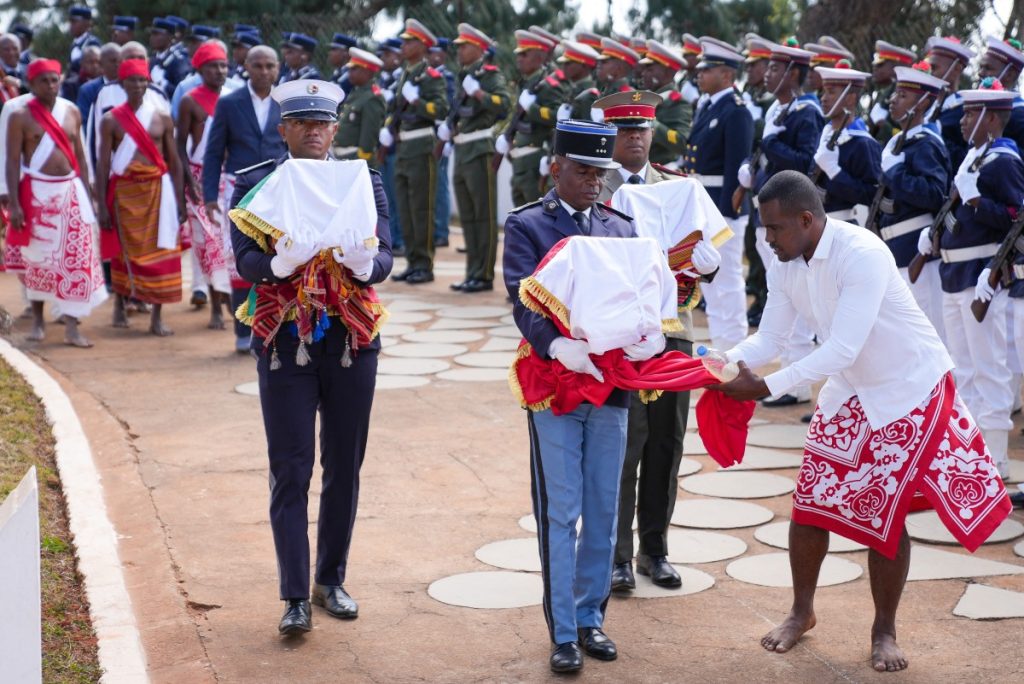
The remains, believed to belong to King Toera of the Sakalava people and two of his warriors, arrived at Antananarivo’s airport late Monday evening. Members of the Sakalava community, dressed in traditional ceremonial robes, received the three flag-draped boxes containing their ancestors’ remains.
President Andry Rajoelina joined government officials and Sakalava dignitaries at the capital’s mausoleum Tuesday morning to welcome the skulls home in a ceremony steeped in cultural significance.
“If we want to move forward, we must know our past, our history,” Rajoelina told the gathering. “We are proud to have had a king and his soldiers who protected the nation.”
The president praised the Sakalava people who “rose against French colonial troops with courage and daring,” highlighting the enduring legacy of resistance against colonial occupation.
Sacred rituals and royal reception
In a deeply symbolic moment, Georges Harea Kamamy, King Toera’s great-grandson and the newly enthroned Sakalava king, performed traditional rites to welcome his ancestor home. Kamamy sprinkled sacred water from the Tsiribihina River over the remains, following centuries-old customs of his people.
“We Sakalava are relieved. Today is a day of joy,” Kamamy declared, though he expressed disappointment that the skulls were returned to Madagascar’s government rather than directly to the royal family.
The ceremonial reception highlighted the complex intersection of state diplomacy and traditional authority in post-colonial Madagascar.
Journey to final rest
The skulls will now embark on a significant 800-kilometer journey westward to the Menabe region, where burial ceremonies are planned for later this week. The four-day overland procession will culminate at Ambiky, the site where King Toera was killed in 1897.
The king’s skull will rejoin the rest of his skeleton in the tomb where he was originally buried, completing a circle of history that began with colonial violence and ends with cultural restoration.
“It is a source of pride and immense inner peace that my ancestor is back among us,” said Joe Kamamy, a royal descendant and leader of the second Sakalava clan.
However, family divisions remain evident. Kamamy revealed lingering disagreements about the final resting place, expressing regret that the skulls would not be kept in Mitsinjo alongside relics of other Sakalava kings.
Colonial legacy and modern reconciliation
The 1897 Ambiky massacre represented a brutal chapter in French colonial expansion. Following the violence, French forces took the skulls to France as war trophies, where they remained in Paris’s national history museum for more than a century alongside hundreds of other remains from Madagascar.
Madagascar gained independence in 1960 after more than six decades of French colonial rule, but the question of cultural artifacts and human remains taken during the imperial period has remained a sensitive diplomatic issue.
France has gradually returned various artifacts plundered during its colonial campaigns in recent years. However, each repatriation previously required special legislation until parliament streamlined the process with the 2023 law specifically addressing human remains.
This landmark return sets a precedent for future repatriations and represents a significant step in France’s ongoing efforts to address its colonial legacy. The ceremony in Antananarivo demonstrates how cultural diplomacy can help heal historical wounds while resporing dignity to indigenous communities whose heritage was scattered across colonial museums.
As the Sakalava community prepares for the final burial rites, the return of King Toera’s remains serves as both an end to a long journey and a beginning of renewed connection between Madagascar’s people and their ancestral heritage.


You must be logged in to post a comment.