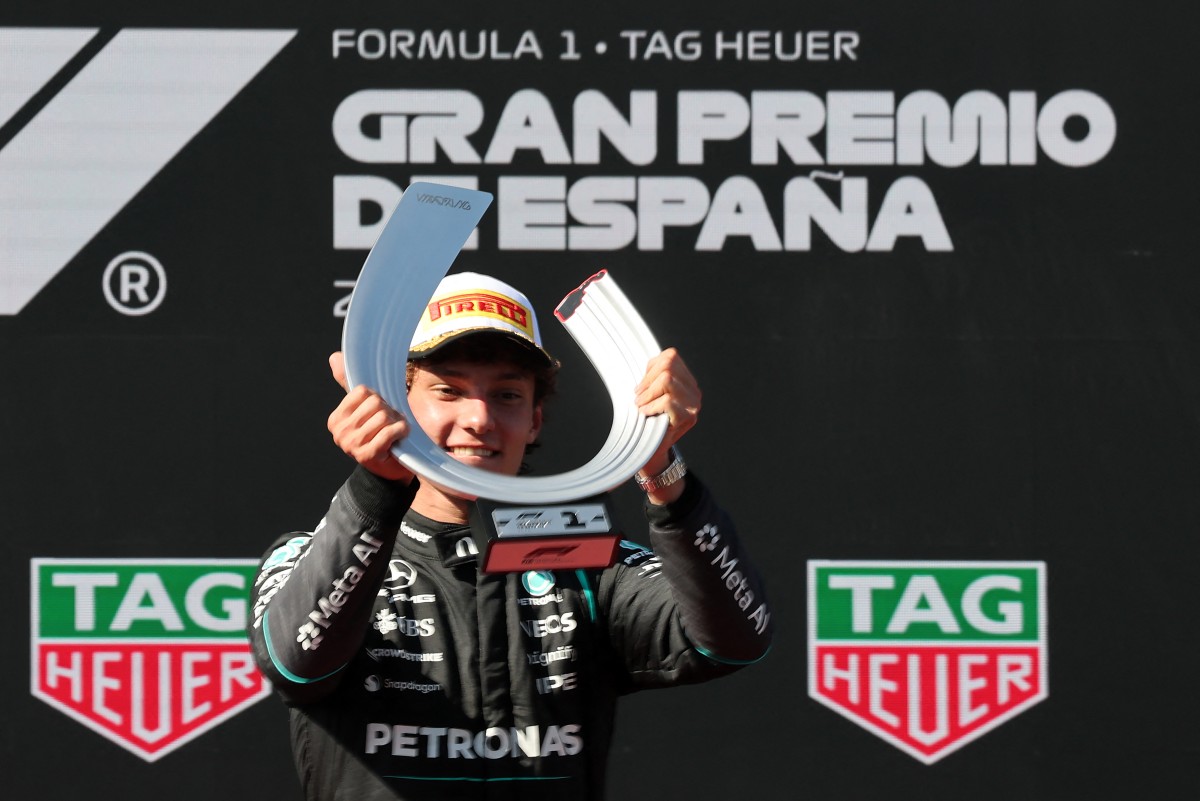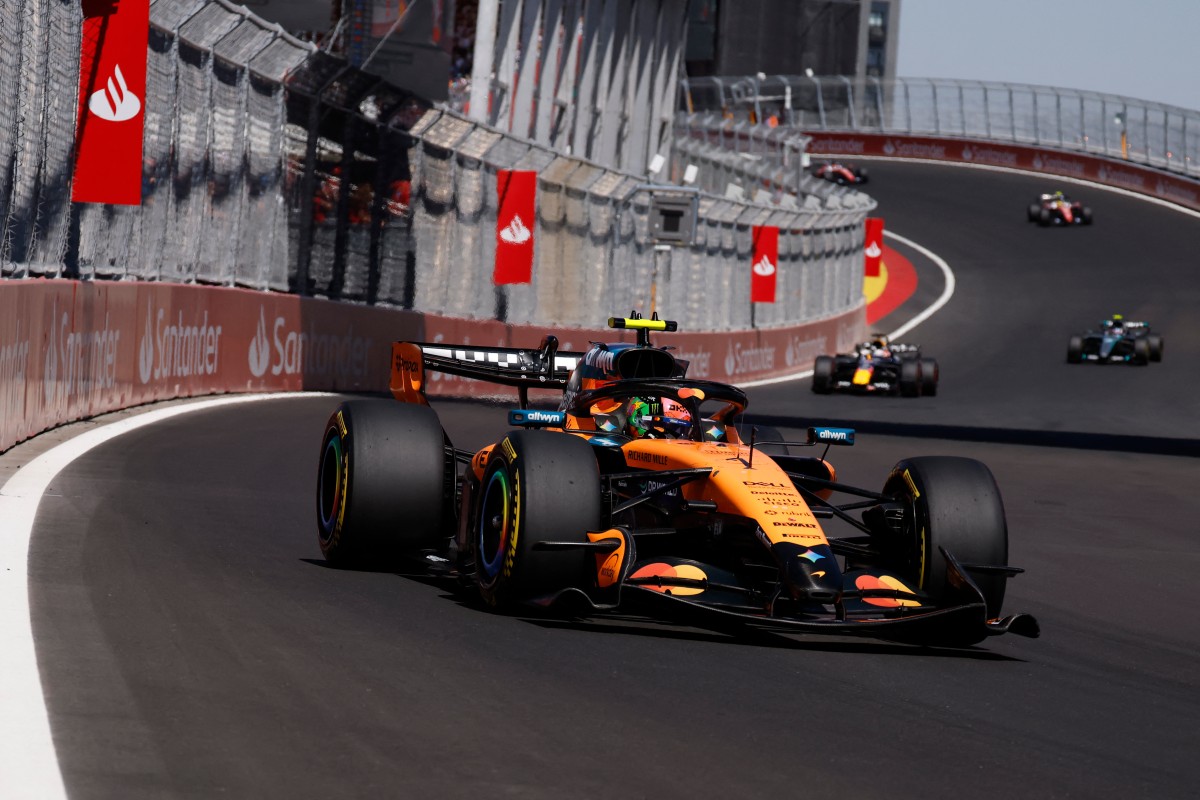
Lando Norris was a man nursing a familiar wound on Sunday evening. The reigning world champion had just been mugged by Formula One’s most capricious thief, the Virtual Safety Car, and whilst he stood on the podium in third place, everyone inside the Madring paddock knew he should have been spraying champagne from the top step.
The McLaren driver dominated the Spanish Grand Prix from pole position, controlling the race with the assured brilliance of a defending champion in complete command of his machinery. Then, in the cruellest twist imaginable, Lance Stroll’s brake failure at Turn 20 triggered a VSC deployment that came precisely four seconds too late for Norris and precisely on time for everyone hunting him down.
By the time the chequered flag fell, Kimi Antonelli stood atop the podium for Mercedes, Max Verstappen claimed second for Red Bull, and Norris was left picking up the pieces of what should have been a comfortable victory, transformed instead into a podium finish that tasted like defeat.
Also read: Strategy blunders gift Antonelli dominant Spanish Grand Prix victory
“I was just unlucky. I was the only one on the grid that doesn’t get a pit stop, so I lose 20 seconds on the whole grid,” Norris said, his frustration barely concealed beneath the professional veneer. “It’s just out of my control, it’s just out of their control. It is a rule that should not define a whole race.”
The four-second lottery that decided everything
The margin between victory and heartbreak in Formula One can be measured in thousandths of a second during qualifying. On Sunday in Madrid, it was measured in the four seconds that separated Norris from salvation and condemned him to one of the sport’s most agonising injustices.
Leading comfortably, Norris approached the pit lane entry on lap 15. Behind him, his nearest rivals trailed by more than four seconds, a comfortable gap in normal racing conditions. Then Stroll’s Aston Martin suffered brake failure and careered into the barriers at Turn 20, triggering an immediate VSC deployment.
The timing was catastrophically perfect, or perfectly catastrophic, depending on your perspective. Norris had already passed the pit entry when race control deployed the VSC. He had no choice but to complete another lap before he could pit for fresh tyres. Meanwhile, every single one of his rivals, Antonelli, Verstappen, Charles Leclerc, George Russell, immediately dived into the pits, changing tyres whilst the entire field crawled around at controlled VSC speeds.
Pitting under a Safety Car or Virtual Safety Car is Formula One gold dust. You lose minimal time relative to cars staying out on track because everyone is travelling at reduced speeds. It’s the equivalent of finding money in the street, pure, unadulterated advantage handed to you by circumstance rather than earned through performance.
Norris, leading the race and driving brilliantly, received no such gift. Instead, he was forced to complete a full lap at VSC speeds on old tyres whilst his rivals fitted fresh rubber. By the time the McLaren driver came round to pit, the VSC period had ended and racing had resumed at full speed. The pit stop that would have cost him perhaps 15 seconds under VSC conditions instead cost him his entire race lead plus an additional margin.
Also read: Hamilton urges Ferrari to work harder after agonising pole miss
“It’s unfair but it has happened in the past. Others have won from it. I’ve probably won from it in the past,” Norris admitted with the grudging honesty of someone who understands racing’s random cruelties. “But I don’t think many people have lost a race win over it so it is frustrating.”
The fastest driver punished, the chasers rewarded
The fundamental injustice gnawing at Norris is difficult to dispute. He was the fastest driver on the day. He qualified on pole. He controlled the race from the front. He managed his tyres, his pace, and his gap to the cars behind.
And he was punished for it.
Meanwhile, his rivals received a gift-wrapped advantage that transformed the race.
“A race should be won by the guy who can put in the best performance, who maybe takes a risk by going long in a stint,” Norris argued, his logic unassailable. “Maybe you get a safety car later and things can help you because you know that is one of the big factors, but for everyone to get a safety car, a VSC pit stop, it means nothing.”
But Sunday’s lottery wasn’t about strategic gambles. It was about geographical position on the circuit when race control pushed a button. Norris, leading the race, happened to be in the wrong place. His rivals, trailing by four seconds, happened to be in the right place. Performance didn’t determine the outcome. Random timing did.
“Today, I was the only one who lost out. And I lost out on about 20 seconds of race time and that is not how it should be,” Norris said.
The rule change Norris demands
This isn’t the first time drivers have raised concerns about VSC and Safety Car timing creating unfair advantages. During previous drivers’ briefings, the topic has been discussed, with suggestions that race control should leave safety interventions deployed for at least one complete lap before allowing pit stops.
“We have spoken about it in the past in drivers’ briefings and said you should leave it out for at least a lap,” Norris revealed. “So then it is equal for everyone.”
The logic is straightforward: if every driver must complete at least one full lap under VSC or Safety Car conditions before pit stops are permitted, then everyone faces the same circumstances.
Would such a rule change eliminate all strategic variation? Of course not. Teams would still make different calls about when to pit, what tyres to fit, and how aggressively to manage degradation. But it would prevent the specific injustice that befell Norris on Sunday, the leading driver being punished simply because he’d already passed the pit entry when fate intervened.
“I need to speak to the team, but it’s not a guessing game,” Norris said. “It is a rule that should not define a whole race.”
McLaren’s agony
If Norris was frustrated, his team principal Zak Brown was equally distraught, watching a dominant performance evaporate through circumstances entirely beyond their control.
“Lando was gone and the team did a great job,” Brown said. “But the VSC came out a couple of seconds after we’d gone by and then it went away again a couple of seconds before we could pit.”
The margins were razor-thin, the timing impossibly cruel.
“There was nothing we could do. It was great to hear Lando’s radio message to just shrug it off, but I think it was our race by 20-25 seconds,” Brown continued. “He was dominant and he was gone. He was managing it great, tyre wear was great. He was in a league of his own. He’s got a trophy, yes, but it was P3. Not P1.”