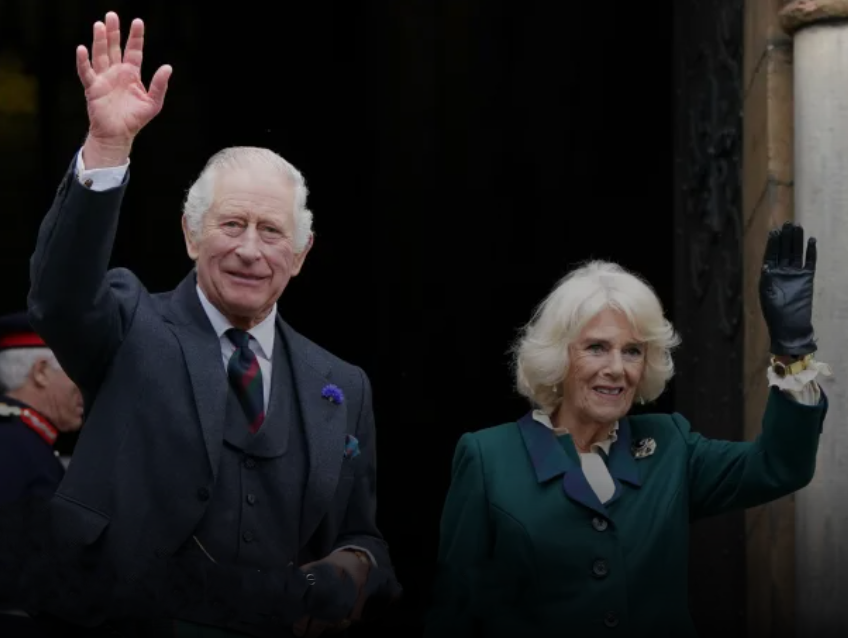
LONDON – King Charles III has become the first British monarch to publicly disclose his tax payments, revealing he paid £30 million (about R653 million) since ascending to the throne in 2022.
Buckingham Palace released the financial documents on Thursday, describing the move as part of its “commitment to transparency” amid growing public interest in how the royal family is funded.
The revelation comes as the royal household prepares for significant changes to its annual funding structure, with the Sovereign Grant set to be recalibrated after years of substantial increases driven by offshore wind revenue.
Sovereign Grant reaches record levels
The Sovereign Grant, which is the annual payment allocated by the UK Treasury to cover the monarch’s official duties, rose to £132,1 million in 2025-2026. This marks a sharp increase from £86,3 million in the previous four tax years.
The grant covers the running and upkeep of official royal residences, staff support, official travel and hosting of events including garden parties and investitures.
Around £67,5 million of this year’s funds were allocated to preserving the occupied royal palaces, described by Buckingham Palace as “some of the nation’s most iconic heritage buildings”. Staff costs came to £33,7 million, whilst a single flight taken by the king and Queen Camilla to Rome in 2025 cost £126 946.
The grant does not cover all royal expenses. Security costs are funded separately through other government departments.
Windfall from offshore wind
Introduced in 2012 to replace the centuries-old Civil List system, the Sovereign Grant is calculated as a percentage of profits from the Crown Estate, a property management company whose revenues flow directly to the public purse.
The grant was set at 12% of Crown Estate profits from two years earlier. These profits have surged in recent years, mainly due to a windfall from leasing seabed rights to offshore wind developers.
For 2026-2027, the Sovereign Grant will increase to £137,9 million, including the final major instalment of £40,3 million for a ten-year Buckingham Palace restoration project.
However, Buckingham Palace confirmed on Thursday that the grant will be reset to £99,9 million annually for the five years between 2027 and 2032, reflecting a new calculation method and the completion of palace renovations.
The Sovereign Grant is not taxed because it is public money used for official duties.
Crown Estate portfolio
The Crown Estate manages a vast property portfolio worth £16,7 billion, including prime London real estate, rural land, coastal holdings, the Windsor Estate and seabed rights around England, Wales and Northern Ireland.
It operates as an independent commercial business, separate from both government and the royal household. The estate is not the monarch’s private property and cannot be sold.
In the year ending March 2025, the Crown Estate made £1,1 billion in net profits. But that figure fell to £487 million in the tax year to this March, due mainly to declining fees from offshore wind projects.
Private income from historic estates
Beyond the Sovereign Grant, the king received £25,2 million in private income from the Duchy of Lancaster in 2025-2026, whilst the Prince of Wales received £21,6 million from the Duchy of Cornwall.
These two historic estates are the main sources of private income for the monarch and the heir. They are large, diversified portfolios of land, property and investments managed as modern commercial enterprises.
They earn money by leasing farmland, managing commercial and residential real estate, and holding financial assets. Both estates are held in trust for future generations and cannot be sold outright.
Their profits fund personal expenses and some official duties, separate from taxpayer-funded support.
Neither the king nor William are under any legal obligation to pay taxes on their private income, but both do so voluntarily, following the example set by the late queen Elizabeth II.
Personal wealth
Individual members of the royal family also hold personal wealth, mostly from investment portfolios and legacies.
The king owns both Balmoral and Sandringham estates, which he inherited from his mother Elizabeth. Unlike for most British citizens, assets passed directly from one monarch to the next are exempt from inheritance tax under a long-standing government agreement.
ALSO READ: Britain’s ex-prince Andrew profited from subletting royal cottages while paying symbolic rent