

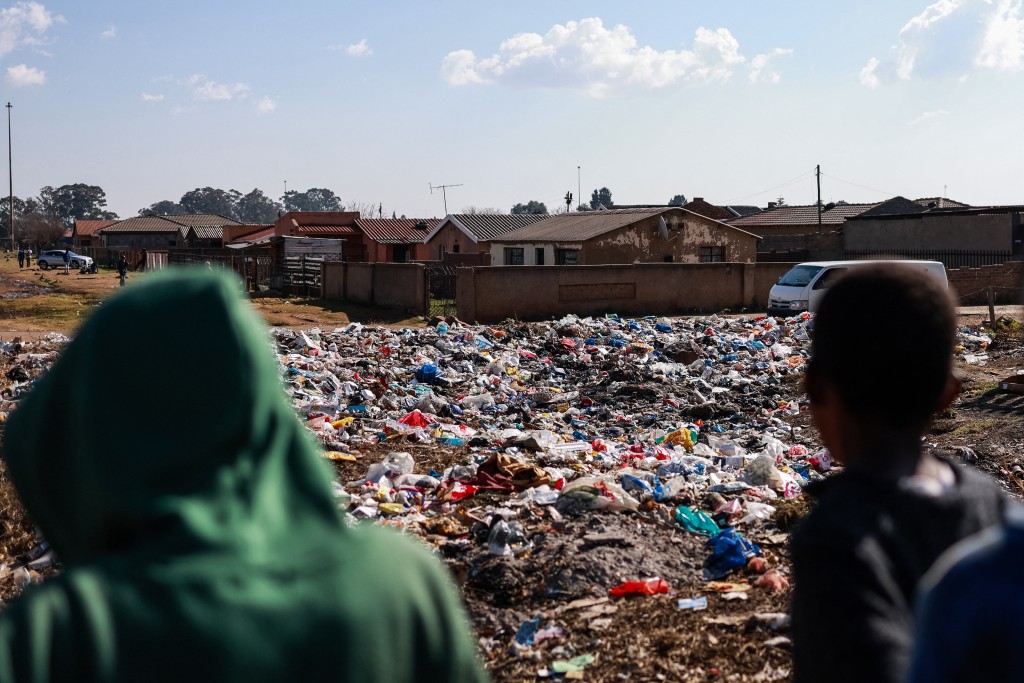
The lived reality of Johannesburg residents – overflowing dustbins, broken water pipes, electricity failures and potholes – does not reflect the political leadership’s assertion that “our financial management is okay and has not reached a crisis state”.
While the City will now be paying Eskom R1.4-billion and Rand Water R960-million this month, Eskom is actually owed more than R6-billion and no details have been given on how and when this debt will be paid off. Added to this is the fact that Johannesburg Water loses almost 42% of what it buys, while City Power loses 30% of its bulk purchases. These losses are directly related to crumbling infrastructure, theft and vandalism.
The money to pay these bulk suppliers will probably come from the National Treasury’s equitable share grant of R3.5-billion, which will be paid to the City next week. The City of Johannesburg (CoJ) does not have the revenue on hand to pay from its own coffers.
CoJ has 12 days of cash on hand – about R2.8-billion. City Power owes its contractors R1.5-billion as of this month, Johannesburg Water owes around R1.8-billion while Pikitup owes contractors R1.3-billion.
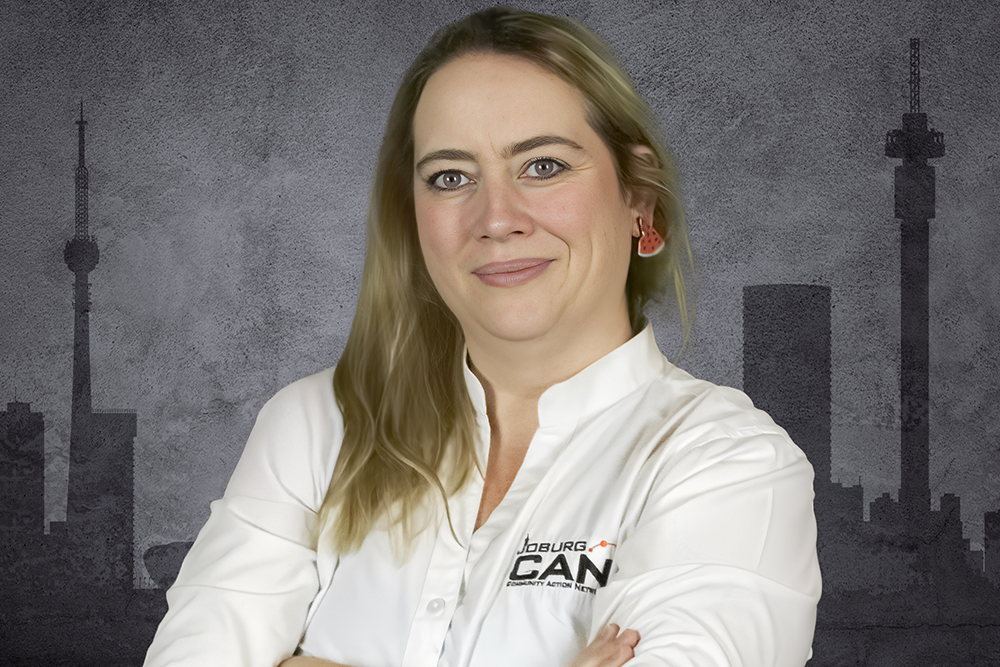
This, said JoburgCAN’s Julia Fish, is simply not enough. “30% of the City’s budget is spent on salaries. The City is playing a massive game of Russian roulette, paying whichever supplier they can. There is no wriggle room. Late payments incur penalties, which means the city pays more than it should for services,” she said
The City constantly pays its contractors late, to the point where infrastructure projects are suspended because of non-payment. Currently, the work on the Hurst Hill 2 reservoir is suspended because of non-payment, and the project is estimated to be eight months overdue.
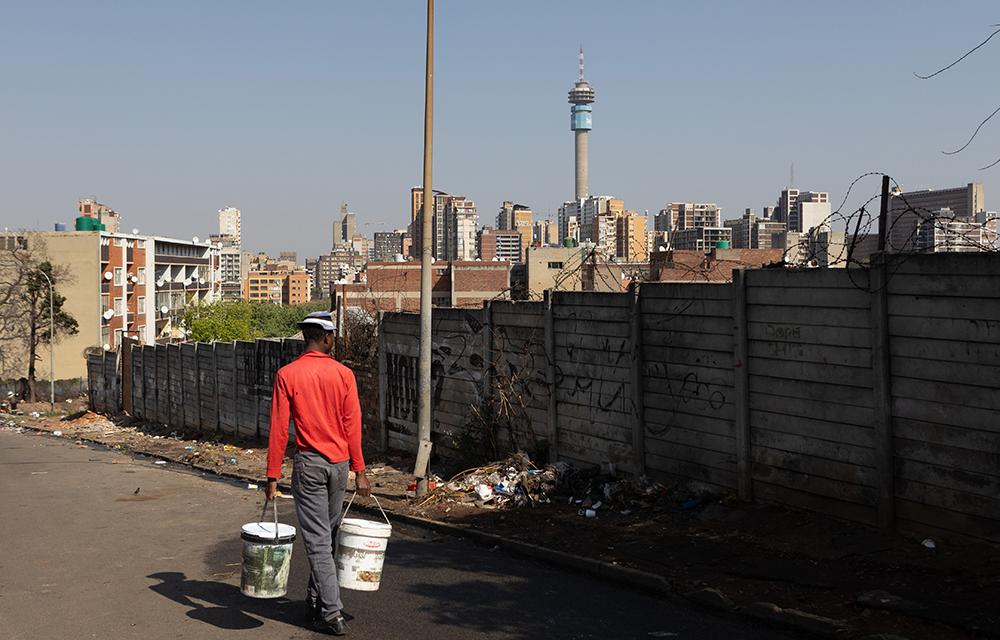
The cash flow crisis has affected infrastructure projects across the city, with City Power deferring 10 crucial projects to the next financial year, while six projects have experienced implementation delays because of late payments.
One of these infrastructure projects is the upgrading of the Eikenhof substation, where power failures have plunged Johannesburg’s water supply into crisis.
The substation powers the Rand Water Eikenhof pump station, which supplies water to 60% of the city. A power failure of any length at Eikenhof can have, and has had, long-lasting implications for the water supply. City Power was supposed to begin a R350-million upgrade of the Eikenhof substation during this financial year.
City Power spokesman Isaac Mangena says that the Eikenhof project, along with the mobile substation programme, the transformer refurbishment programme, the Orlando switching station, the Dainfern substation, the Nancefield-Nirvana tower project, and the replacement of aged standby boards at the Cydna, Gresswold, Mayfair and Ridge substations, have all been deferred to the next financial year.
Pikitup’s financial troubles are equally drastic. While the entity has R2-billion in cash reserves, it has been unable to access them because money is controlled centrally by the City. Morero said this issue will be addressed and the money will be ring-fenced to allow Pikitup to pay its contractors.
Both the National Treasury and the Auditor-General have raised concerns about the state of Johannesburg’s finances. The AG was particularly brutal in calling out the mounting financial, governance and service delivery challenges that threaten Johannesburg’s ability to fulfil its role as South Africa’s economic powerhouse.
AG Tsakani Maluleke told Parliament that Johannesburg’s standalone audit regressed from an unqualified audit opinion to a qualified audit opinion in the 2024/25 financial year after the City failed to correct material errors identified during the audit process.
While the CoJ’s consolidated audit outcome, which includes its municipal entities, remained unqualified with findings, the regression in the core administration raised concerns about the municipality’s financial governance.
The National Treasury has threatened to withhold Johannesburg’s equitable share grant payment (R3.6-billion) due this month. Morero said the City had addressed the concerns raised and the share will now be paid over.
Morero said they were working through the historical backlog of unauthorised, irregular, fruitless and wasteful expenditure rather than simply disclosing it. He said the City has recently regularised R918.4-million of such expenditure.
Morero said the largest unauthorised, irregular, fruitless and wasteful expenditure driver this year is City Power’s overspending on bulk electricity purchases, amounting to R2.1-billion by the end of the third quarter (March).
Professor Alex van den Heever from the Wits School of Governance has issued a scathing rebuke to the assurances that all was fine with the city’s finances.
ALSO READ: Johannesburg’s terrible financial position
“The core problem is that the City has not resolved the systemic failures that produced the crisis in the first place. The National Treasury’s intervention is important, but it is remedial rather than systemic. Withholding the July equitable share is a pressure mechanism to force payment plans and basic compliance. Treasury itself describes the intervention as corrective and preventative, not a comprehensive turnaround of Johannesburg’s governance, revenue, infrastructure and accountability failures,” he said.
Van den Heever said the City’s claim that it was “regularising” irregular expenditure also could not be accepted as reassurance. “The first question is not whether irregular spending can be administratively processed after the fact. The question is why the City is unable to spend regularly in the first place?” he said.
Van den Heever said what is required is a credible turnaround plan that confronts the hard issues: funded budgets, enforceable payment discipline, ring-fenced utility revenues, procurement integrity, real consequence management, infrastructure maintenance, reliable billing, and capable professional management insulated from political interference.
ALSO READ: Johannesburg financial crisis deepens as treasury withholds funds
Fish noted that there are turnaround strategies in place for Johannesburg Water and City Power which are workable, but that there was no money to fund these strategies.
“The City is not prioritising its core mandate, which is service delivery, and is undermining the exact documents it is giving to the Treasury to comply. So, it’s basically empty compliance,” she said.
- This story was produced by Our City News, a non-profit newsroom that serves the people of Johannesburg.




You must be logged in to post a comment.