


National Treasury has temporarily withheld R3.6 billion in funding from the City of Johannesburg, one of almost 70 municipalities across South Africa facing sanctions for persistent financial mismanagement and non-compliance with the Municipal Finance Management Act.
The announcement which was made this week, affects a total of R13.5 billion in equitable share transfers to municipalities that have failed to meet basic financial governance standards. The Treasury invoked Section 216(2) of the Constitution and Section 38 of the MFMA to enforce fiscal discipline after months of warnings went unheeded.
For Johannesburg, the withheld amount represents approximately 4% of the city’s annual budget. The funds will only be released once the municipality submits signed payment agreements with creditors such as Eskom and Rand Water, commits to ending unfunded budgets from the 2026/27 financial year, and demonstrates measures to reduce unauthorised, irregular, fruitless and wasteful expenditure by at least 25% by the end of September.
Mayor defends city’s position
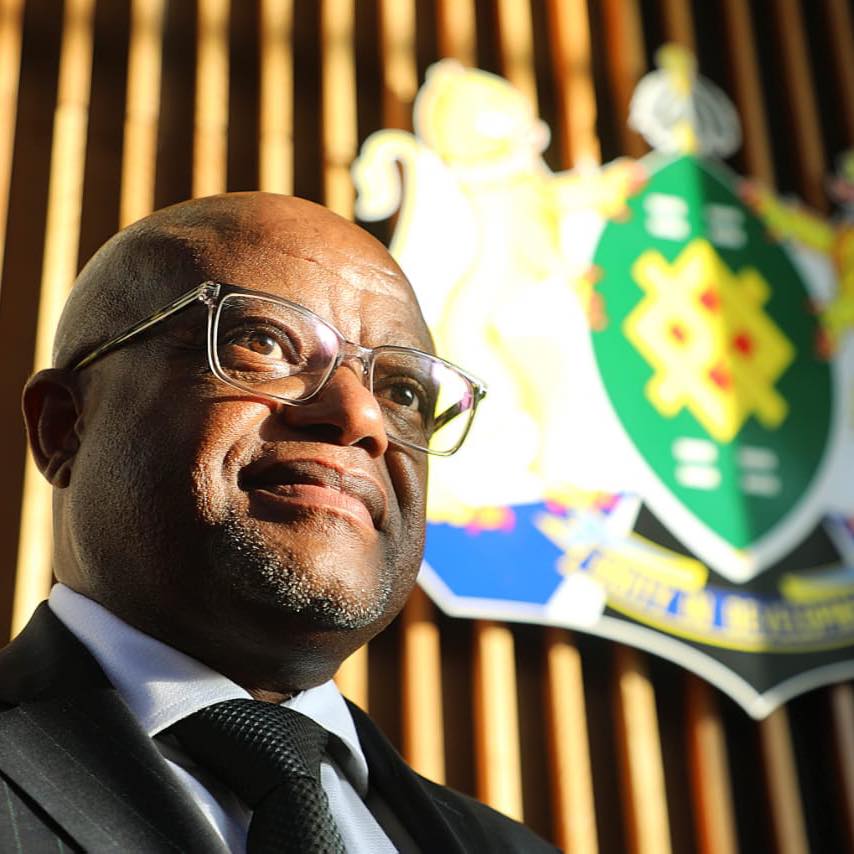
Speaking at a media briefing on Wednesday, Johannesburg Mayor Dada Morero insisted the city was not in financial crisis, stating that feedback from Treasury confirmed the city’s financial management was in an acceptable state.
“The National Treasury has confirmed that the metro’s R97.1 billion budget for 2026/27 is fully funded,” Morero said, attempting to reassure residents that widespread service delivery collapse was not imminent.
The mayor committed to paying Rand Water R160 million and Eskom R1.4 billion by mid-July, and outlined efforts to address the city’s R23 billion in historical unauthorised, irregular and wasteful expenditure. He said the metro had already regularised R918.4 million in expenditure following investigations.
Morero also called for Treasury to be more lenient regarding certain recovery requirements, suggesting some existing conditions might hinder the city’s ability to advance.
OUTA unconvinced by promises
The Organisation Undoing Tax Abuse has welcomed Treasury’s firm stance but remains deeply sceptical of the city’s assurances.
“The mayor has outlined what appears to be a sensible roadmap, but Johannesburg residents have heard similar commitments over several years while service delivery has steadily declined and the city’s financial position has worsened,” said Wayne Duvenage, OUTA chief executive.
Duvenage emphasised that the organisation would not be convinced until the city demonstrated genuine compliance and lasting financial reform, noting that similar promises had been made in the past whilst the municipality’s finances continued to deteriorate.
Of particular concern to OUTA is the absence of meaningful consequence management. Despite Treasury identifying ongoing governance failures, no changes have been announced to executive leadership, utility boards or senior management structures.
“One cannot continue to promise a different outcome whilst leaving the same governance structures and leadership entirely intact,” Duvenage said. “Restoring confidence requires more than revised budgets and recovery plans. It requires visible accountability for those responsible for the decisions that brought the city to this position.”
OUTA also questioned whether sustainable recovery could be achieved through cash injections alone, arguing that structural reforms to revenue collection, expenditure controls, procurement oversight, contract management and transparent financial reporting were essential.
Water crisis leaves communities without taps for weeks
Johannesburg’s financial mismanagement has manifested most acutely in the city’s water crisis, with communities left without running water for weeks on end due to ageing infrastructure, chronic underinvestment and systemic failures.
The crisis is not driven by a shortage of bulk water supply, but by a failing distribution network that loses up to 48% of supplied water through leaks, pipe bursts and illegal connections. This compares to a world-class benchmark of 25% non-revenue water.
The city’s water infrastructure requires an estimated R127 billion for replacement, whilst much of the 12 364km distribution network is more than 80 years old. Water storage capacity has declined from 39 hours of average consumption in 2012 to just 28 hours in 2022, well below the 48-hour benchmark, making the system highly vulnerable to any interruptions.
Criminal syndicates have targeted water infrastructure, stripping equipment from wastewater treatment plants and forcing the city to deploy additional security resources. Illegal connections at communal standpipes frequently overload systems, causing outages particularly in informal settlements.
Johannesburg Water’s debt to Rand Water stood at R3.1 billion as of June. In February, Rand Water demanded a deposit of more than R2 billion to guarantee future payments, though the city has been managing the debt through repayment arrangements.
Water experts have warned that Johannesburg has effectively reached its own “Day Zero”, with residents already experiencing the reality of unreliable water supply due to infrastructure collapse rather than drought.
ALSO READ: Johannesburg’s terrible financial position
Trash piles up as services deteriorate
The financial crisis has also severely impacted waste collection, with Pikitup facing repeated disruptions due to labour disputes, infrastructure failures and landfill capacity constraints throughout 2025 and into 2026.
In April 2025, employees staged a two-day work stoppage over the suspension of staff transport services, whilst December 2025 saw city-wide collection delays when new fleet service providers were appointed just one week before their start date.
The city’s four main landfill sites now operate at 95% to 98% capacity, with only two facilities remaining fully operational. This has forced waste trucks from northern depots to travel to southern sites, significantly extending turnaround times and exacerbating collection backlogs.
ALSO READ: Treasury suspends transfers to 69 municipalities over financial mismanagement
Throughout 2025, communities in areas such as Cosmo City, Zandspruit, Kya Sands and Honeydew frequently blocked depot gates to demand employment opportunities, whilst strikes occurred following the postponement of promises to transition casual workers into permanent positions.
The city has struggled to secure environmental licences for new landfill space, and plans to build new cells at Robinson Deep have been delayed to the 2026/27 financial year.
Wider municipal crisis
Johannesburg is not alone in facing Treasury sanctions. A total of 99 municipalities were initially placed on notice, with 30 successfully averting the withholding by complying before the deadline.
The Treasury has stated that the measure is corrective rather than punitive, aimed at compelling compliance with financial management standards. Municipalities were given prior written notice and an opportunity to provide reasons why their funds should not be withheld before action was taken.
Finance Minister Enoch Godongwana has previously warned that persistent irregular expenditure and unfunded budgets cannot continue, particularly in light of South Africa’s constrained fiscal environment.
For Johannesburg residents, the real test will be whether the latest round of promises translates into tangible improvements in service delivery, or whether this becomes yet another cycle of recovery plans that fail in implementation.
ALSO READ: Johannesburg leaders granted steep pay increases as taps run


You must be logged in to post a comment.