
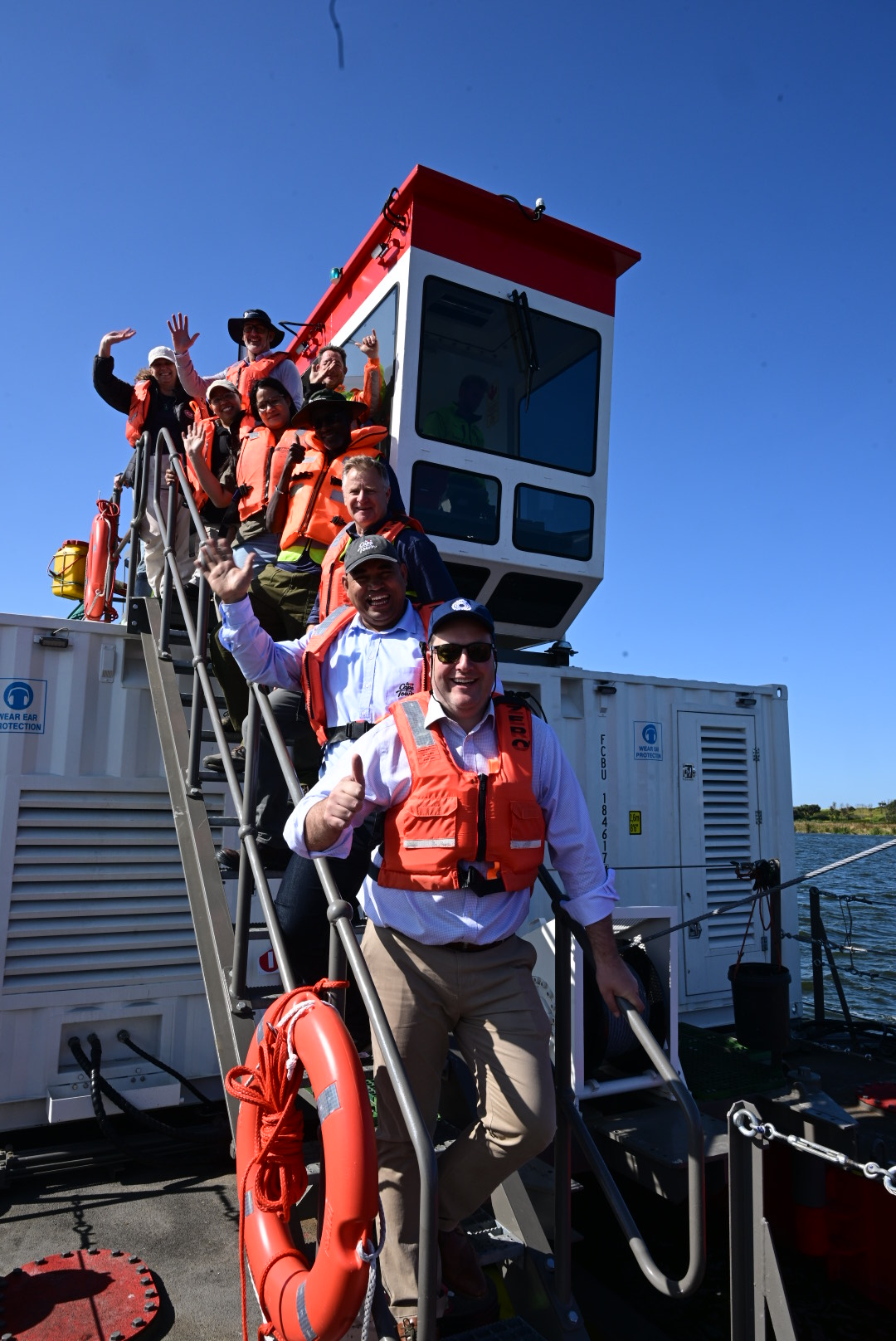
Cape Town is making environmental history with the deployment of an innovative floating suction dredger at Zeekoevlei, marking the city’s first vlei dredging operation in 42 years. The specialised machinery, which has been operating since 30 June, represents a technological breakthrough in wetland restoration efforts.
Mayor Geordin Hill-Lewis and Deputy Mayor Eddie Andrews visited the site recently to witness the groundbreaking project firsthand, as the floating dredger continues its methodical work to restore one of the city’s most important recreational waterways.
Unlike traditional dredging methods, the floating suction dredger can navigate far beyond the water’s edge to extract sediment containing decades of nutrient and pollutant buildup from the lakebed. The machine operates daily from 06:00 to 19:00, supported by a dedicated team of 15 personnel including specialised dredge operators, deck hands, divers, and excavator operators.
“We are using innovative floating machinery so we can go far beyond the water’s edge to remove sediment from the lakebed containing nutrient and pollutant build-up,” explained Mayor Hill-Lewis during his site visit. “I am excited to see the impact of this extensive environmental restoration over the next 26 months.”
The operation involves sophisticated infrastructure supporting the floating dredger’s work. A 4.3 km slurry pipeline pumps dredged sediment from Zeekoevlei to specially prepared dewatering ponds at the Cape Flats Wastewater Treatment Works. The system includes a secondary 2.3 km pipeline that returns treated supernatant water to the facility.
To date, the floating dredger has successfully removed 15 200 cubic meters of sediment from Storm Bay, the first of two sections targeted for restoration. The complete Storm Bay operation will extract 207 000 cubic meters of sediment over approximately 12 months, before the floating machinery moves to Home Bay for an additional 157 000 cubic meters over 14 months.
The floating dredger’s progress is meticulously tracked through hydrographic surveys conducted every two weeks. The machine’s specialized design allows it to work within the sensitive ecosystem of the False Bay Nature Reserve, a Ramsar site of international importance for wetlands.
“With us now approaching drier and hotter months, we anticipate that the working conditions will improve significantly,” said Deputy Mayor Andrews. “There will be less water in the False Bay Nature Reserve and the heat will also help with the drying and shrinkage of the dredged material.”
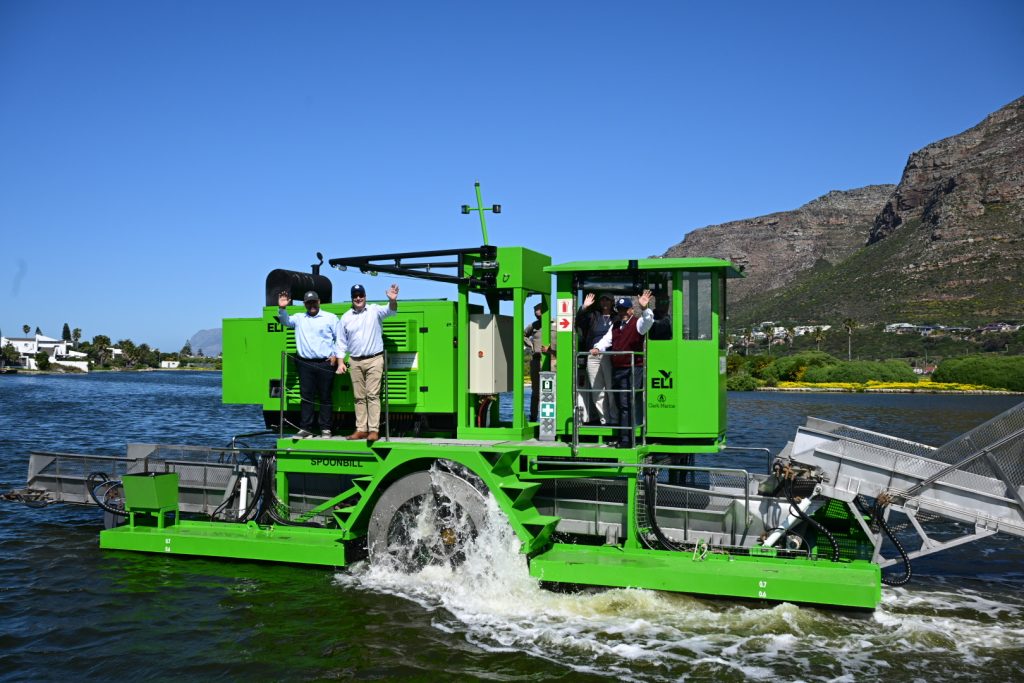
The floating dredger operates alongside other specialised vessels in the city’s expanding environmental restoration fleet. Today’s visit also marked the delivery of “Spoonbill,” a second weed harvester for Zandvlei, joining similar vessels at Rietvlei. These machines work in tandem with the floating dredger to comprehensively address water quality and navigability issues.
The ambitious project represents a significant investment in Cape Town’s environmental future, with the floating dredger serving as the centerpiece of the most extensive wetland restoration effort in decades. As Cape Town holds Ramsar City accreditation, the successful deployment of this innovative floating machinery demonstrates the city’s commitment to international wetland conservation standards.
The 26-month dredging operation will ultimately restore two critical sections of Zeekoevlei, improving water quality, reducing pollution, and enhancing recreational opportunities for communities while preserving this internationally recognized ecosystem.


You must be logged in to post a comment.