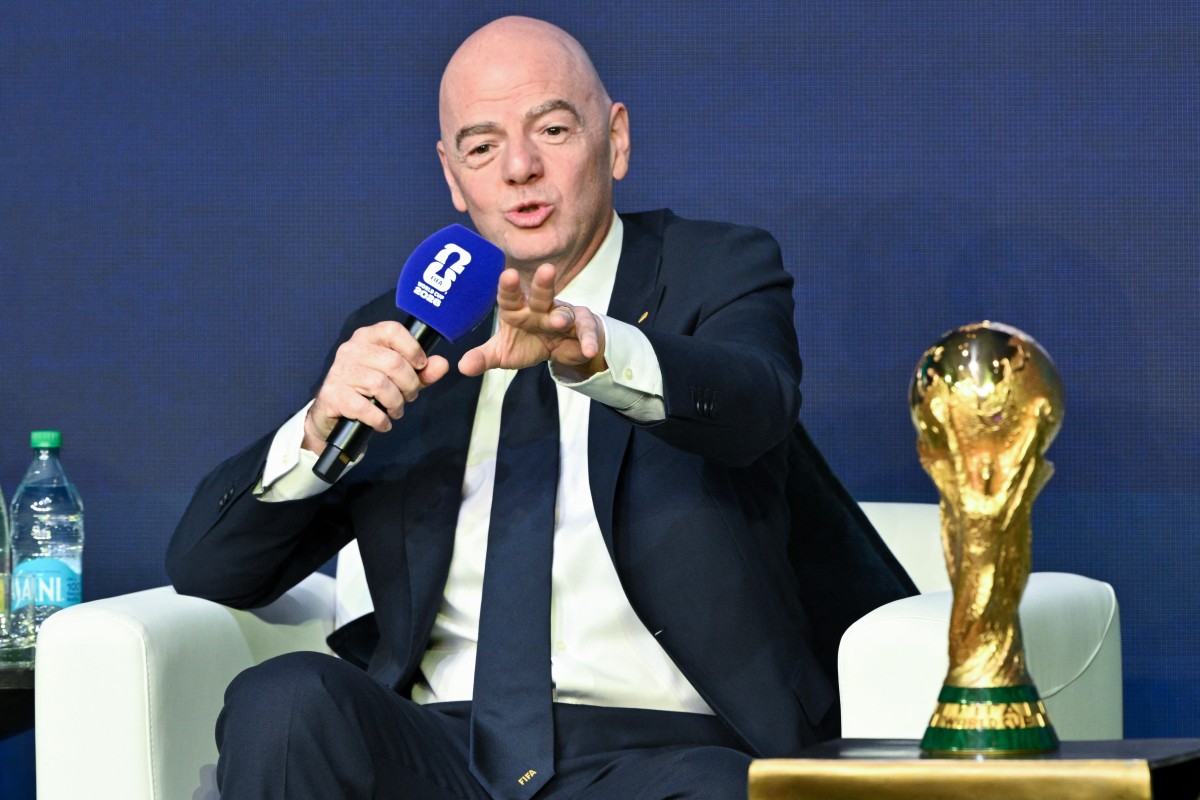
He’s battered, bruised, but still standing. FIFA president Gianni Infantino received the “full support” of senior directors on Wednesday following a crisis meeting in Morocco, but world football’s governing body was forced to issue a apology for the controversy surrounding the now-shelved plan to open the World Cup to private investment.
Facing a barrage of criticism over the aborted proposal that triggered UEFA’s nuclear threat to boycott the World Cup, FIFA’s leadership acknowledged “errors” whilst nonetheless backing their under-fire president after emergency talks in Rabat.
Infantino has come under increasing pressure , even from within his own organisation, over his catastrophic handling of the proposal. Calls for him to step down had grown louder since he abandoned the plan last Saturday in what represented one of the most spectacular climbdowns in sporting governance history.
The apology
In a statement released Wednesday, FIFA’s leadership acknowledged “that errors were also made after the proposal was leaked to media”, a grudging admission that their response to the crisis proved almost as damaging as the original plan.
FIFA had floated the scheme claiming it could raise up to $4.2 billion based on a $20 billion valuation for a new commercial subsidiary called the FIFA Forward Enterprise (FFE), which would run events including the World Cup and Club World Cup. Each of FIFA’s 211 member associations would receive a one-off $20 million payment in early 2027, with funding allocations for 2027-2030 increasing from $8 million to $20 million.
Instead of acting as a sweetener, it produced a furious backlash. European football’s governing body UEFA threatened to boycott the World Cup if the plan proceeded.
By Saturday, Infantino held his hands up and withdrew the proposal.
The show of support
After Wednesday’s meeting in Rabat, the FIFA Secretary General and members of the FIFA Management Board issued a statement reaffirming “their full support for FIFA President Gianni Infantino, as the only official elected by the 211 FIFA Member Associations.”
The statement acknowledged mistakes were made. “It was agreed that it was not the intention for the FIFA Council and FIFA Member Associations to feel excluded from the process and that the process should have been handled differently,” it read.
Crucially, FIFA issued a separate letter to the FIFA Council and member associations apologising for the errors “together with a commitment to ensure they do not happen again.”
One of those believed present at the meeting was FIFA’s secretary-general Mattias Grafström, whose scathing internal email to staff criticising the plan leaked on Tuesday, adding to Infantino’s woes.
The statement confirmed a review will be conducted with a report presented to the FIFA Council at its next scheduled meeting. “As previously communicated, the FFE proposal, which would have been subject to the approval of the FIFA Member Associations and the FIFA Council, is now off the table.”
Defiant public appearance
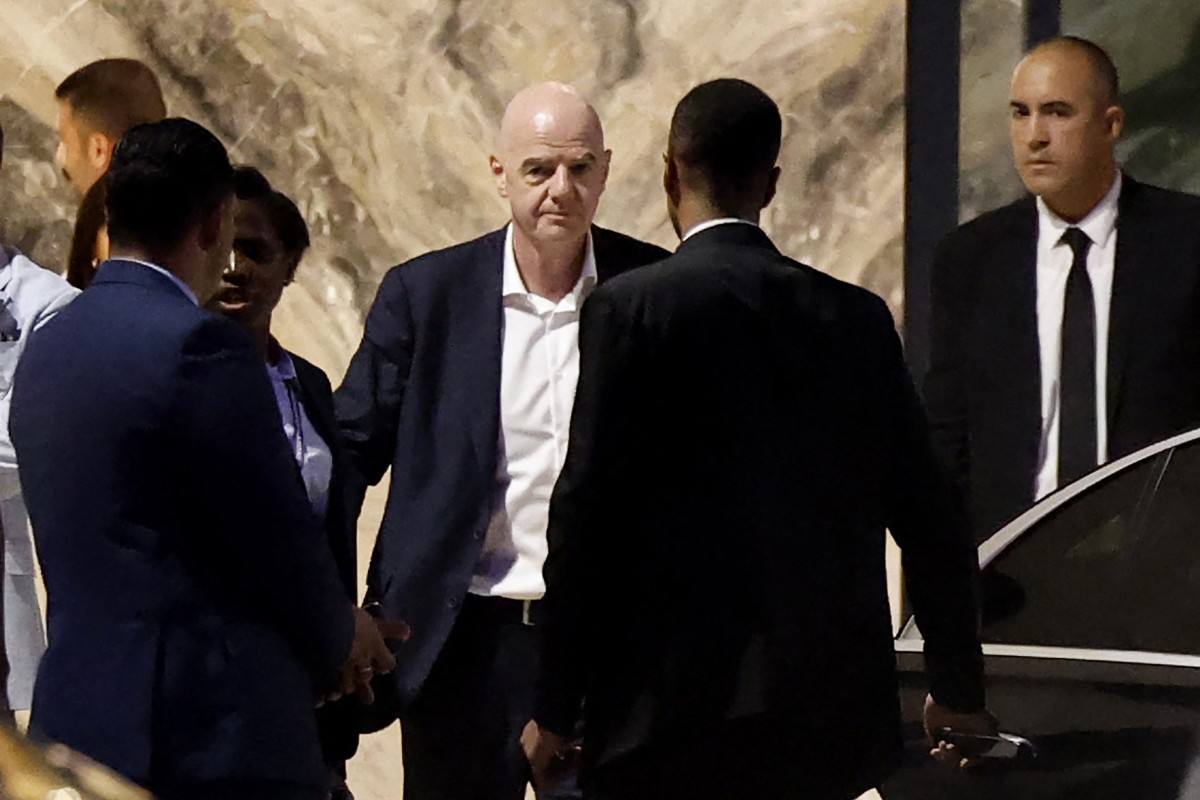
Later Wednesday, Infantino, a 56-year-old Swiss lawyer was in Morocco to celebrate last week’s Feast of the Enthronement, attended the Women’s Africa Cup of Nations match between Zambia and Malawi in Rabat.
The FIFA chief was spotted alongside Moroccan football federation president Fouzi Lekjaa at Al Medina Stadium’s entrance, projecting defiance despite the crisis engulfing his presidency.
Morocco co-hosts the 2030 World Cup, and Lekjaa remains one of the few to have publicly supported Infantino since the humiliating climbdown. He praised Infantino’s “wise” move to scrap the plan in the interests of “unity and cohesion,” reiterating backing for “all the initiatives aimed at the development of world football” during Infantino’s 10 years in charge.
From triumph to crisis
Infantino had been basking in the warm afterglow of a highly successful 2026 World Cup, the largest ever with 48 teams, co-hosted by Canada, Mexico, and the United States. His wish to serve a fourth and final term looked certain to be rubber-stamped in Rabat next March, with no challengers emerging.
Then everything changed last Tuesday.
UEFA termed the proposal “a shabby, back room, opaque deal” hatched by Infantino. “The current FIFA leadership has not only lost UEFA’s confidence but also that of many other members of the football family,” their statement thundered.
CONCACAF went further, calling for “a comprehensive reckoning with this presidency” whilst slamming Infantino’s “poor governance and leadership.”
On Wednesday, Canadian Prime Minister Mark Carney delivered perhaps the most damaging blow, declaring he no longer had confidence in Infantino’s ability to lead FIFA.
Infantino survived Wednesday’s crisis meeting. But his authority has been shattered, his judgement questioned, and his fourth term, once a formality, now hangs in the balance.