
In communities shaped by violence, surrounded by conflict and instability, in homes under financial distress, and in schools carrying challenges far beyond education, children often grow up having to manage life independently.
Our nervous systems are not fully mature until approximately age 25. From early childhood, neural pathways supporting emotional regulation and cognitive development are still forming, whilst the prefrontal cortex – responsible for decision-making, impulse control, and risk assessment—is amongst the last areas to develop.
What happens when a child’s nervous system must learn to survive before they are able to dream?
The survival mode reality
Fear, anger, and sadness often leave children confused and insecure, without the skills or space to process these emotions. Feelings are ignored or suppressed, and what is frequently mistaken for coping is simply survival. Children are asked to identify with being abused, suicidal, depressed, or anxious in order to receive support. However, many children actively avoid this terminology, as it carries stigma and shame.
Our behaviour as adults is often shaped by childhood experiences. Abuse, neglect, dysfunction, and chronic fear experienced during our early developmental years can later surface as violence towards others, disengagement, self-harm, and unhealthy habits. This shapes the society we inhabit.
The consequences are evident. Suicide is a leading cause of death amongst young people in South Africa, and unemployment approaches 50% within the same demographic. One hundred and eighteen rapes are reported daily, and 123,000 live births were recorded amongst mothers aged 19 and below—for perspective, Soccer City can accommodate 94,736 people.
These are not isolated social failures; they are outcomes of prolonged emotional, economic, and structural pressure.
Change is possible, collectively. And it begins with a flower – Zonja Penzhorn, founder and CEO of Human Nature Africa.
Human Nature Africa’s Plant Play programme is designed to enable children to have play time that is both enjoyable and fulfilling by encouraging them to grow a flower—a hyacinth, deliberately chosen to be non-food, visually beautiful, and fragrant. If the bulb is cut open, the flower is already visible inside, representing the beauty within us all. When given time and care, it will emerge.
The responsibility is age-appropriate and carries no survival pressure. Flowers allow children to experience exploration, responsibility, and growth without expectation. A flower does not determine whether a household eats, does not “punish” without reason, and its behaviour can be anticipated based on simple factors such as watering or sun exposure.
Diepsloot, Johannesburg, was chosen for the four-month pilot project as it represents one of the country’s highest gender-based violence areas, determined by reported cases. Abuse is often linked to unresolved trauma, poor emotional regulation, and social norms that normalise violence.
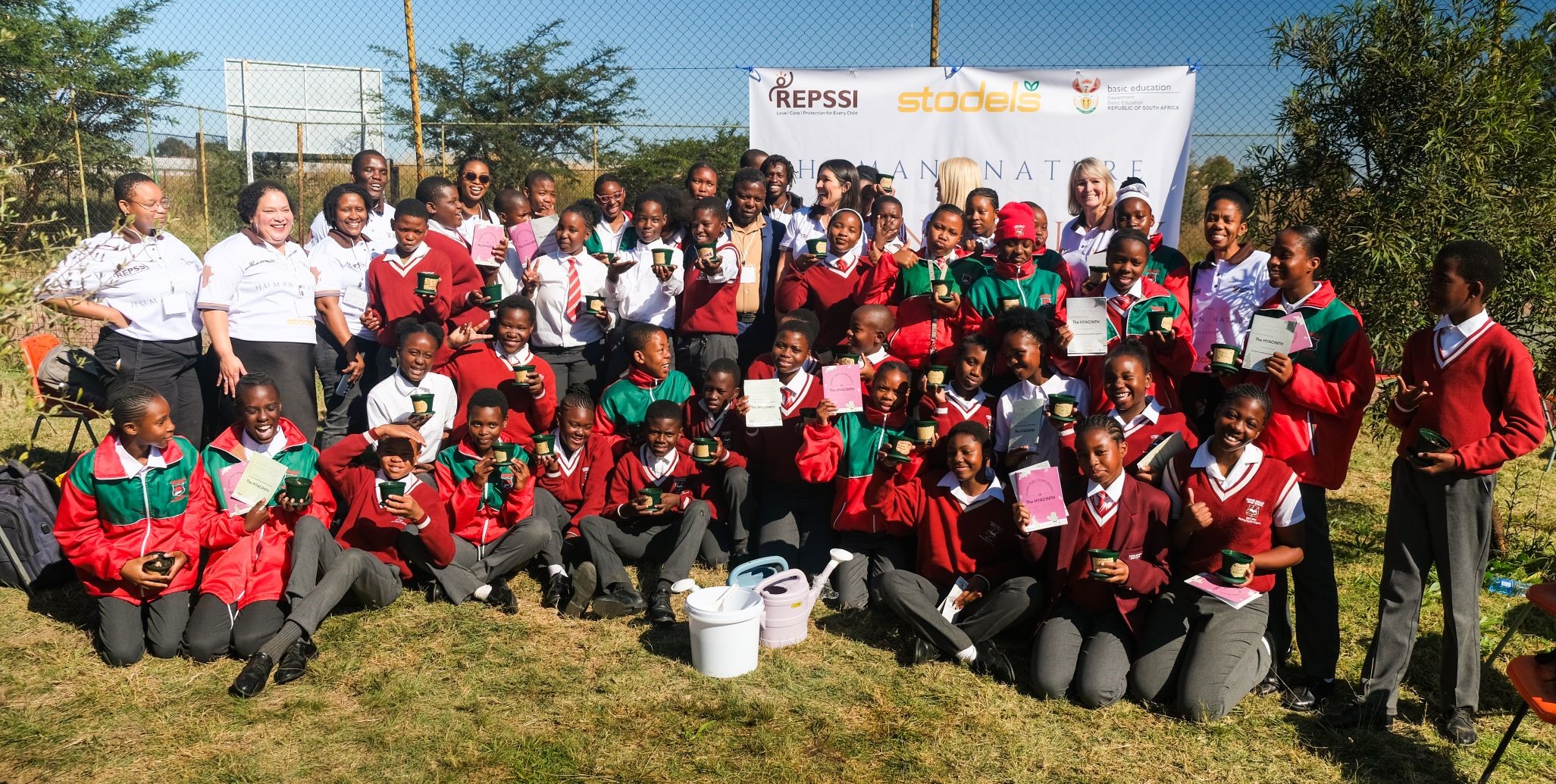
Guided by youth facilitators employed from the community, 265 learners aged between 10 and 15 received a flower bulb, soil, and pot to keep and take home. For some, this was the first possession they had ever owned. The intention was to identify at-home risks during weekly Plant Play sessions.
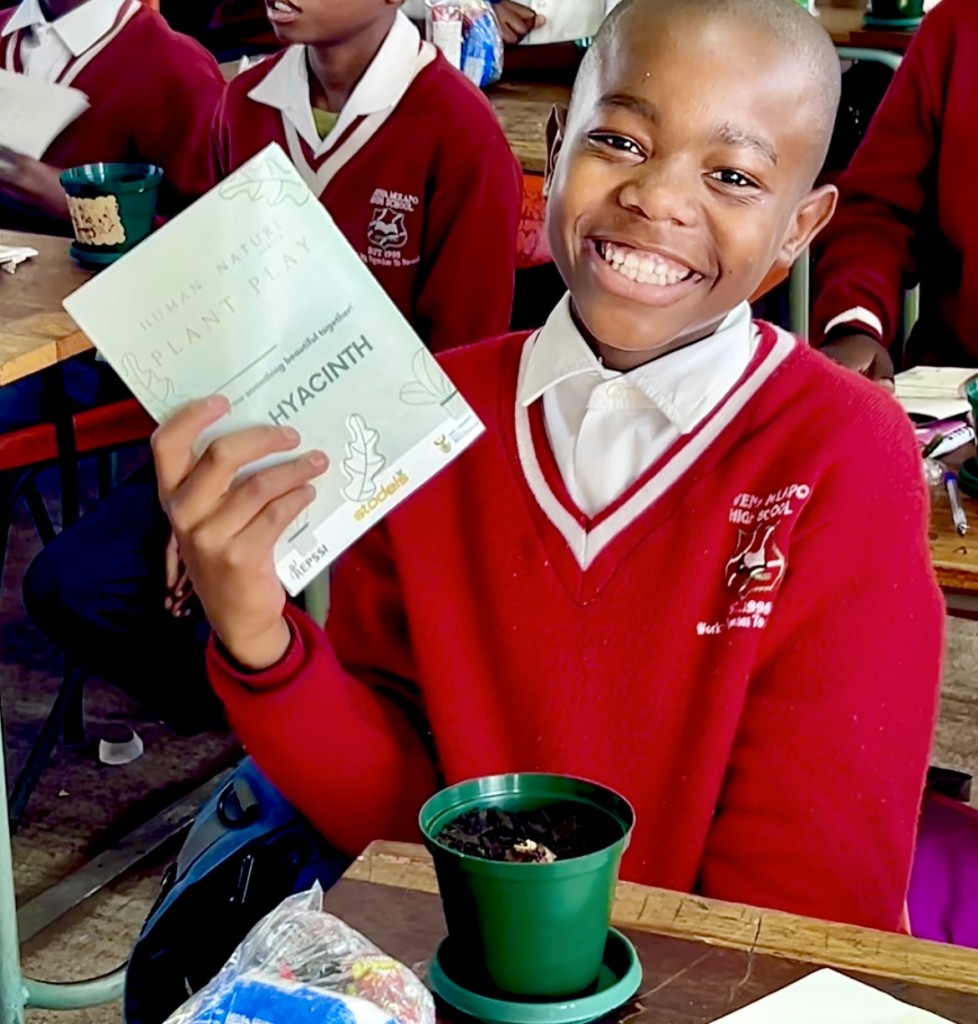
On day one, a 12-year-old girl raised her hand and said she could not take her plant home: “When my mum and dad fight, they break things…”
That moment transformed the room – Zonja Penzhorn, founder and CEO of Human Nature Africa.
When asked why they thought they had received the plants, some boys said the flowers were pointless because they could not be eaten. Most girls said the plants were to teach them motherhood. Neither response reflected childhood curiosity or play; both revealed how survival instincts and gender roles had already replaced imagination.
We live in a society where boys and men are taught to suppress emotion, and that silence later erupts through harm to themselves or others. Children living with unimaginable circumstances have every reason to be angry, withdrawn, or resistant, especially when bullying has intensified through increased digital access.
However, through the Plant Play programme, the children became gentle. They became children again. They began to play.
The bonds between child and plant resulted in powerful peer relationships over the four months from bulb to bloom. It was an emotional journey for each child—one that reflected life whilst having the ability to change a life.
Six plants did not survive. Those children were not isolated; the group embraced them, shared plants and experiences, and supported one another, as one would expect in life. Each class was a mixed-gender environment where equality and empathy emerged naturally, rather than being taught.
Children began to express a strong sense of self and form independent opinions, as if their plant had granted them courage and confidence—essential skills for navigating their realities.
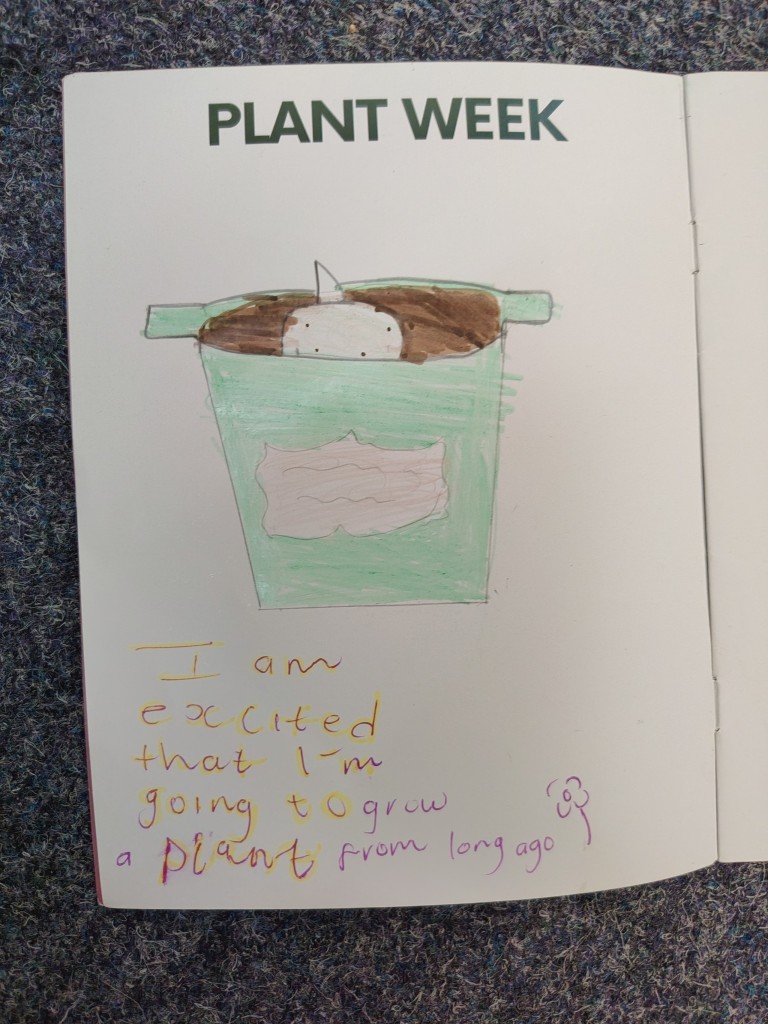
Parents contacted us to report that their children were speaking to them for the first time about genuine feelings. Teachers observed that children who had never participated before raised their hands—not to ask about themselves, but about caring for their plants.
Beautiful reassurance of emotional safety became evident early in the classrooms. Children opened up, shared stories, supported each other, and appeared unafraid of failure. Caring for their plants taught emotional regulation—they gained patience, learned to handle disappointment, and recognised progress whilst facing situations beyond their control. Emotional expression became normalised.
ASO READ: Enjoy Garden Day with paws and flower crowns(Opens in a new browser tab)
We must reach beyond these 265 children. How can we not?
Plant Play has the ability to transform the lives of children, their families, and their communities, ultimately shaping societies. It represents a measurable investment in education, gender equality, and violence prevention, reducing future social risk whilst strengthening communities and tomorrow’s leaders. It aligns with our National Development Plan 2030 and the United Nations Sustainable Development Goals.
Societal stability depends on early, preventive behaviour change. The Human Nature Collective has united community, civil society, private sector, and government, and requires Corporate South Africa to partner on Plant Play and scale the programme across South Africa’s 30 highest-ranking gender-based violence areas, reaching more than 15,000 children with the potential to improve 15,000 households.

Zonja Penzhorn is the founder and CEO of Human Nature Africa. Her work focuses on prevention at the intersection of human behaviour, addressing gender-based violence, sexual and reproductive health and rights, HIV and mental health. She is committed to normalising conversations around critical social issues and moving beyond limiting labels to improve access to services and enable the addressing of root causes at a societal level. She is the creator of Plant Play.





You must be logged in to post a comment.