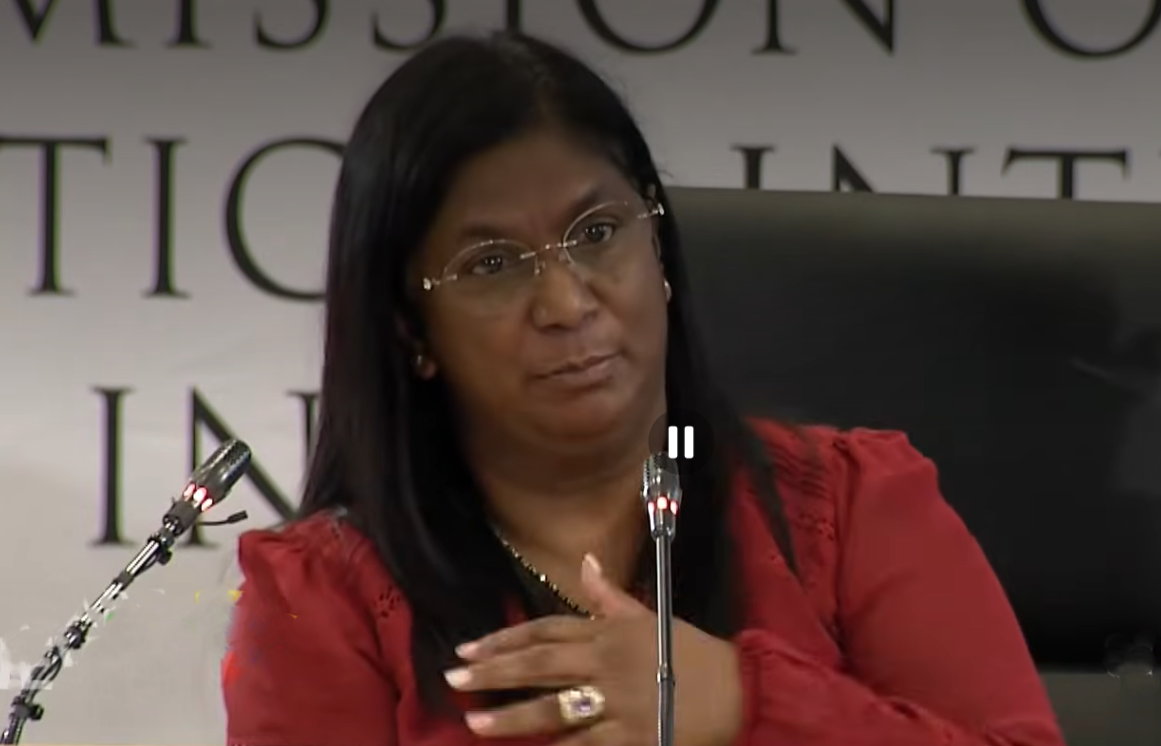
The Office of the Investigating Directorate Against Corruption (IDAC) has confirmed receipt of complaints relating to IDAC head Advocate Andrea Johnson, who this week invoked her constitutional right against self-incrimination during testimony at the Madlanga Commission.
The public acknowledgment comes amid growing media interest and scrutiny regarding leadership integrity within IDAC, following allegations against Johnson at the commission of inquiry into criminality, political interference and corruption in the criminal justice system.
In a statement on Wednesday, the ombud’s office said the complaints are receiving attention through established processes and are being assessed in accordance with its statutory mandate and applicable legal framework.
“The Office does not ordinarily comment on complaints received or matters under consideration. However, given the exceptional public interest in this matter, the numerous media enquiries received, and the fact that the existence of the complaints is already in the public domain, the Office considers it appropriate to confirm their receipt,” the statement read.
Johnson refuses to answer questions on docket disclosure
During her second day of testimony at the Madlanga Commission on Tuesday, Johnson invoked her constitutional right against self-incrimination under Section 35(3)(j) of the Constitution regarding allegations that she improperly disclosed a criminal docket to SAPS Crime Intelligence deputy head Major-General Feroz Khan.
Johnson told the commission that these allegations are currently the subject of a docket before the National Prosecuting Authority (NPA) to determine whether she should be prosecuted. She asserted that the commission’s fact-finding mandate does not override her constitutional protection against self-incrimination.
The IDAC head also denied allegations that the arrest of Lieutenant-General Dumisani Khumalo was politically influenced or that he was targeted for his role as coordinator of the Political Killings Task Team. She testified that the arrests were evidence-led and related to charges under the Prevention and Combating of Corrupt Activities Act, as well as fraud.
Johnson disputed evidence previously provided by senior IDAC investigator Colonel Brian Padayachee, who claimed that investigators were not provided with necessary Section 27 referral affidavits in the Khumalo case. She suggested Padayachee might have been conflating the case with a separate investigation.
She also denied the existence of a “cabal” involving herself, Khan and other SAPS officials, stating she had no knowledge of such an association and had not authorised or benefited from any such arrangement.
Ombud protects whistleblowers
The ombud insisted that it remains committed to protecting whistleblowers and complainants who make “disclosures in good faith”.
“The reporting of alleged corruption and misconduct is an essential feature of constitutional accountability and the rule of law. The Office will take all reasonable measures within its mandate and the bounds of the law to ensure that individuals who raise concerns are not discouraged from doing so by fear of prejudice, intimidation or retaliation,” the statement continued.
The office explained that there is no “hard-and-fast rule” on the protection or publication of the identity of persons against whom complaints have been lodged.
“Whether such information is disclosed or remains confidential depends on the particular circumstances of each case, including considerations of public interest, procedural fairness, legality, the rights and interests of affected parties and the integrity of the IDAC Oversight Judge Office’s processes. These considerations are carefully weighed and balanced on a case-by-case basis in accordance with the Office’s constitutional and statutory mandate,” the statement read.
The public is cautioned against drawing premature conclusions regarding Johnson’s conduct.
“The Office emphasises that the receipt of a complaint does not constitute a finding of wrongdoing, nor should it be interpreted as evidence of misconduct. Every complaint is considered independently, objectively and in accordance with the principles of procedural fairness,” the statement concluded.
The office will not comment further on the substance of the complaints or any investigative steps while the matter remains under consideration.
ALSO READ: IDAC denies deliberately targeting senior police officials following arrests