

AFRICAN CENTRE FOR BIODIVERSITY – The South African Human Rights Commission has concluded a comprehensive seven-day national investigative hearing into the state of South Africa’s food systems, exposing critical deficiencies in pesticide and GMO regulatory frameworks.
The hearing, held from 12-20 March, examined seven key themes affecting food security and safety across the country. The African Centre for Biodiversity emerged as a key contributor, submitting three detailed written submissions and providing oral testimony that highlighted systemic regulatory failures.
The ACB’s first submission addressed concerns about the governance, approval, and cultivation of genetically modified organisms and associated herbicides, pointing to what it described as “systemic deficiencies in the biosafety and administrative frameworks.” This submission directly addressed the hearing’s second theme: corporate capture of the food system.
The organisation’s second submission focused on the continued use of highly hazardous pesticides in South Africa, despite documented risks to human health and environmental integrity. This highlighted what the ACB termed “systemic failures and fragmented governance” that have enabled dangerous chemical use to continue unchecked.
A third submission raised concerns about the ongoing revision of South Africa’s National Biodiversity Strategy and Action Plan, arguing that it lacks meaningful opportunities for civil society participation.
Laboratory evidence of contamination
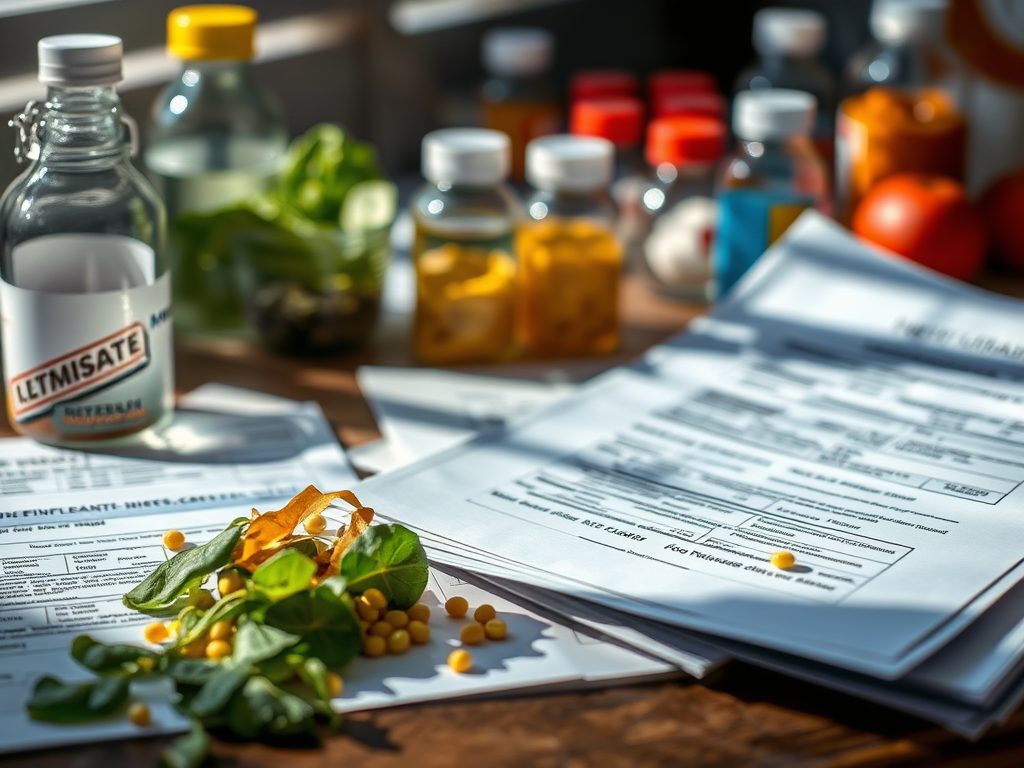
On Monday, 16 March, ACB’s research coordinator Zakiyya Ismail presented compelling evidence to the Commission, including findings from recent laboratory tests that discovered glyphosate levels exceeding maximum residue limits in some staple foods.
Ismail drew upon the organisation’s comprehensive 20-year Pesticide Compendium to demonstrate ongoing failures in the state’s regulation of hazardous chemicals in the food system, emphasising the implications for constitutional rights.
ACB Director Mariam Mayet highlighted a concerning dependency on industry-controlled information flows, noting that CropLife maintains the country’s only pesticide register whilst regulators frequently rely on risk assessments produced by agrochemical companies themselves.
Government officials face scrutiny
The hearing intensified when Agriculture Minister John Steenhuisen and Jonathan Mudzunga, Registrar for the Fertilisers, Farm Feeds, Agricultural Remedies and Stock Remedies Act, testified on Wednesday, 18 March.
When questioned about the long-promised overhaul of outdated legislation dating from 1947, Mudzunga acknowledged that minimal progress had been made, contradicting earlier ministerial assurances about prioritising regulatory modernisation.
The Commission also probed the absence of a publicly accessible pesticide register. Steenhuisen could not confirm when such a register would be released, whilst Mudzunga suggested it “might” be available in the next fiscal year.
Commissioners scrutinised the delayed implementation of the 2025 Cabinet ban on Terbufos, despite hundreds of poisoning cases—many involving children—in 2023 and 2024. The Department cited procedural delays for the continued availability of the banned pesticide.
Steenhuisen made unsubstantiated claims
Steenhuisen made unsubstantiated claims that Terbufos originated outside the country, whilst Mudzunga indicated a preference for restricting rather than banning most highly hazardous pesticides.
When asked about food security, Steenhuisen was unable to provide scientific evidence supporting his claim that hazardous pesticides are necessary, instead framing the issue as a dispute between “activists” and industry.
In closing remarks, hearing Chairperson Commissioner Sandra Makoasha expressed disappointment that several ministers failed to appear despite invitations or subpoenas. She noted that even the Agriculture Minister acknowledged that the agricultural sector remains entrenched in pre-democratic patterns.
Makoasha announced plans for a second phase of hearings, during which CropLife will be called to testify—a development welcomed by civil society organisations.
Hope for change
The ACB has expressed hope that the SAHRC probe will prompt substantive government action to initiate transparent, consultative processes for updating what it describes as “hopelessly antiquated and unconstitutional pesticide regulatory frameworks.”
The organisation advocates for exploring just transition and agroecological pathways towards food sovereignty, moving away from the current system’s heavy reliance on industry self-regulation and towards genuine public oversight of food safety.
The hearing’s findings highlight the urgent need for regulatory reform in a sector where constitutional rights to health, environmental protection, and food security intersect with powerful commercial interests.
The Commission’s final recommendations, expected following the second phase of hearings, could prove pivotal in reshaping South Africa’s approach to food system governance and chemical regulation.


You must be logged in to post a comment.