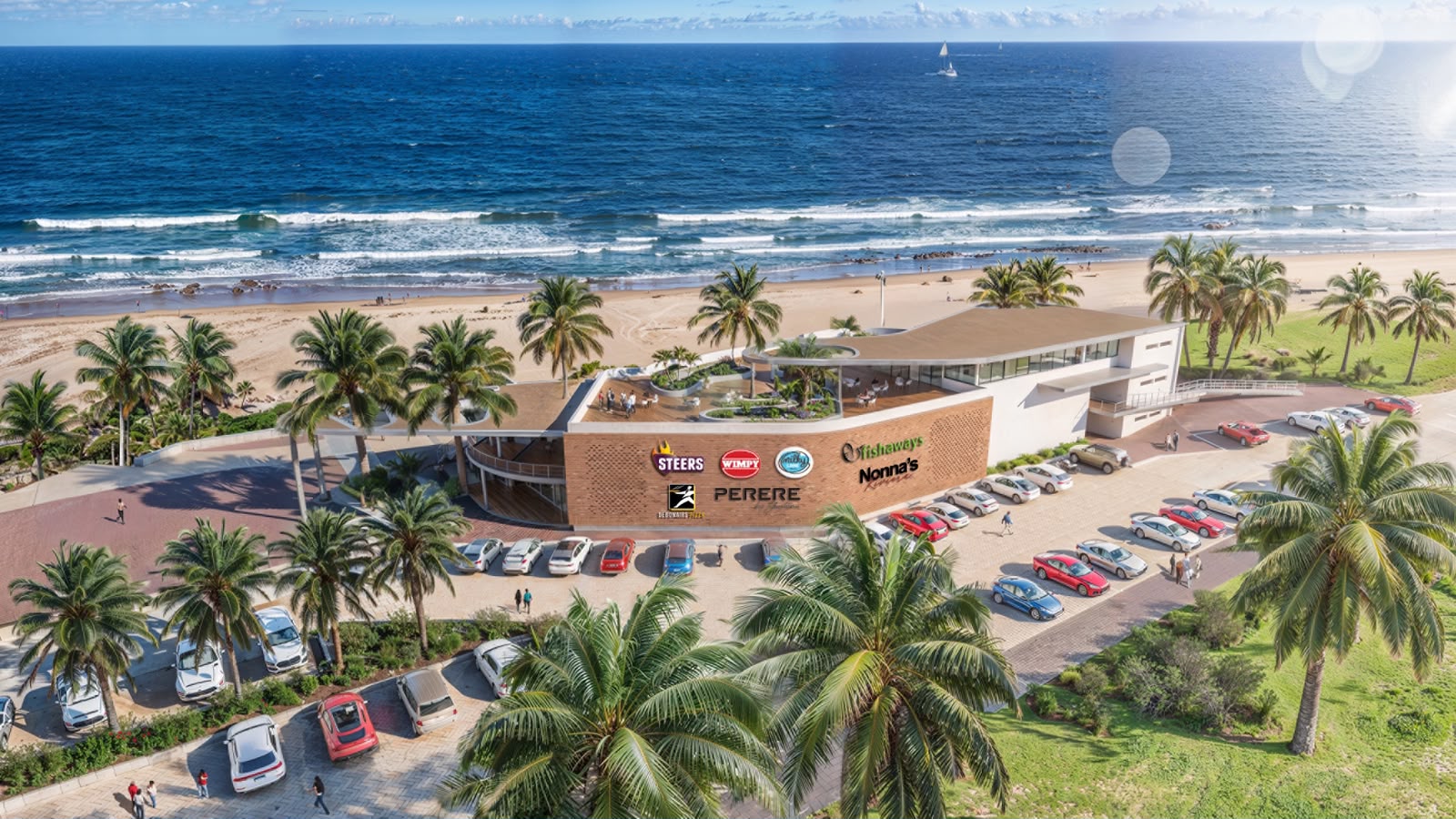
DURBAN – The high court in Durban has dismissed a major environmental and planning review aimed at halting a massive multi-million-rand redevelopment of the historic Beachwood Golf Course.
In a comprehensive 26-page judgment handed down on 30 September, judge Peter Olsen upheld the decisions of municipal and provincial authorities, clearing the path for Beachwood Investments (Pty) Ltd to proceed with its proposed residential and commercial coastal estate.
Property history and legal restrictions
The legal action was spearheaded by The Friends of Beachwood, a coalition led by spokesperson Angela Wilson, alongside local resident James Te Reile, who claims his peace will be disturbed by the development. The 42-hectare property, situated in Durban North adjacent to the Beachwood Mangrove Nature Reserve, was established as a golf course in the 1930s before being sold at auction in 2017 to Beachwood Investments for R108 million.
When Beachwood Investments purchased the site, its development potential was heavily restricted by private open space zoning and restrictive title deed conditions. Under these legal encumbrances, the land could essentially only be used as a golf course and sporting facility, as it had been since the 1930s. Furthermore, a public road servitude crossed the land to maintain beach access along its eastern boundary.
Legal challenges mounted
On the municipal front, the applicants challenged eThekwini’s decision to remove long-standing restrictive title conditions that preserved the land for sporting use, arguing that this constituted an unlawful disposal of a municipal capital asset under Section 14 of the Municipal Finance Management Act (MFMA).
The applicants then launched review proceedings under the Promotion of Administrative Justice Act (PAJA) to set aside environmental approvals issued by the KZN Department of Economic Development, Tourism and Environmental Affairs (EDTEA), as well as municipal planning approvals granted by the eThekwini Municipality.
Although the court affirmed that the community coalition possessed legal standing under Section 38 of the Constitution and Section 32 of NEMA, the applicants stumbled on key procedural and substantive hurdles. Judge Olsen found that the challenge against the provincial environmental authorisations suffered from an unreasonable delay of over two and a half years beyond PAJA’s statutory 180-day limit.
The court dismissed the applicants’ argument that the initial environmental approvals were “inchoate” or incomplete, describing their interpretation as “contrived and obtuse” and refusing to grant condonation for the late review.
Municipal asset disposal claim rejected
On the municipal front, the applicants contested eThekwini’s decision to remove restrictive title deed conditions that had historically confined the property to sporting and open-space use. They argued that these restrictions constituted a public asset, requiring compliance with Section 14 of the Local Government: Municipal Finance Management Act (MFMA) regarding capital asset disposal.
Judge Olsen decisively rejected this proposition, clarifying that restrictive title conditions represent private servitudes held by dominant neighbouring landowners, not municipal property or capital assets subject to MFMA disposal regulations.
Planning decisions under scrutiny
The applicants sought to set aside key decisions made by eThekwini Municipality regarding the development. First, the full municipal council exercised its exclusive authority to amend the Land Use Scheme to create “Special Zone: Beachwood Coastal Estate”. Second, the Municipal Planning Tribunal, acting under Section 38 of the local planning by-law, approved the three-stage subdivision of the 42-hectare site into 38 plots, removed restrictive title deed conditions, realigned public road and parking servitudes, and formally applied the new special zoning to the land.
Infrastructure and flood impact arguments fail
Regarding the municipal infrastructure claims, Judge Olsen held that the applicants failed to present any factual or expert evidence showing that the city neglected sewage, stormwater, or traffic impacts, relying instead on unsupported assertions about their preferred outcome. Similarly, on the “catalytic projects” challenge, the court found no evidence to dispute the municipality’s account of the process or to prove that designating the site as a catalytic development improperly influenced the planning tribunal’s decision-making.
Furthermore, the court dismissed claims that municipal planning authorities failed to consider infrastructure impacts following the devastating April 2022 floods, noting that the applicants presented no expert evidence to contradict municipal specialist studies. Judge Olsen also confirmed that designating the development as a “catalytic project” with an investment exceeding R500 million did not unlawfully bypass statutory planning procedures. Consequently, the court dismissed the review application in its entirety.
ALSO READ: R70 million investment to transform Durban’s Golden Mile beachfront