


DURBAN – South Africa has issued a stark warning that escalating global turmoil and the erosion of international cooperation could derail ambitious 2030 development goals designed to eliminate hunger, eradicate extreme poverty, and combat climate change worldwide.
Speaking at the G20 finance ministers and central bank governors meeting in Durban on Thursday, South African Finance Minister Enoch Godongwana emphasized the critical threats facing the United Nations’ comprehensive development blueprint adopted by all member states in 2015.
G20 chair highlights economic uncertainty
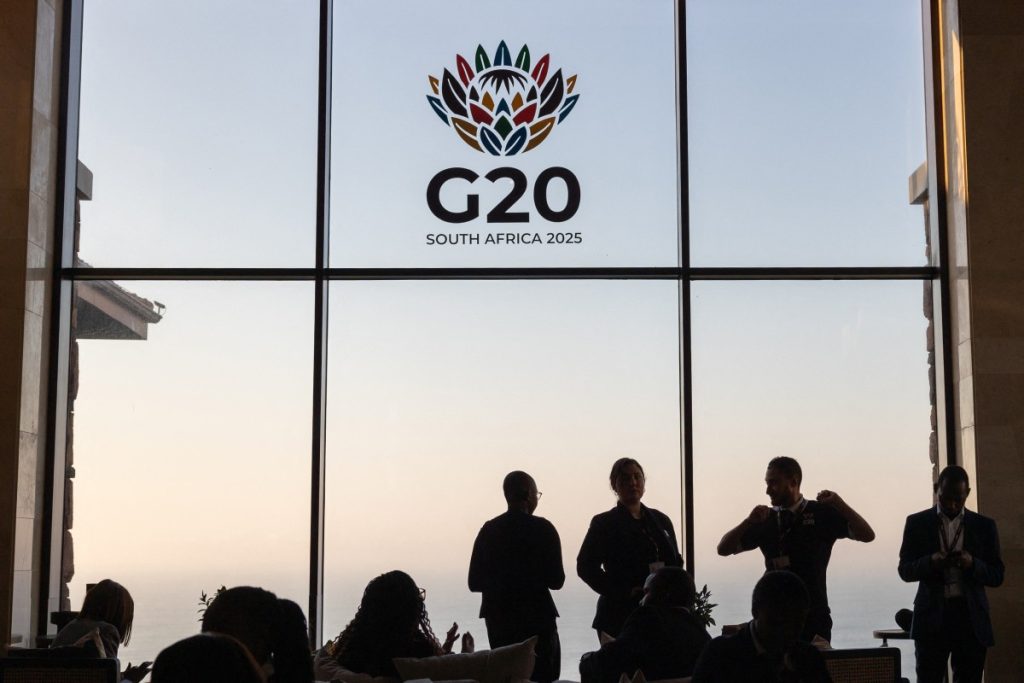
As the current chair of the G20 group of nations until November 2025, South Africa faces the complex challenge of coordinating a diverse and often fractious membership that includes global powerhouses such as the United States, China, Russia, the European Union, and the African Union.
“While inflation is gradually moderating and financial conditions have started to stabilise in some regions, uncertainty continues to weigh heavily on global growth prospects,” Godongwana told the assembled finance chiefs and central bank governors during the two-day Durban summit.
The South African finance minister highlighted several pressing concerns that could push the 17 sustainable development targets further out of reach. These comprehensive goals encompass critical areas including education advancement, climate action initiatives, and gender equality promotion across all UN member nations.
Rising trade barriers pose significant threats
Godongwana specifically pointed to rising trade barriers, persistent global economic imbalances, and emerging geopolitical risks as significant obstacles to achieving the 2030 development agenda. These challenges, when combined with climate-related shocks and environmental disasters, create a perfect storm that threatens to undermine years of international development progress.
The G20 group has found itself scrambling to respond to dramatic policy shifts implemented by the United States, the organization’s wealthiest member, since Donald Trump’s return to the presidency. Washington’s recent trade policy upheavals have fundamentally disrupted established global trade rules and international cooperation frameworks.
US absence highlights diplomatic tensions
The United States, which is next in line for the G20 presidency, has imposed sweeping tariffs on countries it characterizes as “anti-American” and announced significant foreign aid cuts that are severely impacting development projects, particularly across the African continent.
Notably, US Treasury Secretary Scott Bessent did not attend the crucial Durban meeting, with Washington instead sending an undersecretary for international affairs as its representative. This absence follows a pattern, as Bessent also skipped a similar G20 gathering in February, while US Secretary of State Marco Rubio declined to participate in a meeting for G20 foreign ministers.
Commitment to multilateral cooperation
Despite these challenges, South Africa remains committed to strengthening international cooperation and multilateral approaches to global problems. “We have a critical role to play in revitalising and strengthening multilateralism by fostering inclusive dialogue, reinforcing rules-based cooperation, and driving collective action on global challenges that no country can solve alone,” Godongwana declared.
Germany has expressed strong support for this approach, with Finance Minister Lars Klingbeil emphasizing his government’s commitment to multilateral partnerships.
“We as the federal government, are using all possibilities to also discuss how, especially in these times of international upheavals and uncertainty, we can strengthen our partnerships within the multilateral world order,” Klingbeil told journalists attending the Durban summit.
Economic impact and global significance
The G20’s significance in addressing these development challenges cannot be overstated. Comprising 19 individual nations and two regional organizations, the group represents more than 80 percent of the world’s total economic output, making its decisions and cooperation essential for global development progress.
However, the bloc’s resolutions remain non-binding in nature, highlighting the importance of voluntary cooperation and diplomatic engagement in achieving the ambitious 2030 development goals. This structure makes the current diplomatic tensions and declining multilateral cooperation even more concerning for international development advocates.
The Durban meeting serves as a critical juncture for assessing progress toward the 2030 sustainable development agenda while addressing the mounting obstacles that threaten to derail these essential global objectives. As South Africa continues its G20 chairmanship, the success of international cooperation efforts will largely depend on member nations’ willingness to prioritize collective action over unilateral policy decisions.



You must be logged in to post a comment.