
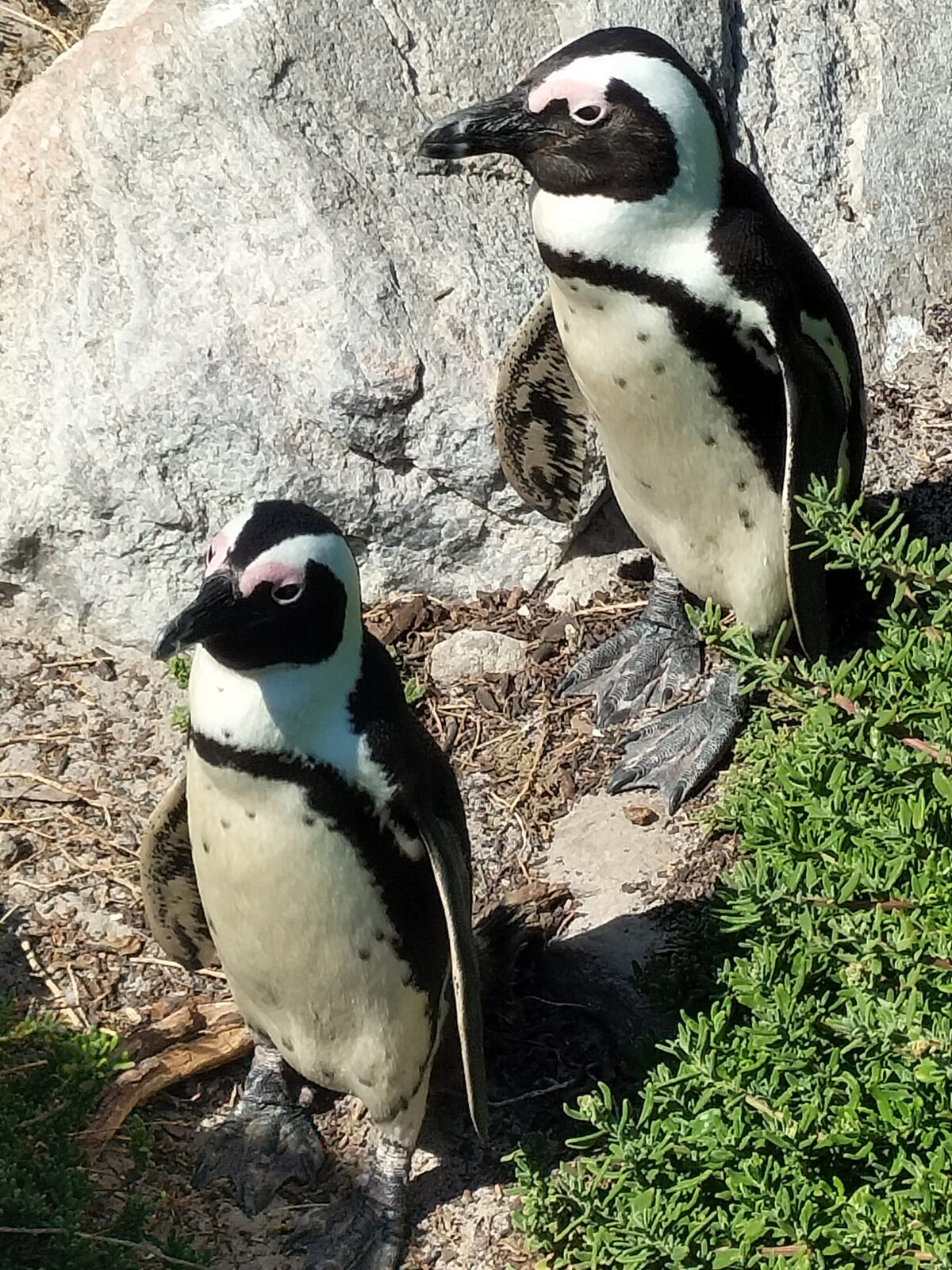
As Cape Nature pushes ahead with a major new fencing project at Betty’s Bay’s penguin colony, residents are raising serious questions about process, predator science, commercial motives – and whether Cape Nature itself may be part of the problem it claims to be solving.
“In Betty’s Bay the African Penguin has long been a source of community pride and when Cape Nature’s announced that a 2,1-metre ClearVu predator fence will be erected around the Stony Point Penguin Colony from November this year it raised concerns. Questions are asked whether Cape Nature is being straight with the community it serves,” a concerned resident said.
Cape Nature has confirmed that the new perimeter fence will effectively close all unpaid public access to the colony – one of only two mainland African Penguin colonies in the world and a site of genuine international conservation significance. According to them the purpose of the fence is to protect the critically endangered birds from predators and uncontrolled human disturbance. Officials have described it as a “national standard” measure.
For most residents, the conservation goal is not in dispute. “The African Penguin is in serious trouble. Numbers have collapsed dramatically across South Africa over recent decades, and Stony Point has long been regarded as one of the species’ last meaningful strongholds. Nobody who lives alongside these birds wants to see them disappear,” residents said. But according to them the way this project has been conceived, communicated, and pushed through, raised some concerns.
The first point of concern was the community consultation process – or, as many residents have come to regard it, the absence of one. “A survey was distributed to property owners inviting community input on the proposed project. On the surface, a reasonable gesture. In reality, the decision had already been made, the funds allocated, and the implementation date confirmed before a single survey form was returned,” the resident said. “I call it a smokescreen survey,” said one resident. “Why pretend to get our input if you are going ahead anyway? That is not consultation – that is ticking a box.”
Community priorities
The frustration came to a head at a community engagement session held at Crassula Hall, where residents were invited to discuss what Cape Nature described as “mutual community priorities and concerns” and to receive feedback on the survey.
Those who attended report that the session did little to address the community’s questions, with officials largely restating that the project would proceed. The feedback on the survey itself, according to one resident who attended, amounted to this: “You wasted your time doing the survey and we are going ahead.” A further complication is that several penguins have established nests outside the formal colony boundary. The Facebook user asked what will happen to those birds once the fence is in place. “Will they be permanently cut off from their nesting sites? Will the fence simply relocate the predator problem rather than solve it?”
Other concerns are access fees – coastal areas currently accessible on foot – including the rocky section behind Brigadoon past Crassula Crescent – will be closed off, with access to sections of the waterfront potentially subject to an entrance fee.
Entrance revenue
For residents who walk to the water multiple times a week, the prospect of paying each visit is both financially burdensome and, many feel, fundamentally unjust.”I am all for saving these animals – it is one of the reasons I bought here,” said one long-term resident. “But I will not be paying an entrance fee two to three times a week to access the coastline. At the very minimum, a permit system for permanent residents should be on the table.”
The question of where that entrance revenue will go has also been raised repeatedly – and not yet answered satisfactorily. At a recent presentation by the Betty’s Bay Conservancy, Cape Nature’s planned “upgrades” were reportedly showcased in an upbeat, promotional manner, with a new pay point among the features highlighted. For community critics, this framing reveals something important about the priorities driving this project.
“If the penguins are truly in crisis,” asked one resident, “why does every solution seem to involve building new revenue-generating infrastructure?”
For a group of long-term residents and conservationists, the current controversy is not an isolated incident. It is the latest chapter in a story that began more than a decade ago – and the parallels are, they say, impossible to ignore.The most serious allegation being levelled at Cape Nature is this: that Stony Point was, until 2014, the only growing African Penguin colony in South Africa. It was, by any measure, a conservation success story. Then Cape Nature formally occupied the reserve – and the growth stopped.
Community members are now openly asking whether Cape Nature’s own management practices, expanding infrastructure, construction activity, and growing tourism operation have contributed to the very penguin decline that is now being used to justify the new fence.
“We want to make it clear, it is not about the abandonment of the fence. It is accountability, transparency, and genuine engagement. We want an honest, independent assessment of whether Cape Nature’s own activities since 2014 have contributed to penguin decline at Stony Point. We need a credible, science-based plan to address the documented predation capabilities of caracal – not simply a reference to ‘national standard.’ Furthermore we need a clear plan for penguins currently nesting outside the colony boundary,” residents ask.
Cape Nature has been approached for comment on all matters raised in this article. Hermanus Times will publish their full response when received.