

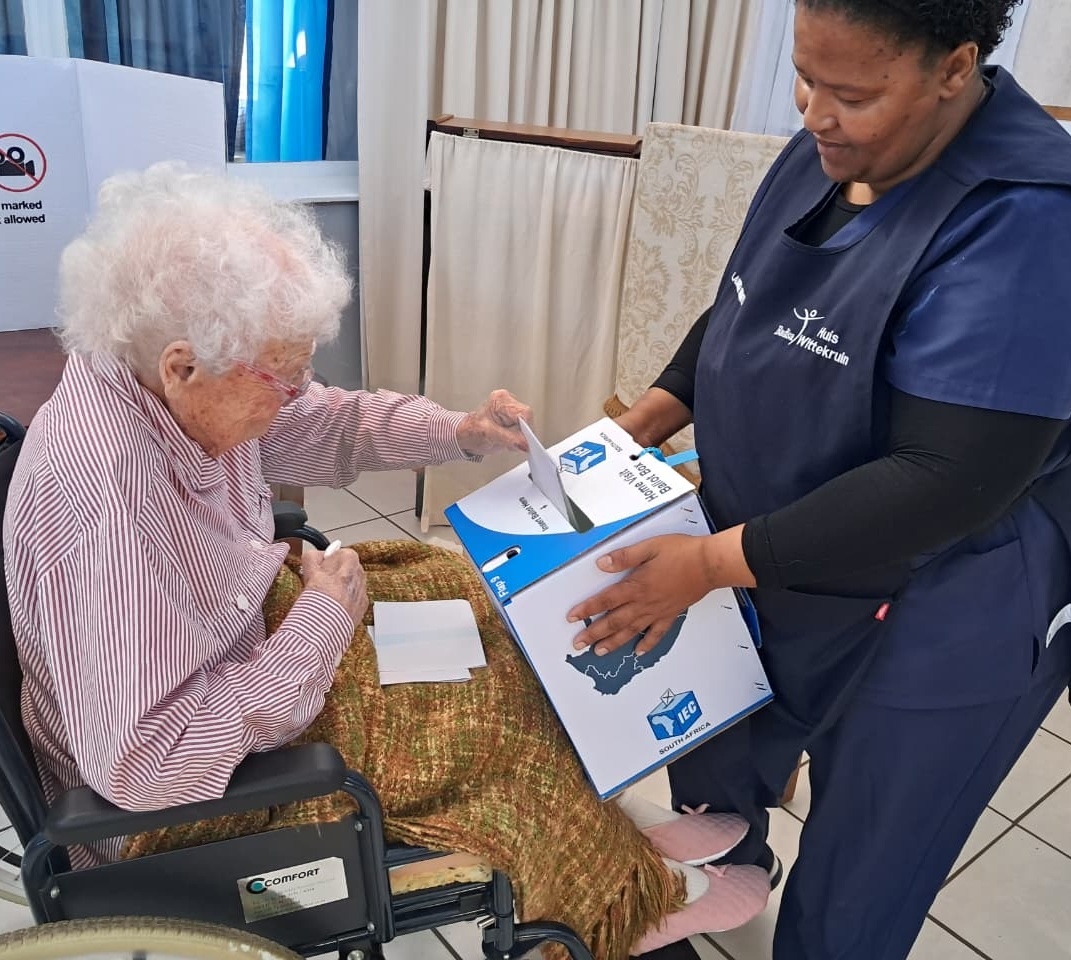
South Africa’s first day of special voting for the 2026 local government elections got off to a troubled start on Monday, with hundreds of voting stations unable to open on time.
While the Electoral Commission of South Africa (IEC) reported that nearly 99% of voting stations opened at 08:00 as planned, significant problems emerged across the Western Cape, Free State and Gauteng that left voters waiting for hours or forced to return home.
The most severe disruption occurred in Cape Town’s metropolitan area, where 217 voting stations could not open because ballot papers had not arrived. The delay affected 33 wards across communities including Strand, Khayelitsha, Philippi, Wynberg, Constantia, the City Bowl, Athlone, Gugulethu, Delft, Atlantis and Kraaifontein.
Kraaifontein bore the brunt of the chaos, with 36 voting districts across six wards left without ballot papers. By 10:30, only 10 of Cape Town’s 116 wards had opened for special votes.

Cape Metro ballot crisis leaves elderly voters stranded
Western Cape Provincial Electoral Officer Michael Hendrickse blamed an “unforeseen delay” involving the production and delivery of special-vote ballots by the contracted printing company. He said stations would open as ballots arrived and that security measures were in place for transport and delivery.
The delays forced elderly and disabled voters, who had arranged to vote early, to wait for extended periods or leave without casting their ballots. In Durbanville, a 79-year-old voter waited 90 minutes at a station that had “no ballot sheets” and “no machines”, according to reports.
The IEC said the problem was confined to the Cape Metro and that stations in the Western Cape’s outer regions operated normally. Hendrickse said both special voting days would be used to ensure approved voters could cast their ballots.
Free State hit by equipment failures and missing materials
The Free State experienced its own set of problems, particularly in the Matjhabeng area. At St Helena, computers could not power up when the station opened at 08:00.
Ballot papers and voting booth structures were not available early in the morning at Welkom High School, Welkom-Gimnasium, Rheederpark, Dagbreek, Riebeeckstad and Christian Revival in Ward 2. At TS Matlaletsa Primary School in Odendaalsrus, ballot papers and election materials arrived late, with voting only beginning around 09:00 instead of the scheduled 08:00 opening.
Some stations, including Dagbreek and Welkom High, had opened by 09:00. The IEC later confirmed that all 1 513 Free State stations were operational.
Provincial IEC manager Itumeleng Liba acknowledged “technical problems here and there”, which he attributed mainly to staff needing to familiarise themselves with materials and brief political party and independent candidate representatives. He said “all systems are running” and that the commission expected to assist 131 809 voters over the two-day special voting period.
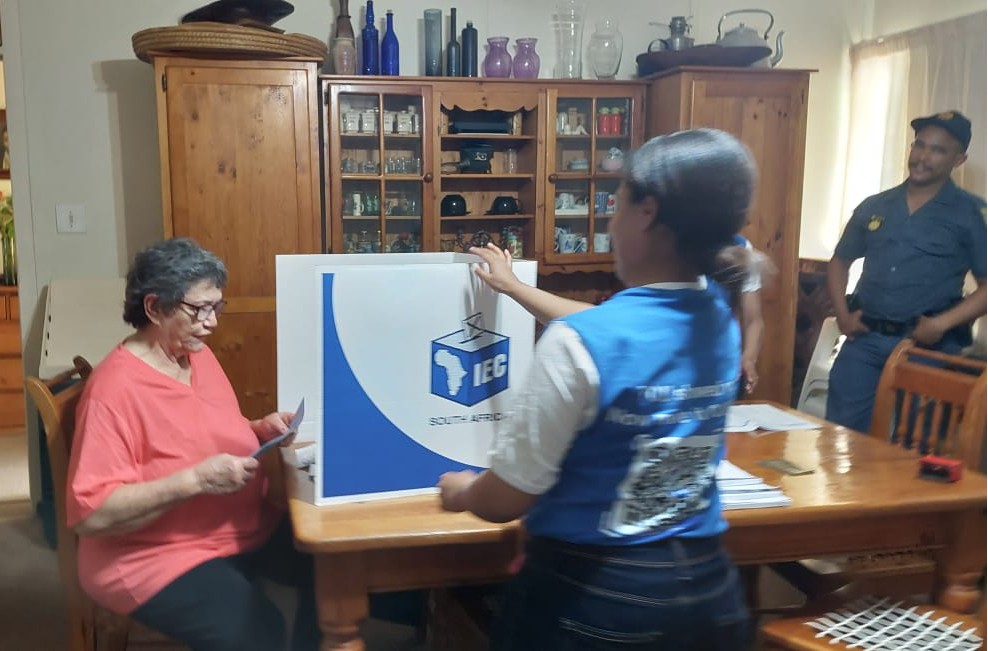
In Gauteng, home visits ran into trouble in Benoni, Ekurhuleni, where IEC officials lacked vehicles. Some officials walked between addresses while voters and officials waited for transport. One voting district had about 10 home visits scheduled, while another had more than 100 to complete without a vehicle. A DA candidate described the IEC as unprepared.
Presiding officer dies, deputy injured in separate incidents
The IEC reported two tragic incidents involving election officials on Monday. A presiding officer collapsed and died at a voting station in Mahikeng, North West. The IEC did not release the official’s name or the cause of death.
In a separate incident, a deputy presiding officer in the uKhahlamba district in KwaZulu-Natal was injured when hit by a car while travelling to a voting station. She was rushed to hospital and her condition has not been disclosed.
IEC Deputy Chief Electoral Officer Masego Shiburi announced the incidents during a media briefing in Midrand. The commission said it was providing support to affected officials, colleagues at the stations and the deceased official’s family.
Record numbers registered for special voting
Despite the problems, special voting represents a significant increase in participation compared to the 2021 local government elections. The IEC approved 2 655 067 special voters for the 2026 elections, a 131% increase from the 1 147 759 approved in 2021.
Of those approved, 1 976 542 will vote at their registered voting stations, while 678 525 will receive home visits because they cannot travel due to physical infirmity or disability.
ALSO READ: Ballot delivery delays affect 217 voting stations in Cape Metro during special voting
Gauteng had the highest provincial total with 480 721 approved special voters, followed by the Eastern Cape with 401 971 and KwaZulu-Natal with 348 971. Limpopo recorded 341 623, Mpumalanga had 292 775, the Western Cape 291 866, North West 235 733, Free State 132 088 and Northern Cape 129 319.
The IEC deployed approximately 127 000 officials to administer the two-day special voting process. Shiburi reported that 94% of voting stations opened with staff and required materials.
Special voting continues on Tuesday, 3 November, from 08:00 to 17:00, with the main election day scheduled for Wednesday, 4 November, from 07:00 to 21:00. Special votes will not be counted until election day, when they will be opened and tallied together with ballots cast on 4 November.
The IEC said it expected improved performance in Cape Town during the afternoon and on the second day of special voting.



You must be logged in to post a comment.