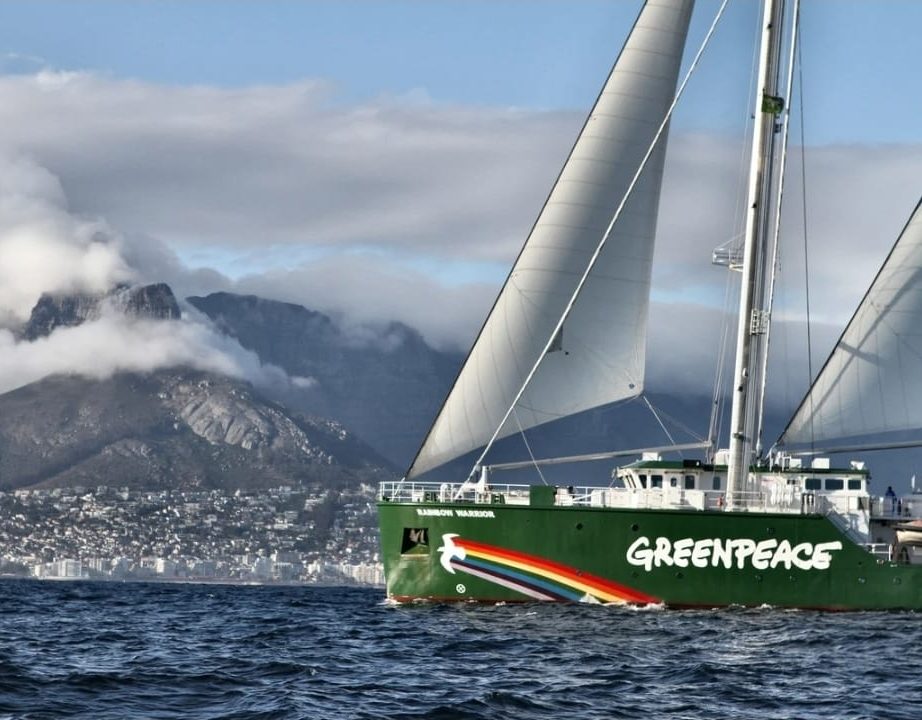
CAPE TOWN – The Greenpeace vessel Rainbow Warrior is set to dock at Cape Town’s V&A Waterfront this month, igniting fresh controversy over the organisation’s stance on African energy development.
Greenpeace Africa shared its excitement over the ship’s Cape Town visit in a post on Facebook, calling it not only a visit, but “a statement”, further highlighting the organization’s position as a “global symbol of environmental resistance”.
The visit comes amid growing criticism of Greenpeace’s opposition to oil and gas projects across Africa, with industry leaders highlighting what they see as contradictions in the environmental group’s approach.
According to a statement by the African Energy Chamber, despite advocating for African nations to abandon fossil fuel development, the Rainbow Warrior itself relies on diesel-electric engines powered by marine gas oil for propulsion and operations, even though it incorporates wind-assisted sails and battery systems.
“A wealthy western NGO parading Africa in a fancy boat, eating caviar and goat cheese, while drinking matcha with almond milk, telling Africans to stop oil and gas is shocking to say the least,” said NJ Ayuk, Executive Chairman of the African Energy Chamber.
The debate centers on Africa’s energy crisis, with over 600 million people lacking electricity access and 900 million without clean cooking solutions. Critics argue that organizations like Greenpeace are hindering development by opposing key energy projects.
Greenpeace has actively campaigned against seismic surveys in South Africa and lobbied against the East African Crude Oil Pipeline (EACOP), which would transport crude from Uganda’s oilfields to international markets via Tanzania. Supporters argue such projects could generate crucial revenue for infrastructure development and economic growth.
“If fossil fuels remain necessary for Greenpeace to run its own operations, then it is neither credible nor justifiable to demand that Africa leave its resources undeveloped while millions remain without electricity, jobs or industrial opportunity,” Ayuk noted.
The Rainbow Warrior’s design reflects the practical challenges of eliminating fossil fuels entirely. While Greenpeace acknowledges that wind power reduces rather than eliminates fuel consumption, critics argue this undermines the organization’s demands for complete fossil fuel abandonment in Africa.
South Africa, facing ongoing load-shedding issues, possesses significant offshore and onshore hydrocarbon resources that could potentially stabilize the economy and provide long-term energy security if developed.
“Africa needs energy to industrialize and create jobs. There is more dignity in work than in accepting foreign aid,” Ayuk emphasised, arguing that foreign-funded NGOs are engaging in “economic sabotage” by blocking energy development.
The African Energy Chamber maintains that Africans should determine their own energy policies rather than accepting directives from international organizations, particularly when millions cannot afford basic energy access.
ALSO READ: Hof stop TotalEnergies se Suid-Afrikaanse olie-eksplorasie