BLOEMFONTEIN: Large water storage dams in the Free State, the water of which is supply for human consumption, are bustling above 80%. Serving as evidence of this is the Department of Water and Sanitation’s (DWS) latest weekly report, showing the total available water is at 100,9%.
This is a significant improvement compared to the 85,8% at this time last year. The level of several major dams for water storage and supply to consumers are hovering between 88% and 108,5%, while two are below the 60% mark. The two in question are Goothoek and Rustfontein, sitting at 52,7% and 58,9%, respectively.
Of these important dams, seven are above the 100% mark. They are the Vaal Dam (107,3), Saulspoort (102,2%), Krugersdrift (100,1%), Koppies (101,0%), Kalkfontein (100,4%), Egmont (100,6%) and Bloemhof Dam (108,4%).
Those just below 100%, but in satisfactory state, include the Allemanskraal Dam (99,1%), Armenia (97,3%), Erfenis (94,9%), Knellpoort (99,9%), Metsi Matso (93,1%), Fika-Patso (85,5%), Sterkfontein (99,1%), Vaalrivier Barrage (97,3%) and Vanderkloof dam (99,3%).
The Welbedacht dam is at (87,5%). This dam is part of the Caledon-Bloemfontein transfer scheme, which also serves other towns like Botshabelo, Thaba Nchu, Dewetsdorp, Reddersburg and Edenburg.
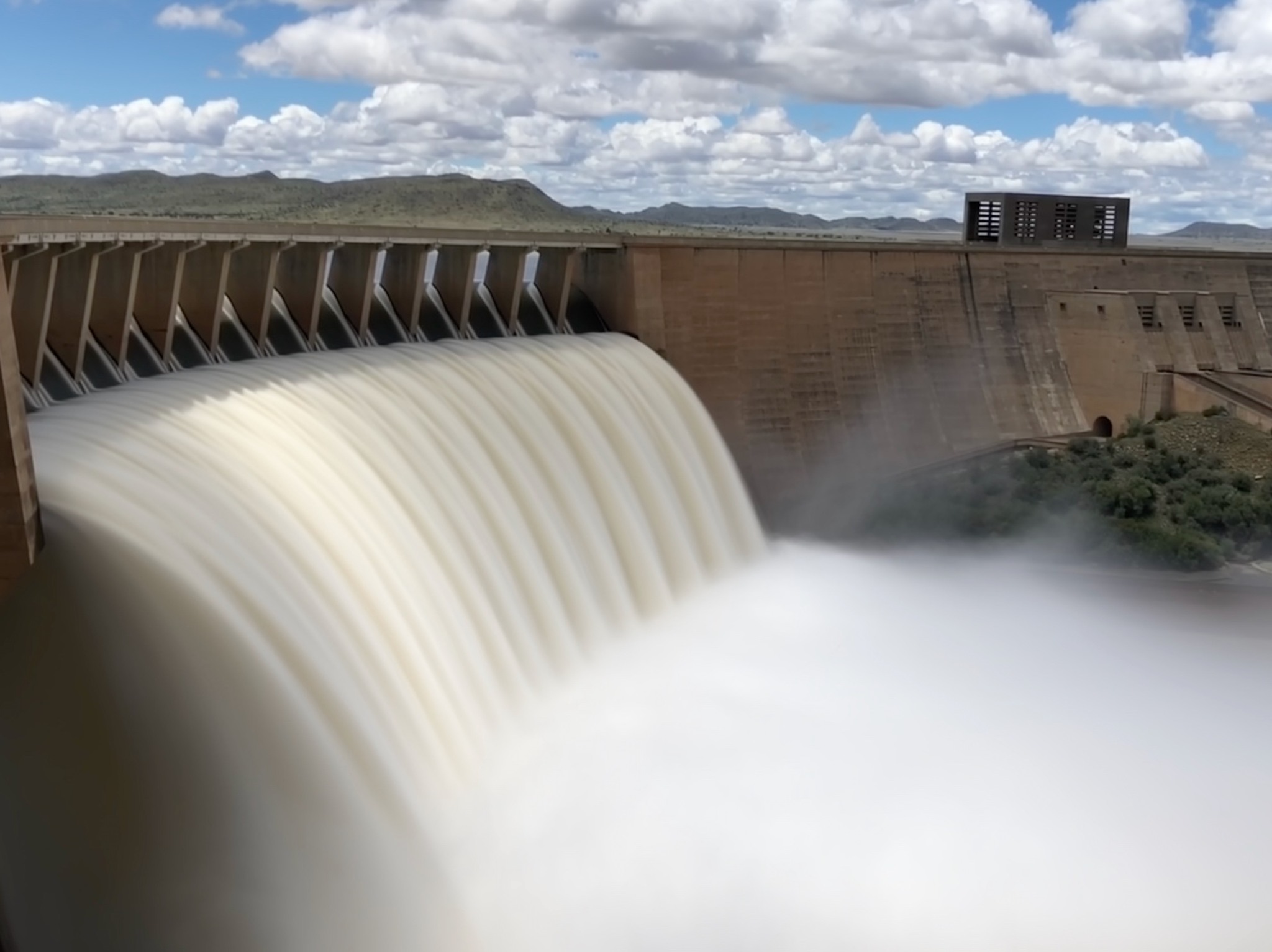
The majestic Gariep Dam is holding its own, currently bustling at (98,9%).
The level of the Tierpoort Dam, primarily used for agricultural irrigation, is also satisfactory, at 98,7%. This dam is a key component of the Riet River irrigation scheme, which is a significant agricultural project in South Africa.
Given the healthy state of these essential 19 storage dams of the province, it is envisaged they will sustain the supply through the spring and summer – depending on usage by consumers and preservation methods the different municipalities in the Free State are employing.
Several municipalities in the province are financially indebted to water boards, owing to their dismal failure to service their bulk supply accounts. This neglect has resulted in reduction in bulk supply by the affected water entities, attempting to recover millions due to them by municipalities.