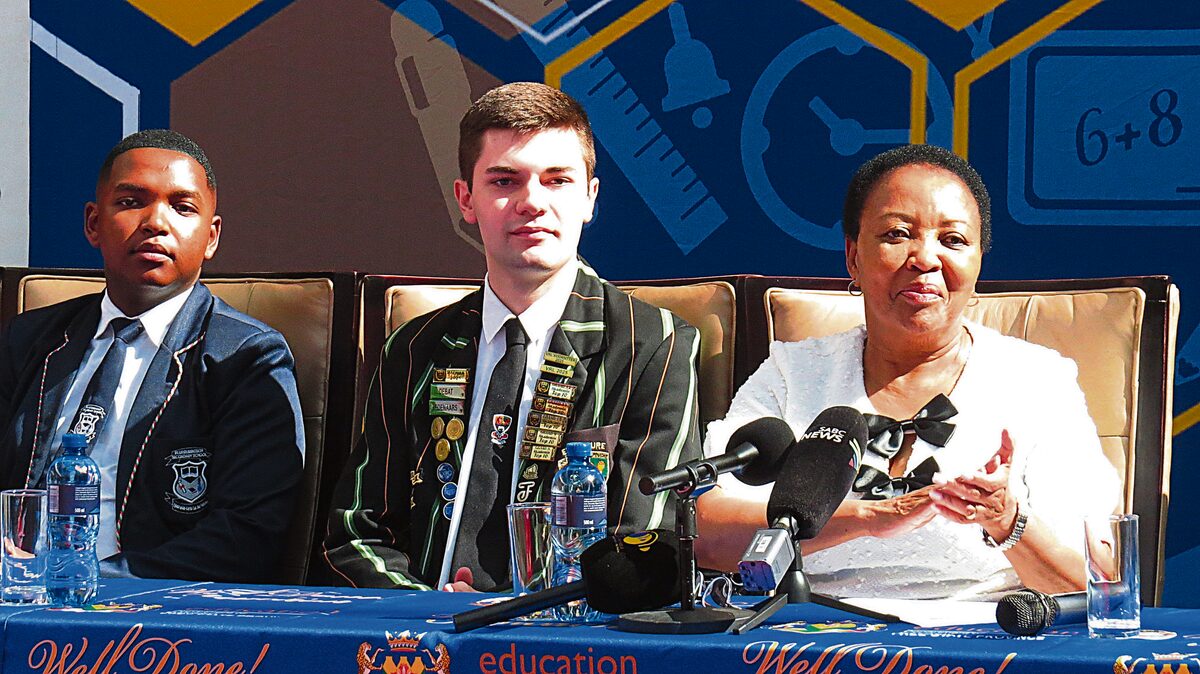
BLOEMFONTEIN – Dr Julia Maboya, Free State MEC for Education, has stressed that the province’s matric class of 2025’s pass rate of 89,3% underscores the quality education provided. She emphasised this fact while addressing the audience at the provincial Well-Done Function for the Matric Class of 2025 held at the Bloemfontein campus of the Central University of Technology (CUT), Free State, on Friday 16 January.
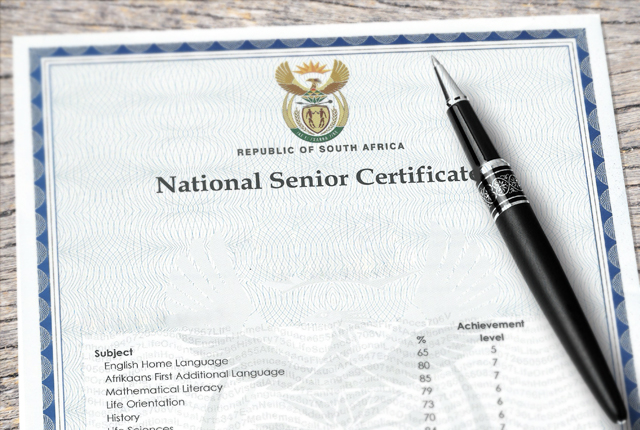
A total of 38 205 learners in Free State wrote the 2025 National Senior Certificate (NSC) final examination. The overall pass rate of 89,3% translates to 34 129 candidates who passed.
Beaming with pride, Maboya indicated that the province was not overly concerned with the slight decline in pass rate, noting that it had secured second place behind KwaZulu-Natal, which achieved first position with 90,6%. The Free State’s pass rate reflected a marginal decline of 1.67 percentage points from the 91% achieved in 2024.
“The quality of outcomes is reflected by 16 728 learners who obtained bachelor passes (43,8%), while 11 926 obtained diploma passes (31,2%), and 5 407 obtained higher certificate passes, underscoring that progression, when properly supported, strengthens rather than compromises system performance,” said Maboya.
“Out of a total of 359 schools, 115 schools performed at 95% and above. This includes 58 township schools. In 2025, a total of 46 schools managed to achieve 100%, of which 14 are township schools.”
Maboya explained that the Free State’s marginal decline did not reflect a collapse in the quality of results and teaching.
The decline in the Free State is neither a collapse nor anything new; it is a fluctuation within a system that has demonstrated resilience over a decade of sustained excellence.
Dr Julia Maboya
“For instance, in 2018, the Free State shifted to second position with a variance of approximately 3%, and again in 2020 with a marginal difference of 3,3%. On both occasions, we recalibrated and returned stronger. This demonstrated a system characterised by resilience, coherence, and corrective leadership, enabling the province to rebound decisively.”
Furthermore, Maboya based the province’s quality education on learner performance, demonstrated by learners who achieve at a national level.
Bokang Vincent Mokubung of the Bluegumbosch Secondary School in Phuthaditjhaba (Qwaqwa) is the provincial Best Overall Achiever in Mathematics and Physical Sciences.
Johannes Deysel of Hoërskool Jim Fouché in Bloemfontein is the provincial Overall Top Achiever, excelling in Mathematics.
“These results indicate that the Free State is on track to achieve both quality outcomes and equity,” said Maboya.
She emphasised the significance of celebrating the achievements of the 2025 matric generation.
Maboya revealed that this cohort represented the largest number of learners who passed and thrived despite the devastating global Covid-19 pandemic.
With a mere total of 359 secondary schools – the second lowest nationally – the Free State continues to sustain impressive performance. The province has obtained first position seven times in the last ten years, including four consecutive years from 2021 to 2024. The years are as follows: 2019 (88,4%), 2020 (85,1%), 2021 (85,7%), 2022 (88,5%), 2023 (89,0%) and 2024 (91,0%).
The number of secondary schools per province is as follows: KwaZulu-Natal (1 764), Limpopo (1 278), Eastern Cape (964), Gauteng (938), Mpumalanga (583), Western Cape (469), North West (449) and the Northern Cape (146).