

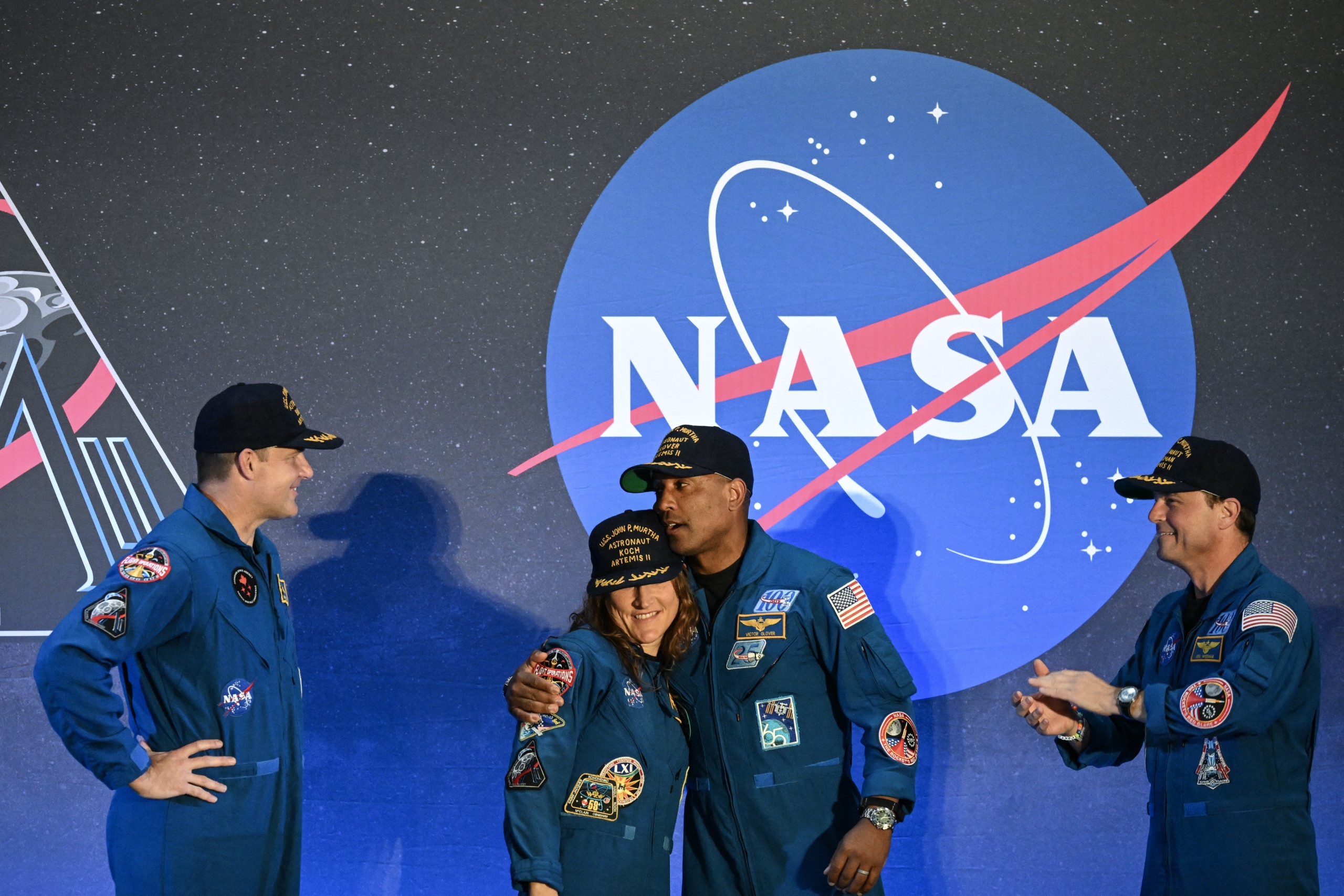
HOUSTON, Texas – Four astronauts safely returned to Earth on Friday after completing the first crewed lunar flyby in more than 50 years, splashing down off the California coast without incident.
The Nasa spacecraft carried three Americans and one Canadian: mission commander Reid Wiseman, Christina Koch, Victor Glover and Jeremy Hansen.
Following a brief communications blackout during re-entry, the astronauts made contact with mission control in Houston. After landing, Wiseman confirmed all crew members were stable and in good condition. Helicopters transported them to a recovery ship near San Diego, where all four walked unassisted.
The spacecraft reached maximum speeds more than 30 times the speed of sound during re-entry, facing temperatures approximately half as hot as the surface of the Sun. This was a critical test of the heat shield, which experienced complications during an earlier uncrewed mission. Engineers had adjusted the return trajectory to address these concerns.
“If you didn’t have anxiety bringing this spacecraft home, you probably didn’t have a pulse,” said flight director Rick Henfling. However, the Artemis II re-entry proceeded smoothly. The Orion capsule will now undergo detailed examination to assess its performance.
The mission lasted nine days, one hour, 31 minutes and 35 seconds, beginning with a launch from Florida on 1 April. The astronauts travelled further from Earth than any humans before, reaching 406 771 kilometres.
During their journey around the Moon, the crew captured thousands of photographs. They also witnessed a solar eclipse and meteorite strikes on the lunar surface.
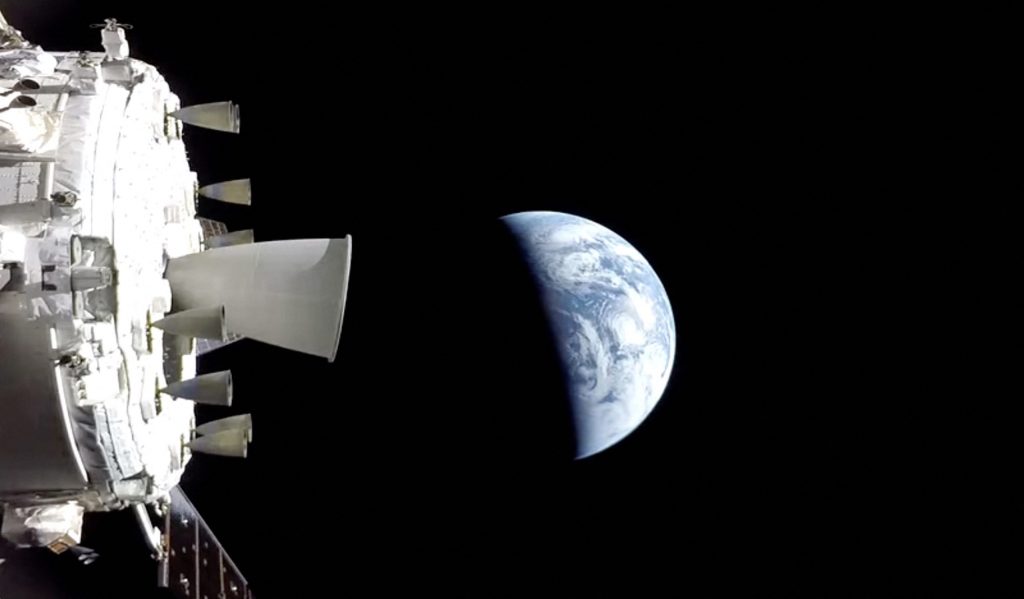
The Artemis II astronauts were preparing for a high-stakes re-entry and splashdown, the final and perhaps most risky step of their historic 10-day journey around the Moon. PHOTO: AFP/ NASA
Calls for unity
At a news conference on Saturday, the four astronauts shared their experiences and called for global unity after witnessing Earth’s isolation in space.
Koch urged people on Earth to recognise their shared humanity.
“What struck me wasn’t necessarily just Earth, it was all the blackness around it. Earth was just this lifeboat hanging undisturbed in the universe,” said Koch.
“There’s one new thing I know and that is: Planet Earth – you are a crew.”
Hansen encouraged supporters of the Artemis mission to see themselves reflected in the crew.
“I would suggest to you that when you look up here, you’re not looking at us. We are a mirror reflecting you,” Hansen said.
“And if you like what you see, then just look a little deeper. This is you.”
The mission achieved several firsts: Glover became the first person of colour to fly around the Moon, Koch the first woman, and Hansen the first non-American.
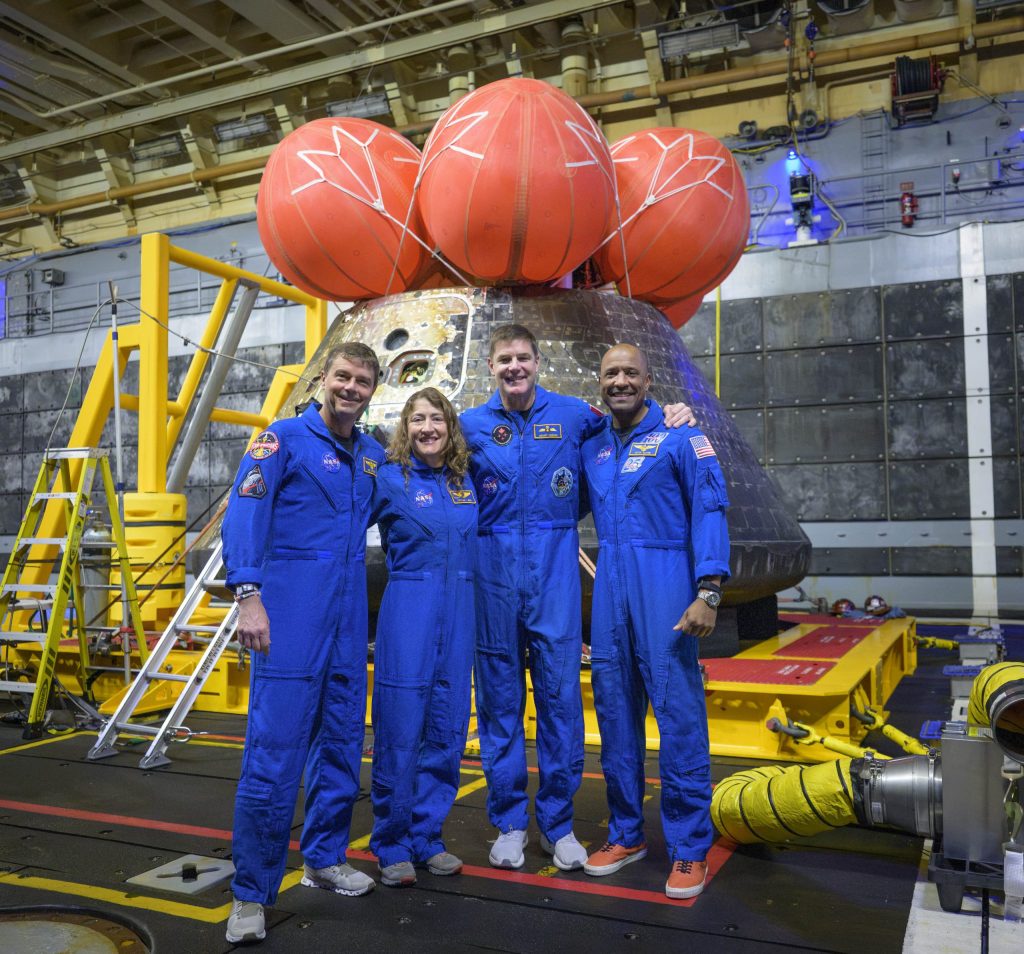
“Artemis II will always be remembered. It was the moment we all saw the moon again, where childhood dreams became missions. You helped the world start believing again, and this is something no one’s ever going to forget,” said Nasa administrator Jared Isaacman, who described the voyage as “a perfect mission”.
US President Donald Trump praised the astronauts and looked ahead to future missions, writing “Next step, Mars!” on social media.
Derek Buzasi, an astronomer at the University of Chicago, called the mission “an almost flawless success” and expressed renewed confidence in the Artemis programme.
Future missions
Artemis II was the inaugural crewed mission of Nasa’s programme to establish a sustained presence on the Moon, including eventual construction of a base for further exploration to Mars. The agency hopes to land astronauts on the lunar surface by 2028, though experts question whether the lunar landers being developed by SpaceX and Blue Origin will be ready.
China is pursuing its own lunar programme, targeting 2030 to put astronauts on the Moon.
Clayton Swope, a space policy expert at the Centre for Strategic and International Studies, said the mission demonstrates that “when America keeps its eye on the prize, it can still do very great things.”


You must be logged in to post a comment.