

The Special Tribunal has ordered the former architect and principal agent of the controversial Nkandla security upgrades project to repay R147.27 million to the National Treasury.
Minenhle Makhanya was found to have acted unlawfully in his role overseeing the security improvements at former president Jacob Zuma’s private residence in KwaZulu-Natal, contributing to massive financial losses suffered by the National Department of Public Works and Infrastructure.
The judgment, handed down on Wednesday, follows an investigation by the Special Investigating Unit (SIU) into allegations that procurement for the project was not conducted in a fair, equitable, transparent or cost-effective manner.
Project costs ballooned from R27-million to R216-million
After Zuma’s election as president, he became entitled to state-funded security and protection for himself, his family and his private residence. Security assessments by the South African Police Service and the South African National Defence Force identified necessary measures to secure the property.
The Department of Public Works and Infrastructure initially estimated the project at R27.89 million, with funding approved through its Planned Maintenance Budget Committee in August 2009.
However, the tribunal found that Makhanya was appointed as principal agent without a competitive bidding or open tender process. There was no emergency or other lawful justification for bypassing procurement requirements, and Makhanya was not registered as a supplier with the department at the time.
The project subsequently expanded well beyond the security measures identified by the security agencies, with costs increasing to R216.01 million.
Non-security upgrades worth R68-million
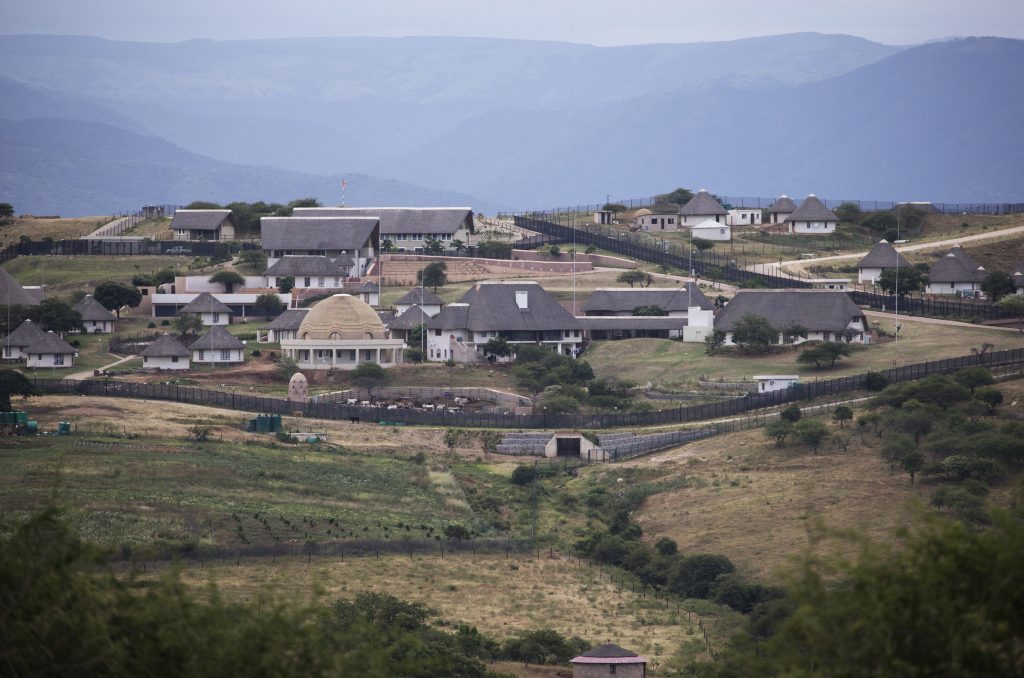
Among the additional works authorised were tunnels with an exit, three lifts, 20 additional accommodation units for police and defence force members, a laundry, visitors’ lounge, basement parking for the clinic, VIP parking, a fire pool, the relocation of 4.5 households, internal roads, air-conditioning and extensive landscaping.
The SIU said these non-security-related structures and works amounted to R68.5 million.
The tribunal found that Makhanya authorised and certified payments for structures and services not required by the security assessments. He also failed to obtain the necessary written approvals for variations and over-designs.
Payments were certified at costs above market-related rates, and work that had either not been performed or had not been properly accounted for was approved for payment.
Architect ‘clearly did not act alone’
The SIU alleged that Makhanya authorised payments totalling R54.83 million to Moneymine Investments 310 CC and Bonelena Construction and Projects, contrary to contractual provisions requiring him to protect the department’s interests.
The tribunal found that Makhanya breached statutory, professional and contractual obligations arising from legislation governing the architectural profession, the applicable professional code of conduct, the department’s Manual for Architects and the Joint Building Contracts Committee agreement.
It rejected his argument that he had acted within his authority by implementing instructions and decisions from the police and defence force. The tribunal also dismissed arguments concerning prescription and the time-barring of the claims.
Judge K Pillay said it was regrettable that Makhanya was the only person against whom the SIU had launched proceedings, given that he “clearly did not act alone” in allowing the project’s costs to escalate.
However, the judge said Makhanya, as architect and principal agent, had a responsibility to ensure that the department did not incur fruitless and wasteful expenditure.
The tribunal declared invalid the contract concluded by or on behalf of the then department director-general for Makhanya’s appointment. Makhanya was also ordered to pay the costs of the legal proceedings, including the costs of two counsel.
The SIU said it accepted Makhanya’s submission relating to a R7.8 million reduction in the claim. The amount had been repaid by Zuma as a contribution towards non-security-related upgrades and will be deducted from the total amount Makhanya must repay.
The SIU said the judgment forms part of its broader efforts to recover public money lost through corruption and maladministration and to strengthen consequence management in the public sector.
Any evidence of criminal conduct uncovered during its investigation would be referred to the National Prosecuting Authority for possible further action, in accordance with the Special Investigating Units and Special Tribunals Act of 1996.
ALSO READ: Jacob Zuma ordered to repay nearly R29 million in legal fees


You must be logged in to post a comment.