

MOMBASA, Kenya – Fifteen countries have signed a landmark global declaration aimed at combating illegal and destructive fishing through enhanced data transparency, marking a significant shift in international efforts to protect ocean resources.
The Mombasa Declaration, unveiled on 17 June at the 11th Our Ocean Conference in the Kenyan port city, commits countries to improved collection and sharing of information on the movement, activity and ownership of fishing vessels.
The declaration marks a turning point for the global fishing industry, which has historically resisted transparency to disguise illicit activity or protect valuable hunting grounds from competitors.
The 15 signatory nations are Belgium, Cameroon, Chile, Dominican Republic, France (on behalf of its overseas territories), Gambia, Ghana, Guinea, Liberia, Panama, Papua New Guinea, Peru, Somalia, South Korea and the Republic of Congo.
The voluntary commitment pledge, adopted by a coalition of willing countries, represents a major step forward in tackling illegal, unreported and unregulated (IUU) fishing. Additional governments are expected to join the initiative before the next Our Ocean Conference in 2027.
Local fishermen bear the brunt of illegal trawling
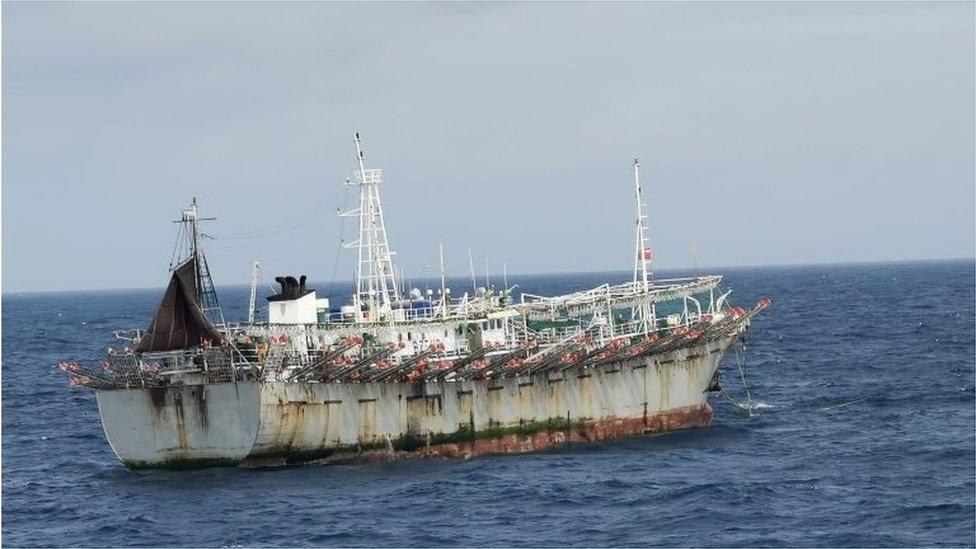
The issue of illegal fishing is existential for small-scale fishermen along Kenya’s coast, just kilometres from where the declaration was signed. Local fishermen in the coastal town of Kipini accuse large, foreign-crewed trawlers of destroying fish stocks and damaging the marine environment.
“This is making people here poor and dramatically changing the sea ocean bed which has depleted a lot of species in our area,” said Awadh Mbarak (53), secretary of a beach management unit in Kipini.
Twaha Yusuf, a retired fisherman from the same town, said he had not seen a dugong – the beloved manatee-like sea mammal – for 40 years, blaming the trawlers. “Maybe my son will not even see sea turtles in the future,” he said.
Locals accuse trawlers of illegally trespassing into shallow waters reserved for small, local boats. Without publicly available data, it is impossible to hold them to account.
“Small-scale fishers are unable to feed their families. They’re losing their livelihoods,” said Maisey Pigeon of the Coalition for Fisheries Transparency, a Washington-based non-governmental organisation. “A lack of transparency enables things like illegal, unreported and unregulated fishing, and also human rights and labour abuses on fishing vessels.”
New global map to track ‘dark fleet’ vessels
Tony Long, chief executive officer of charity Global Fishing Watch, said the fishing industry has resisted transparency for years. Many ships disguise their real owners, flying flags that have nothing to do with their true base of operations.
Global Fishing Watch launched a “world-first global map” during the conference, tracking every class of fishing vessel, including the so-called “dark fleet” that try to hide their location.
“Too much of today’s fishing remains invisible to those tasked with managing our ocean,” said Long, vowing the map would “transform scattered, fragmented data into actionable insights for policymakers”.
Long said many countries have come to see the long-term benefits of open data, especially since the UN’s Sustainable Fisheries Resolution in 2024, which has put “transparency at the forefront of every discussion”.
Declaration commits nations to vessel registry reforms
The Mombasa Declaration commits signatories to modernising vessel registries, better monitoring and sharing data with the UN Food and Agriculture Organization. It supports the 10 policy principles outlined in the Global Charter for Fisheries Transparency.
ALSO READ: Four Chinese fishing vessels intercepted in South African waters
The Our Ocean Conference, held on African soil for the first time, focused on six areas of action: sustainable blue economy investment, marine conservation, combating IUU fishing, climate-ocean action, sustainable finance and empowering youth leaders.
The declaration represents a critical step in protecting ocean resources and the livelihoods of millions of small-scale fishermen who depend on sustainable fish stocks for survival.
ALSO READ: Organised gangs strip protected reefs whilst understaffed department faces resource crisis

