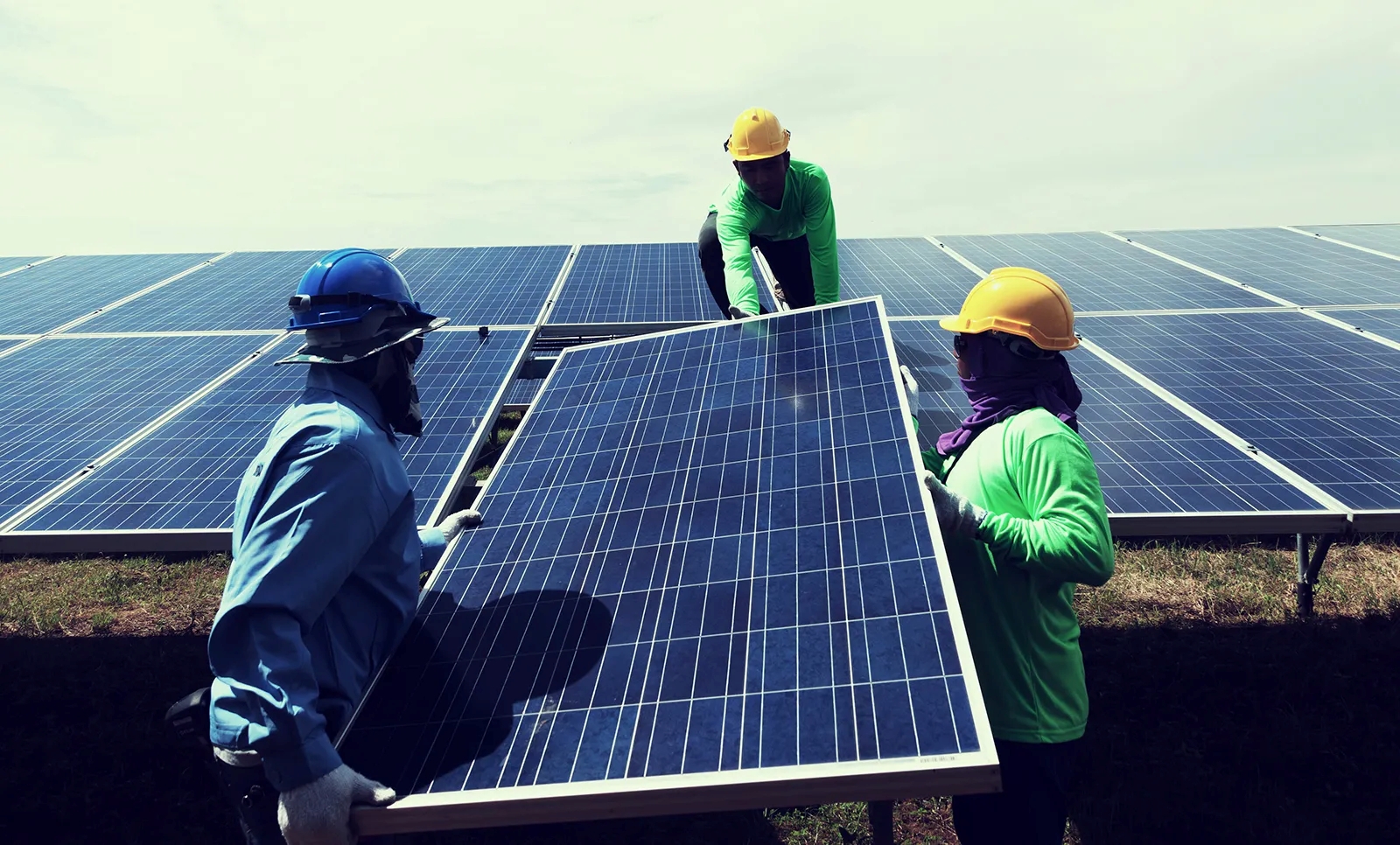
Solar panel owners in South Africa face a 30 September deadline to register their systems with Eskom, but advocacy groups warn that new draft regulations from the National Energy Regulator of South Africa could pave the way for additional charges on households that invested in alternative energy.
Eskom extended its fee waiver for solar panel registration from an initial 31 March deadline to 30 September, offering relief valued at up to R10 000 for urban customers and R36 000 for rural customers. The waiver covers registration and connection fees for small-scale embedded generation systems with a capacity of up to 50 kVA.
The power utility has confirmed it will not fine or disconnect customers who fail to register by the deadline, following intense pressure from civil society organisations. However, grid-connected systems under 100 kW must still be registered with the relevant electricity distributor under the Electricity Regulation Act.
Nersa proposes municipal registers
While Eskom appears to be retreating from its initial hard-line stance, Nersa published draft rules in July that would require municipalities and private electricity distributors to establish comprehensive registers of solar systems generating less than 100 kW in their areas of supply.
Deidré Steffens, adviser for local government affairs at AfriForum, said the draft rules could give municipalities a national regulatory mechanism through which they can compel solar owners to register their systems. AfriForum submitted formal comments to Nersa on 13 August.
“One of AfriForum’s principal objections concerns section 2A(2)(c) of the Electricity Regulation Act 4 of 2006, which states that the Act does not apply to generation facilities with capacities of no more than 100 kW. Nersa must therefore explain the legal basis on which it intends to prescribe registration requirements for precisely these installations,” Steffens said.
OUTA challenges legal authority
The Organisation Undoing Tax Abuse has consistently challenged Eskom’s attempts to mandate registration of behind-the-meter solar systems, arguing that the power utility lacks legal authority to impose fines on customers.
OUTA maintains that the Occupational Health and Safety Act already mandates electrical safety through a valid certificate of compliance, and that demanding additional registration with Eskom constitutes unnecessary administrative overreach.
The organisation has warned that complex, costly and shifting registration requirements discourage households from investing in solar energy. OUTA advises that homeowners who do not export power to the grid may choose to forgo registration, provided their installation has a valid certificate of compliance.
ALSO READ: Solar users should not register with Eskom or municipalities, says OUTA
Revenue concerns
AfriForum warned that municipalities could use comprehensive solar registers to introduce additional fixed charges, availability fees or solar-related levies as their revenue from electricity sales declines.
“Municipalities have historically depended heavily on electricity sales to fund their operations and subsidise other services. Years of loadshedding, Eskom’s deterioration and steep increases in the price of electricity have forced households, farmers and businesses to invest in solar generation. As these customers purchase less electricity, municipal revenue declines,” said Morné Mostert, manager for local government affairs at AfriForum.
He said a comprehensive register would tell municipalities exactly which customers have solar systems, where they are situated and what their generating capacity is.
“There is therefore a real risk that people who spent their own money protecting themselves against Eskom’s failures will be treated as a convenient source of replacement to municipal revenue,” Mostert said.
ALSO READ: Solar installations become essential for SA home sales as buyers demand energy independence