

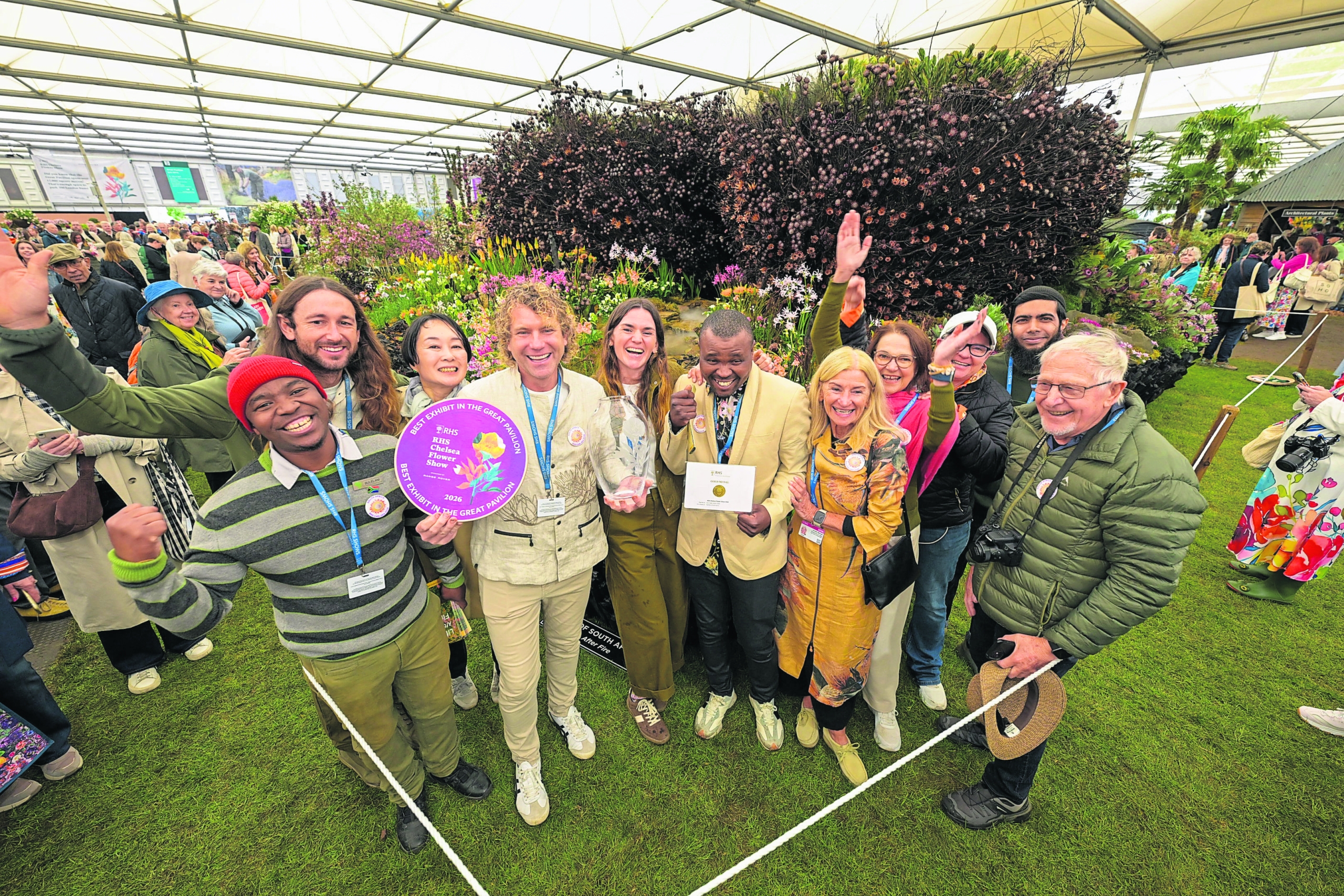
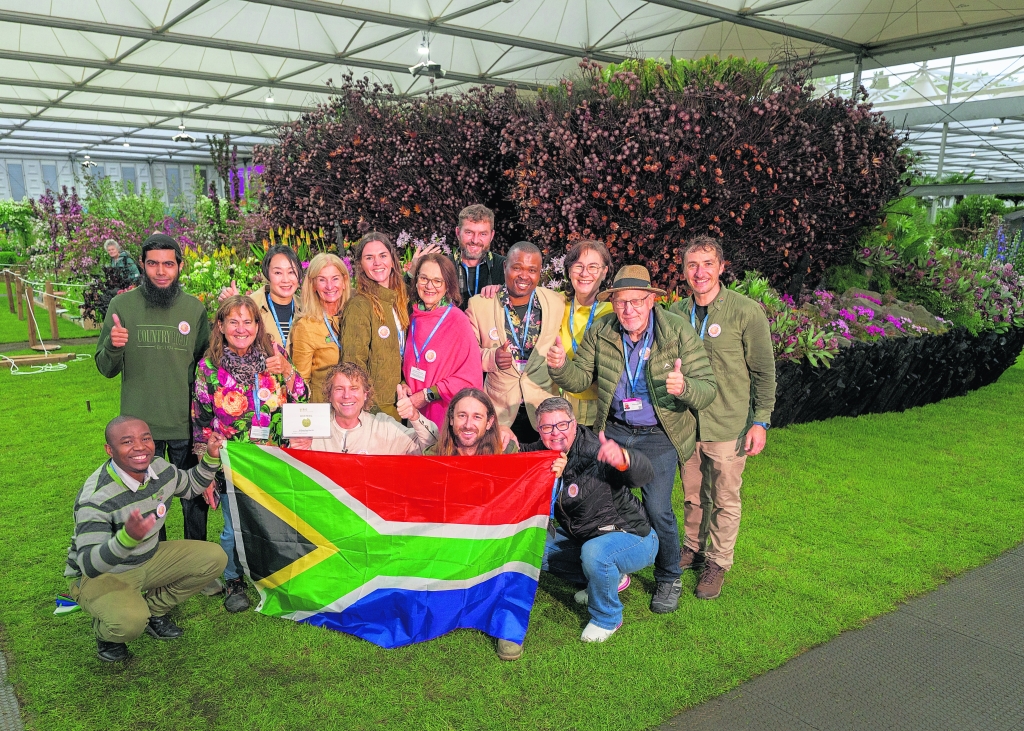
Franschhoek local, botanist and landscape designer extraordinaire Leon Kluge and the South African team have again won Gold and the Best Exhibit in the Great Pavillion award at the 2026 RHS Chelsea Flower Show in London on Tuesday 19 May.
This marks the third successive year that team South Africa has claimed gold in the category, a remarkable feat.
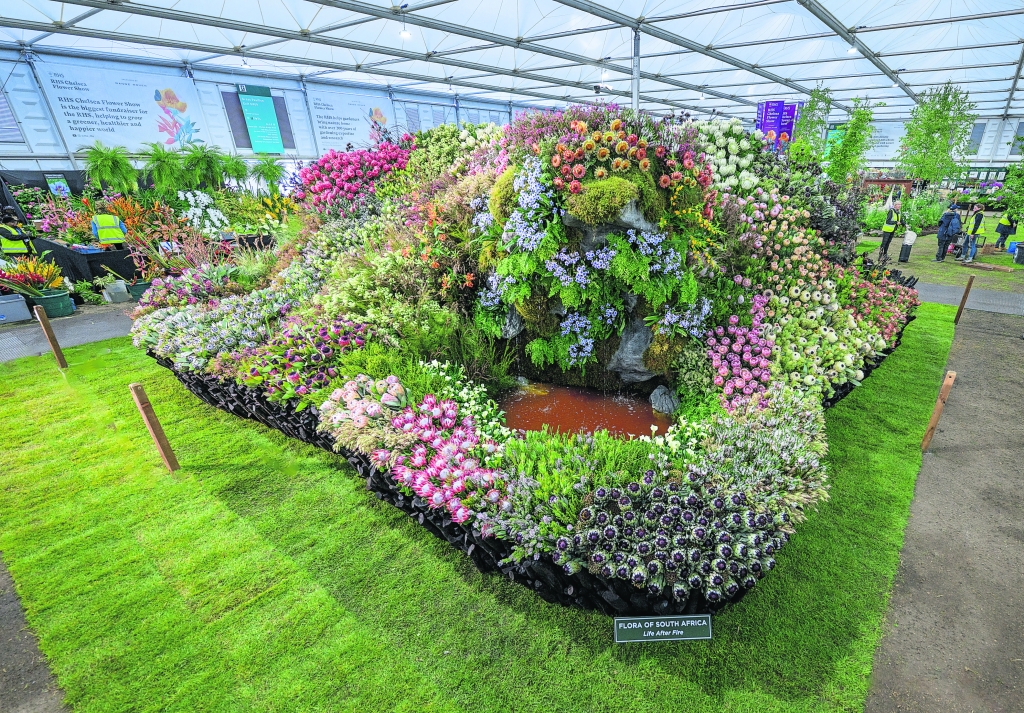
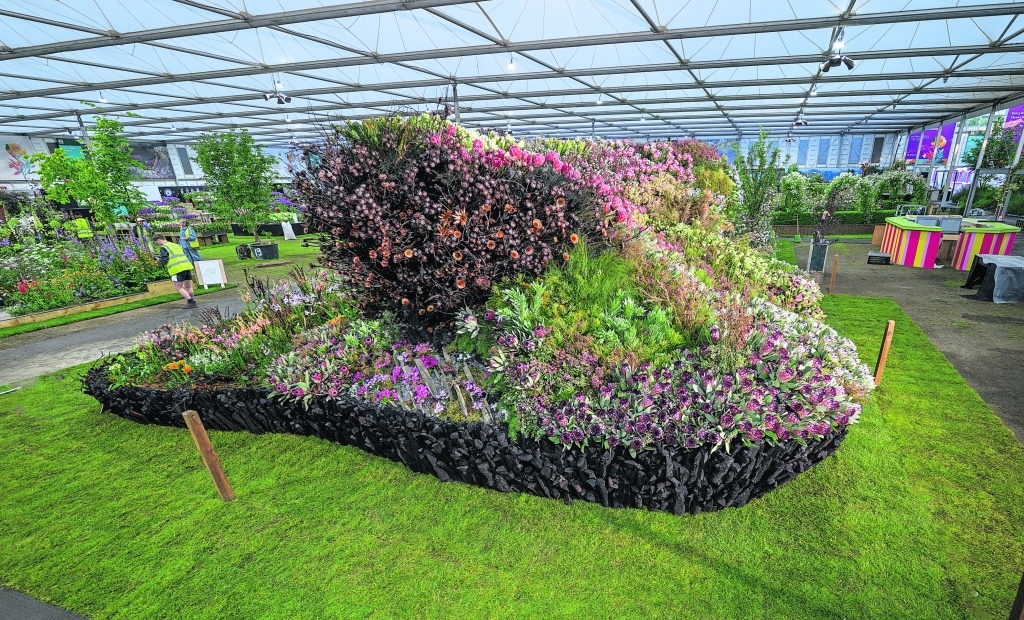
This year’s elaborate floral display, entitled Life After Fire, showcased the diversity of South African flowers that appear after wildfires in the Cape region. Up to 20 000 stems of Protea cut flowers as well as thousands of burnt Protea branches were arranged to create a post fire landscape where bulbs and orchids from all regions of SA were on display.
ALSO READ: Gold for local fynbos wonder in Chelsea
Flowers across SA
Artist Tristan Woudberg led a team to assemble a sculptural vortex of burnt material, including charred wood and burnt branches sourced from the remnants of the devastating fires which tore through the mountainous areas of the Western Cape last year.
Life After Fire is one of SA’s biggest displays at the RHS Chelsea Flower Show and features a babbling fonteintjie or natural stream complete with disa orchids and carnivorous sundew plants.
Other unique plants on display included the miniature star-like flowers of Rhodohypoxis, which hails from the high elevations of the Drakensberg.
The sponsors for this year’s display include The Rupert Nature Foundation, Hazendal Wine Estate, Grootbos Private Nature Reserve and Southern Sun.
Cape Flora SA, a non-profit established in 2005, also offered its support this year and remains steadfast in its commitment to the sustainable harvesting and growth of the fynbos industry.
The display promotes the demand for high-quality fynbos cut flowers in international markets, providing livelihoods for communities within the South African fynbos industry.
Last year’s winner
Last year’s winning display was a recreation of Kluge’s award winning work done for the 2025 Singapore Garden Festival. Kluge and Woudberg led a team of passionate volunteers, who painstakingly prepared and arranged up to 25 000 stems of fynbos.
That exhibit was inspired by SA’s two mighty oceans, the Indian and Atlantic, which have given rise to a multitude of habitats, from the fynbos of the Cape to the more subtropical greenery of KwaZulu-Natal.
A dramatic canyon dominated the design, which cut through a mountain of proteas to reveal multiple waterfalls and cliffs. The Storms River mouth, loca- ted on the border of the Western and Eastern Cape, inspired a ravine with its dramatic living cliff.

You must be logged in to post a comment.