

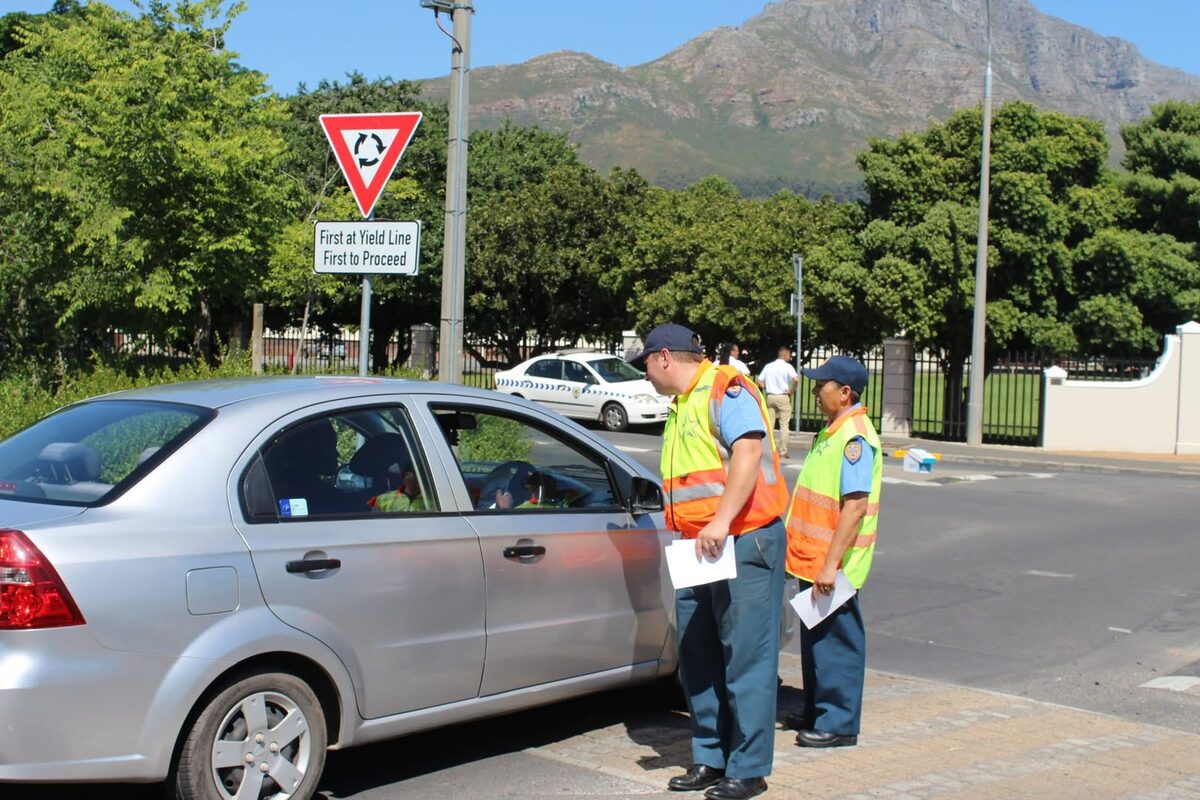
Stellenbosch Municipality has added its name to the list of municipalities opposing the implementation of the Administrative Adjudication of Road Traffic Offences (Aarto) system.
During the August council meeting on Tuesday 25 August, the municipal council voted in favour of declaring an official dispute against implementing the demerit system locally.
The second phase of the controversial system was rolled out in 62 municipalities last month.
These municipalities include metros, and the system is expected to be expanded to 151 municipalities during the third phase in the third quarter of this year.
ALSO READ: Aarto set to start mid-year

Insufficient capacity
Stellenbosch Municipality’s dispute will be brought under the Intergovernmental Relations Framework Act (IGRFA) 13 of 2005. Among the reasons for it not being able to implement the new system, the municipality cites a lack of infrastructure, including National Traffic Information System (NaTIS) equipment, vests and workstations for traffic centres.
According to the municipality, it does not possess sufficient NaTIS capacity to enable Aarto implementation.
“The indication that additional equipment cannot be supplied due to funding constraints, coupled with the position that municipal information technology systems may not be utilised for this purpose, leaves the municipality without lawful or practical alternatives. Manual processing cannot sustain the administrative demands of Aarto. Implementation under these conditions would therefore be untenable,” the municipality claims.
The municipality adds that a lack of standard operating procedures makes consistent application challenging, which in turn affects training programmes, compliance and accountability measures.
The Act’s prescription that infringement notices must be served via the South African Post Office is also a concern for the municipality.
Unresolved concerns
According to ANC councillor Jacobus Davids, Aarto appears to be “a devil no-one wants to be in bed with”.
Davids said Aarto had glaring shortcomings and he wanted to know how the Act would be implemented without the necessary regulations and resources. “My concern is just the municipality is going to declare a dispute – and we must declare a dispute – but we must also prepare ourselves against the onslaught that is going to come,” he added.
The municipality has raised concerns regarding the implementation of Aarto since 2021 and says its concerns remain unaddressed by the relevant spheres of government.
“The unresolved concerns implicate the municipality’s fiscal autonomy under the Intergovernmental Fiscal Relations Act 97 of 1997 (IGFRA), its constitutional status as a sphere of government and its capacity to fulfil its service delivery mandate. A formal IGRFA dispute declaration is accordingly the appropriate and necessary next step,” the municipality states in the relevant council item.
Under the new Aarto framework, traffic violations will be divided into two categories.
The Road Traffic Infringement Agency will handle infringements, such as speeding violations.
More severe offences, which include driving under the influence and reckless driving, will be processed through the country’s legal system.
Licence suspended
All drivers will start with zero points, regardless of their past driving record. Points are added to a licence based on the severity of each violation, with minor infractions attracting fewer points and serious offences carrying heavier penalties.
The critical threshold is 15 demerit points; once a driver exceeds this limit, their licence will be suspended. The suspension period increases with each point over the limit, with an additional point resulting in a three-month suspension.
A third suspension results in licence cancellation and motorists will be forced to retake both their learner’s and driver’s tests. Only after passing these tests and when the suspension period has passed, will motorists receive a new licence card.
GOOD councillor Marius van Stade stated his party’s support for the motion as the lack of clarity on the implementation of Aarto means the municipality’s service delivery would be compromised.
“This is no longer simply a matter of disagreement between different spheres of government. It affects the municipality’s finances, its ability to plan and deliver services, and its constitutional responsibility to govern effectively,” he said.
“[The dispute] is about protecting the interests of Stellenbosch residents and ensuring that the municipality has the resources and authority necessary to deliver services effectively. Co-operative governance must work both ways. Different spheres of government may have different responsibilities, but they must communicate.”
ALSO READ: AARTO implementation delayed again: New December 2025 launch date announced




You must be logged in to post a comment.