

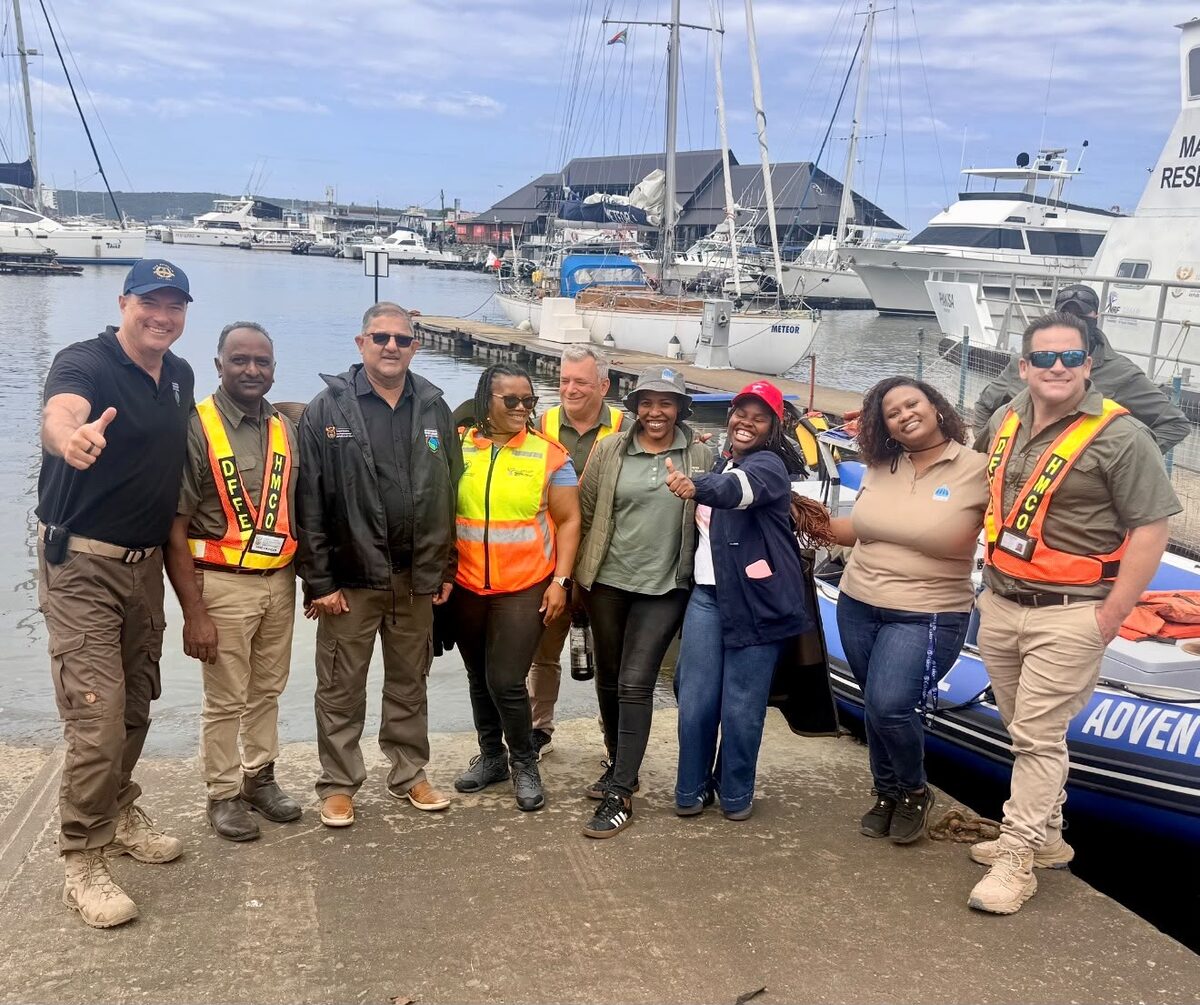
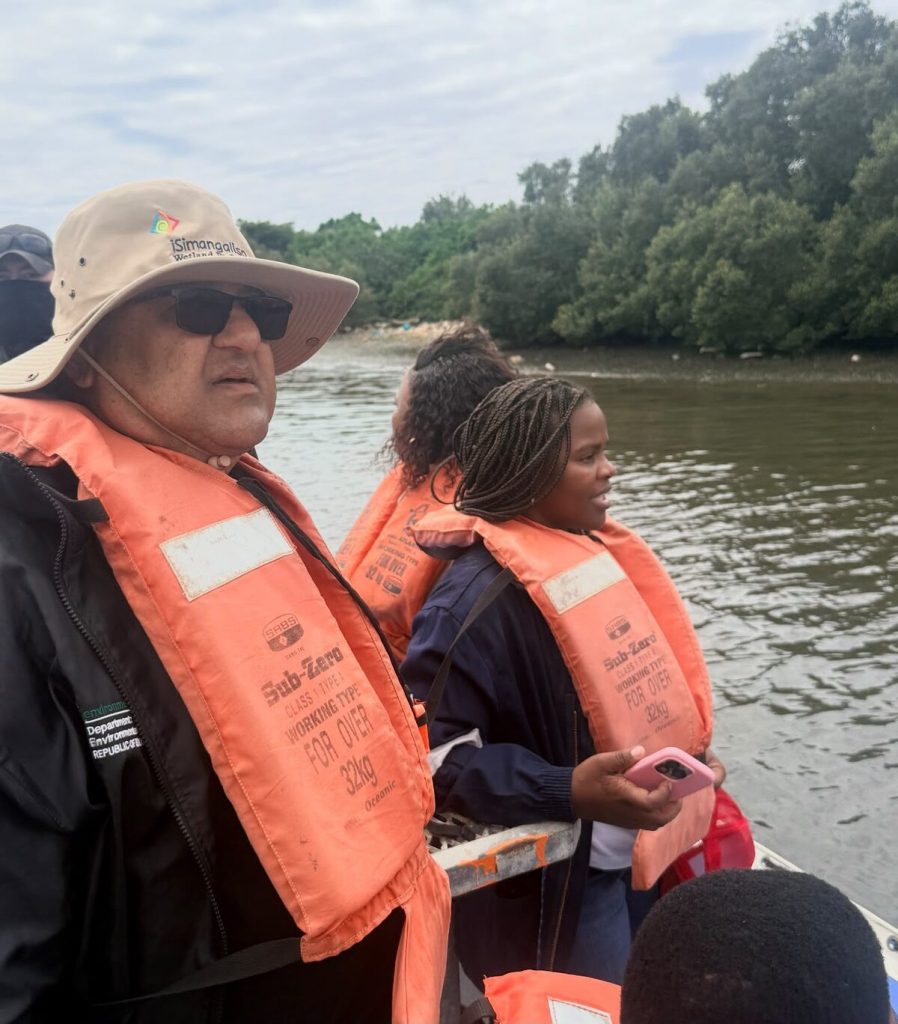
DURBAN – A multi-agency enforcement and clean-up operation is under way at one of South Africa’s last remaining mangrove forests, tucked inside the industrial heart of the Port of Durban. Deputy Minister of Forestry, Fisheries and the Environment, Narend Singh, together with officials from the DFFE Enforcement, the police, the Expanded Public Works Programme (EPWP), Transnet, the eThekwini Municipality, and members of the Coastal Marine Taskforce, conducted a site assessment at the Bayhead Mangrove Heritage Site in the Port of Durban.
The visit follows enforcement operations last weekend targeting illegal gillnetting and associated poaching activities that continue to threaten fish stocks, estuarine ecosystems, and the integrity of protected mangrove habitats.
A rare ecosystem under siege
The Bayhead Natural Heritage Site is a 20-hectare nature reserve protecting mangrove forest and coastal grassland within the industrial area of Durban Bay. It is a critically important remnant of what was once the largest mangrove swamp in KwaZulu-Natal, originally covering approximately 440 hectares. Today only about 15 hectares of mangrove forest remain, supporting up to 120 species of aquatic birds, various crabs, and mudskippers. Mangrove forest in South Africa is classified as “Critically Endangered”.
Enforcement and restoration hand in hand
The assessment focused on deploying EPWP teams, in partnership with Transnet, to clean up plastics and other pollution that accumulate in the remnant mangrove forest, intertidal areas, and surrounding zones. The initiative forms part of broader efforts to combat marine pollution, strengthen compliance under the Marine Living Resources Act (Act 18 of 1998), and support job-creating environmental programmes in coastal communities.
ALSO READ: Durban port crisis sparks calls for urgent parliament debate
Deputy Minister Singh emphasised the need for a dual approach combining firm enforcement against illegal harvesting with practical restoration and pollution-control measures. “Protecting our marine and coastal resources requires both decisive action against those who break the law and hands-on efforts to restore the habitats that support legitimate livelihoods and biodiversity,” he said. “The collaboration between national enforcement agencies, local government, Transnet, and EPWP teams shows how we can move from operations to tangible environmental recovery.”
South Africa’s water pollution crisis
The clean-up comes against the backdrop of a deepening water pollution crisis. The National State of Water Report 2024 found that all 75 monitored national hotspot sites showed significant microbial contamination, with approximately 70% unsafe for recreational activities. The Green Drop 2025 audit confirmed wastewater treatment works operating at only 57% of national design capacity.
Estuaries are South Africa’s most threatened ecosystems: the 2025 National Biodiversity Assessment found that 32% are under severe pollution pressure, with an estimated 655 000 cubic metres of wastewater discharged into estuaries daily.
ALSO READ: SARS, Hawks seize cocaine in back-to-back Durban port busts
Plastic pollution, including microplastics, remains an increasing threat, with land-based sources the primary driver. Government initiatives in 2025 expanded food-grade PET recycling capacity, targeting 60 000 tons nationally.
Further details on the clean-up outcomes and ongoing monitoring will be communicated as the work progresses.



You must be logged in to post a comment.