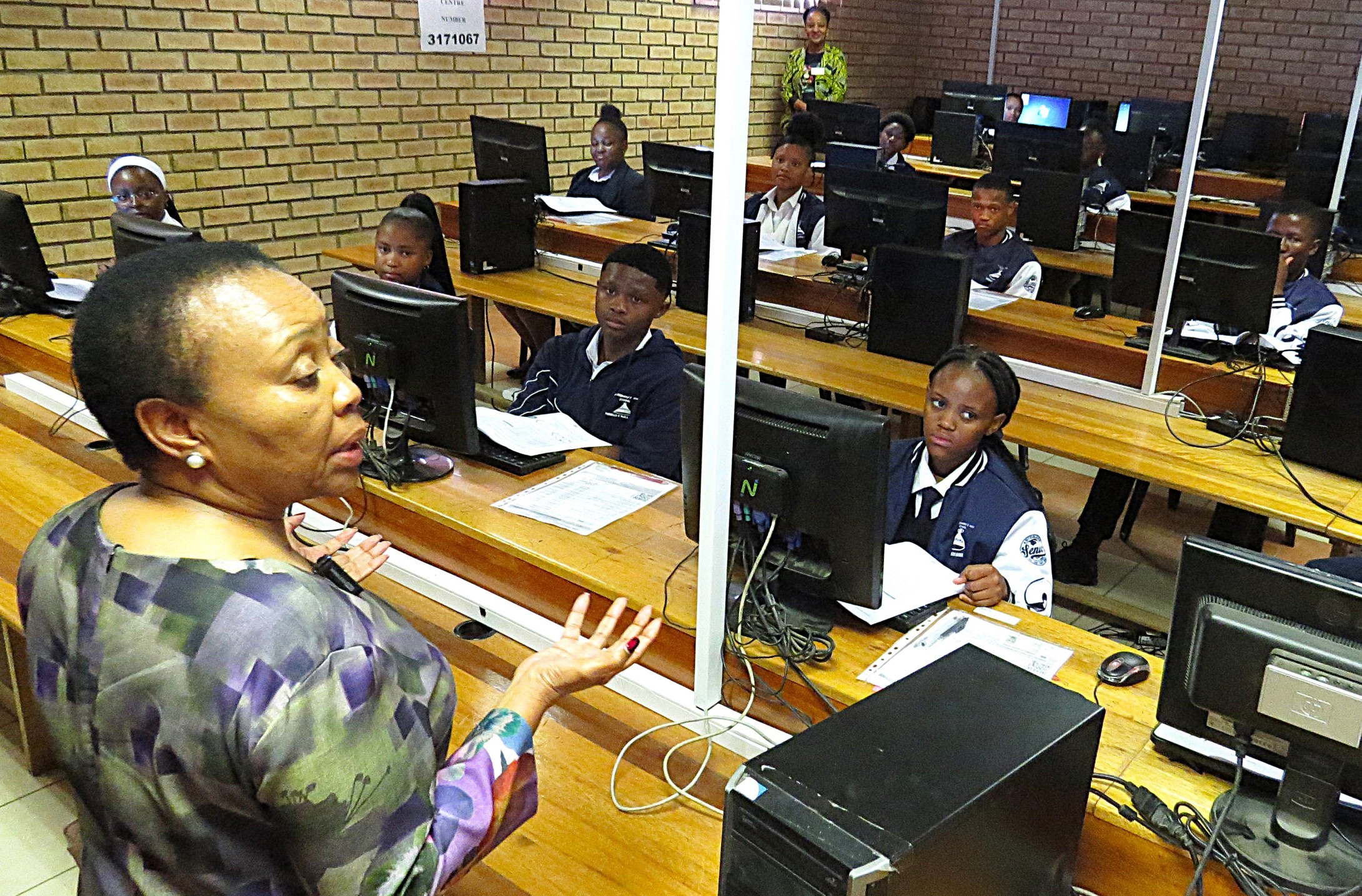
The Department of Basic Education has declared itself ready for the 2026 National Senior Certificate (NSC) examinations, with a record 962 832 candidates registered to write the October/November exams.
Of the registered candidates, 815 051 are full-time learners, an increase of 48 508 from last year, while 147 781 are part-time candidates, including those seeking to improve their previous results.
Basic Education Minister Siviwe Gwarube announced the department’s state of readiness in Pretoria on Sunday, describing the Class of 2026 as the largest full-time cohort to sit the NSC examinations to date.
“All candidates have been provided with all the support they would need to perform, and I am happy to declare that learners are ready for the 2026 NSC Exams,” Gwarube said.
Approximately 7 100 examination centres have been established across the country to accommodate candidates, with the department implementing additional monitoring and security measures to safeguard the examination process.
Gwarube said the department had audited the examination centre network and adopted a risk-based monitoring approach to ensure that supervision and resources were directed where they were most needed.
The setting, moderation and quality assurance of examination materials have been completed, with all question papers and examination instruments reviewed by the department and approved by Umalusi, the quality assurance body responsible for general and further education and training in South Africa.
Security measures have also been strengthened throughout the production and distribution chain, including the vetting of examination officials and collaboration with national and provincial law enforcement structures.
More than 51 000 educators recruited to mark scripts
The department has established 189 marking centres and recruited 51 104 qualified and experienced educators to mark examination scripts.
A standardised national marking approach, strict quality-control procedures and strengthened moderation of school-based assessments will be used to protect the credibility of the NSC qualification.
The department has also put contingency plans in place to address operational challenges, including severe weather and community disruptions that could affect the examinations.
Learner support programmes reach thousands
The department’s 2026 Learner Support Programme has been rolled out across all 75 education districts, reaching 159 180 learners at 1 262 centres.
The programme provides additional learning and revision opportunities, particularly for progressed learners, those requiring extra support and schools experiencing performance challenges.
Learners have also received revision guides, previous examination papers, online learning materials, digital notes and mock examinations to help them prepare.
Meanwhile, the Second Chance Matric Programme continues to support part-time candidates through after-hours and weekend classes at 41 centres. Learning materials have been distributed to 84 centres, while 15 provincial learner workshops have also been held.
Candidates can access additional support through class monitoring, free online study resources and educational broadcasts on radio and television.
Gwarube acknowledged that the Class of 2026 experienced disruptions to schooling during the COVID-19 pandemic, particularly during the transition from the Intermediate Phase to the Senior Phase.
She said the department had responded by strengthening curriculum coverage, using assessment information to identify learning gaps and providing additional revision opportunities.
The minister also urged parents and guardians to create a supportive home environment during the final preparation period.
“So, we appeal to parents, not to burden learners with a load of household chores nor expect them to run family errands. Please give them the space and support they need to perform at their very best in these exams,” Gwarube said.
Department warns against examination irregularities
Gwarube said the department had adopted a zero-tolerance approach to examination irregularities and reinforced candidate and parent pledge agreements to promote integrity.
A 24-hour examination hotline is available for members of the public to report suspicious activity.
The minister also appealed to communities not to disrupt examinations to express dissatisfaction with service delivery or political and socioeconomic issues.
“I appeal to communities not to prejudice the Matric Class of 2026 by disrupting the NSC Exams for service delivery, political, or socio-economic dissatisfaction. The NSC candidates cannot resolve societal problems; it is Ministers, as elected representatives, who must account. Please do not go to schools; come to our offices in Pretoria and in parliament,” Gwarube said.
She urged communities to avoid any action that could disrupt the examinations, stressing that ensuring candidates could write in a safe and secure environment was a shared responsibility.
Having considered preparations reported by all nine provincial education departments, Gwarube formally declared the department and the Class of 2026 ready for the examinations.
ALSO READ: Ramaphosa urges matrics to stay focused as exams loom