
The National Sea Rescue Institute (NSRI), which had humble beginnings in 1967, has grown into an organisation that can compete with some of the best of its kind in the world.
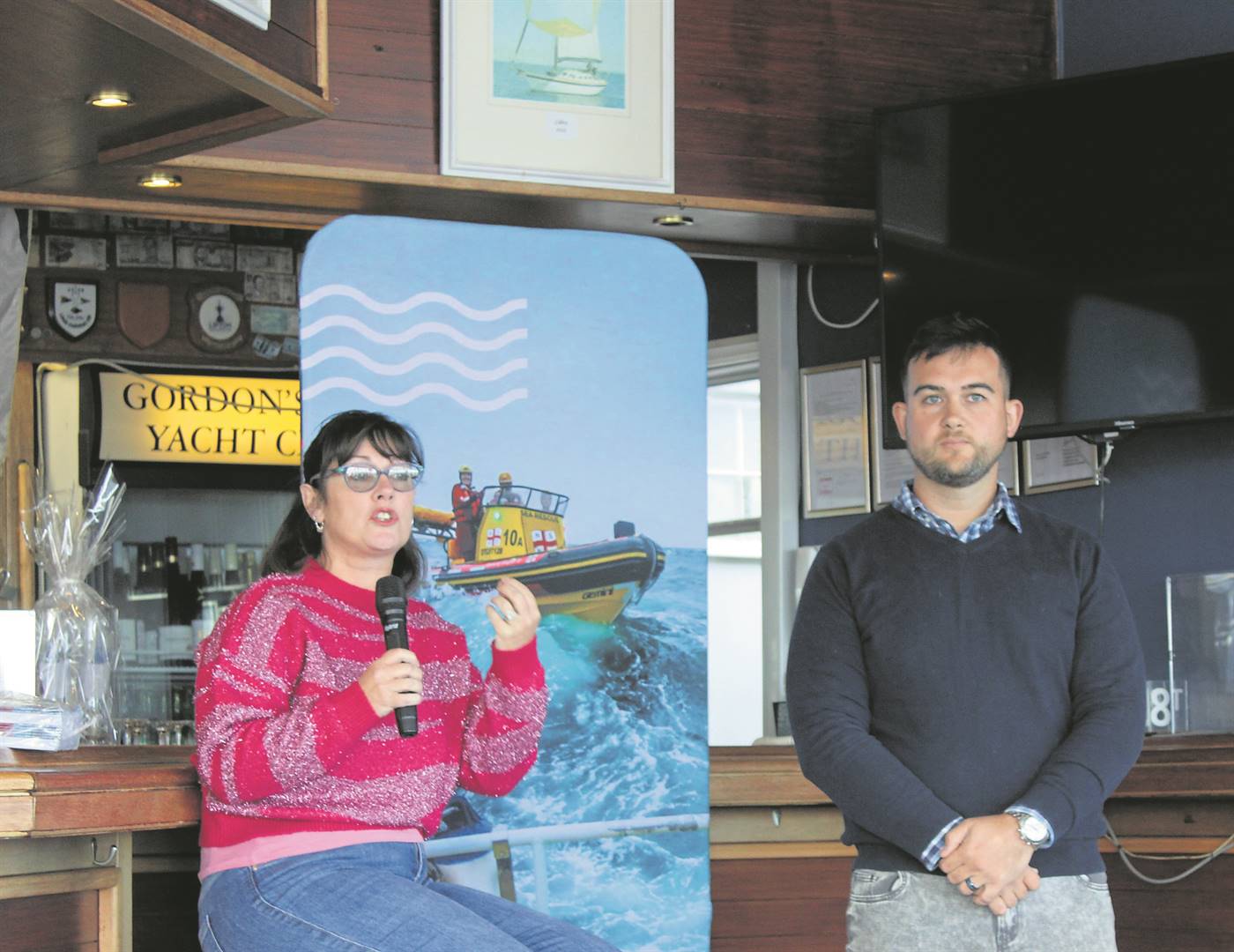
This past Saturday (13 May) NSRI spokesperson and veteran Craig Lambinon gave a talk at Gordon’s Bay Yacht Club, where he spoke about the institute’s humble beginnings and shared stories of tragedies and rescue attempts that it formed part of.
“I have been with the NSRI for 30 years,” he said. “It has been a ride. I aimed in the direction of NSRI in 1993, but soon realised I got terribly seasick. So I became a helicopter rescue swimmer. Now I am its spokesperson and don’t have to set a foot on a boat!”
Lambinon mentioned NSRI is a success story the country can be proud of.
“Without the support of the public we are nothing,” he said.
NSRI is almost entirely funded by donations as it received 1,8% of its total funds from the South African government.
“Our volunteers are the most important part of this operation. We currently have 1 500 volunteers who are based across 52 NSRI stations in the country.”
In March, NSRI volunteers saved the lives of Johann and Helen Brummer in Gordon’s Bay when they were out in a kayak and winds had come up and capsized the vessel.
“On 22 March I was going to the post office to get my fishing licence renewed,” Johann related. “It was a perfect day. I am very picky about the days I go out because I have enormous respect for the ocean. When we purchased the kayak we purchased life jackets with the vessel.”
On this day his wife Helen joined him, and when they paddled just past the harbour wall they decided to go back.
“The wind started to pick up,” Johann related. “Once we turned around we weren’t making any progress. The ocean went from flat, almost glass like, to rip currents and high stormy waves. They were coming towards us when we were actually trying to head to the shore. After 20 minutes the wind capsized our kayak. I tried to lift the kayak up but could not.”
He kept on encouraging his wife while holding onto her. “We had our life jackets on. My wife asked me if we were going to die. We looked up and NSRI was there to rescue us. My wife then had entered the early stages of hypothermia.”
A few days later the kayak was spotted at Seal Island.
Lambinon also spoke on the dangers of the ocean and the power of the currents.
“We figured out that if someone went missing in Kogel Bay then the rip currents take their bodies out to the sea. After a couple of days the body starts bloating and begins to float. This is when the Agulhas currents take them to the Atlantic seaside of Cape Point.”
In recent years the NSRI has taken over dealing with families experiencing sea tragedy.
“Those conversations last months, even years,” Lambinon pointed out. “Yearly we speak to a man who lost his son to the sea about 28 years ago. He still phones us on the annual anniversary of when his son went missing and always asks if we have found his son yet. It’s more of a jolly conversation nowadays, but we never close the books when someone goes missing.”
He said whenever someone goes missing at sea their case is never closed.
“It is only seven years after a person goes missing at sea that a judge will put a stamp on that person’s death certificate. But from our perspective a case is never closed.”
One instance in which the case is still open is of a girl from abroad who went missing in Sedgefield.
“She booked into a backpackers with friends,” Lambinon related. “It was an overcast day and they decided to go for a walk along the beach. When they got back at the backpackers they ordered hot chocolate from the owner of the establishment and the girl went out for a stroll along the beach. She was about 50 metres from the backpackers when she went missing. The friends searched for her in vain. After 40 minutes they contacted NSRI who searched everywhere. Knysna police and emergency services also started searching. At 04:00 the following morning they continued searching. It included a sea search. Everything was taken into consideration. But she just went missing. The family’s life has been ruined because no-one ever knew what had happened to her.”
He urged the public to call NSRI immediately when they notice someone drowning or see a boat has capsized.