


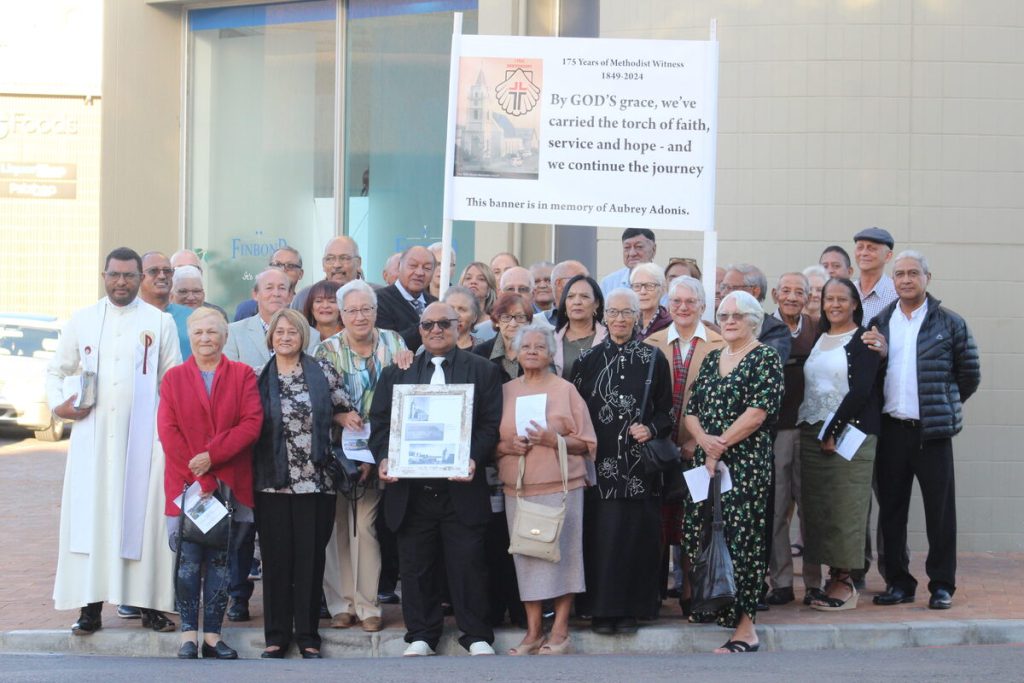
A weekend of celebrations marked the 175th anniversary of Rusthof Methodist church in Strand.
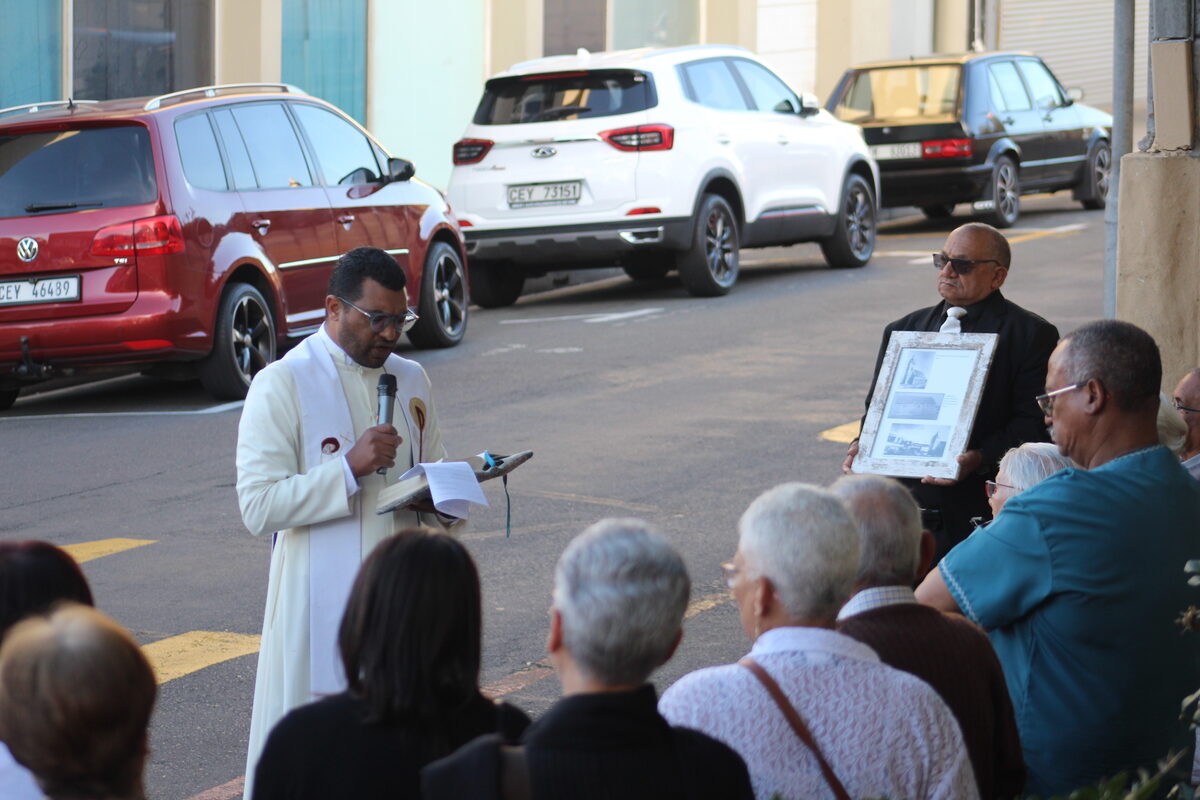
Celebrations began with a youth-led games evening on Friday (25 April) and a fun-filled morning bazaar at the Third Street premises on Saturday (26 April), culminating in a thanksgiving service at the church’s original site followed by a special commemoration service on Sunday (27 April). The latter was attended by special guests including District Bishop Reverend Yvette Moses and former ministers like reverends Mike Brown, William Simons and Pete Grassouw.
Former minister Reverend Emmanuel Gabriel’s historical research highlighted the significant 175 years of Methodist witness in Strand.
Highlighting some of the pivotal moments that shaped the early years of the congregation, William Botha, pastoral assistant and chairperson of the 175th-anniversary organising committee, shared that the church’s origins trace back to a small group of mostly fishermen Methodists residing in Mostert’s Bay (later Strand).
Initially worshipping in Somerset West, they established their own congregation in 1849 and moved into a small thatched-roof building in 1850, marking the church’s foundation. A significant early milestone was the first baptisms on 21 September 1851. In 1853, the church started a school in its building for all “children of colour” including Muslim children, highlighting an early embrace of inclusivity.
As the area evolved with the arrival of white residents who joined the congregation, and with the Dutch Reformed church and Muslim community also using the building, the need for a larger space grew. This led to the construction of a prominent Gothic church on the corner of Main Road and Wesley Street in 1905. The building’s steeple served as a vital navigation aid for returning fishermen, deeply connecting the church to the local maritime community.
Congregation divided
The church’s commitment to education continued with the building of a new classroom in 1912, where the late Mr CR Rhoda began his influential teaching career. The church later built a large new school, which eventually became Lochnerhof Primary School.
Later the learners and teachers were forcibly removed from the building and made to walk to the CR Rhoda School in Main Road.
In 1945 white parishioners moved to establish their own church in Church Street, reflecting the racial segregation of the time. With the implementation of the Group Areas Act declaring Strand CBD a “whites only” area in 1954, the congregation adapted, with members in Halfway beginning to worship in the school’s Jubilee Hall. Simultaneously, families relocated to Rusthof started worshipping in the Wesley Hall in Hammond Street, which was later purchased by the Muslim community and renamed Iqra Hall, showcasing the evolving demographics and interfaith interactions.
Finally, 1969 marked the opening of the current church building on the corner of Broadlands Road and Third Street in Rusthof, signifying a new chapter and location for the enduring congregation.
“It has grown significantly and continues to do so, having fully established itself as a responsible and caring member of not just the Christian community, but the wider community as a whole,” said Botha, highlighting the church’s growth since its humble beginnings and its commitment to the Methodist mission of proclaiming the Gospel for healing and transformation, aligned with the church’s vision of a Christ-healed Africa.
Old-age home started
Sharing a story as testament to the church’s rich history of serving the community, Botha noted the establishment of the Sencit Resthaven Old-Age Home in 1976. “It started when an elderly couple was evicted from a farm where they had worked and a concerned church member picked them up and took them to the minister at the time. The couple was then housed in a vacant property owned by the church. This initiative grew into a fully-fledged old-age home catering for 35 elderly persons,” said Botha.
Although Sencit is now registered as an NPO, it still occupies the church property free of charge and is still managed and supported by members of the congregation.
In addition, the church also runs a soup kitchen that provides a hearty meal for around 150 people per week. Previously, the church also collected school shoes for needy children for distribution at schools in disadvantaged areas of the basin. It also hosted an organisation called Helping Hands that taught people skills such as sewing, and served as a hub for the collection and handing out of preloved clothing.
Apart from these outreach initiatives, the church hall serves as a dojo where avid karateka kick up their skills with classes held twice a week.
The church fosters spiritual growth and discipleship among parishioners with a well-attended Sunday school, youth group, brass band, a recently-introduced Alpha course initiated by the current minister Reverend Ralph Afghan.
Photos: Jamey Gordon


You must be logged in to post a comment.