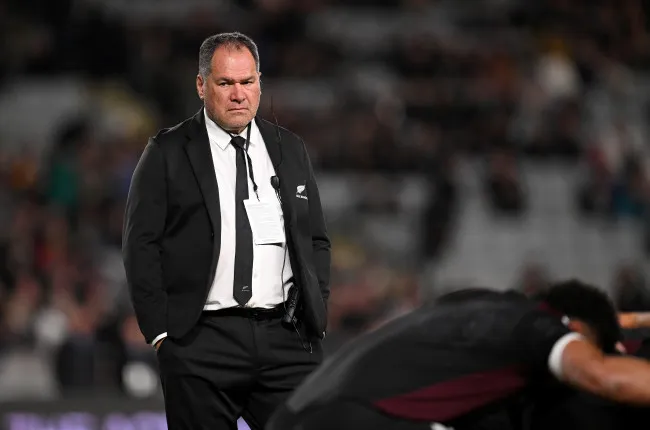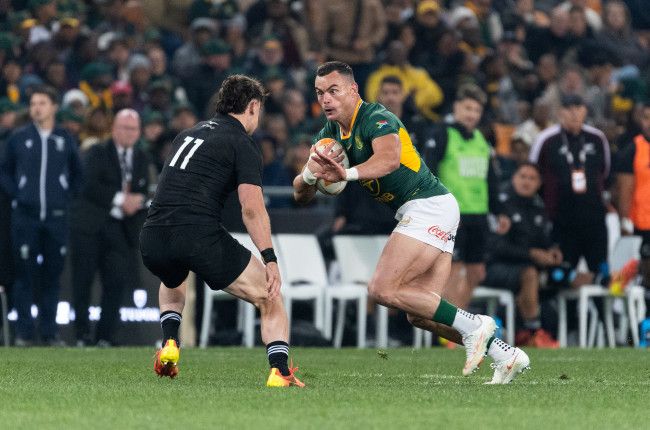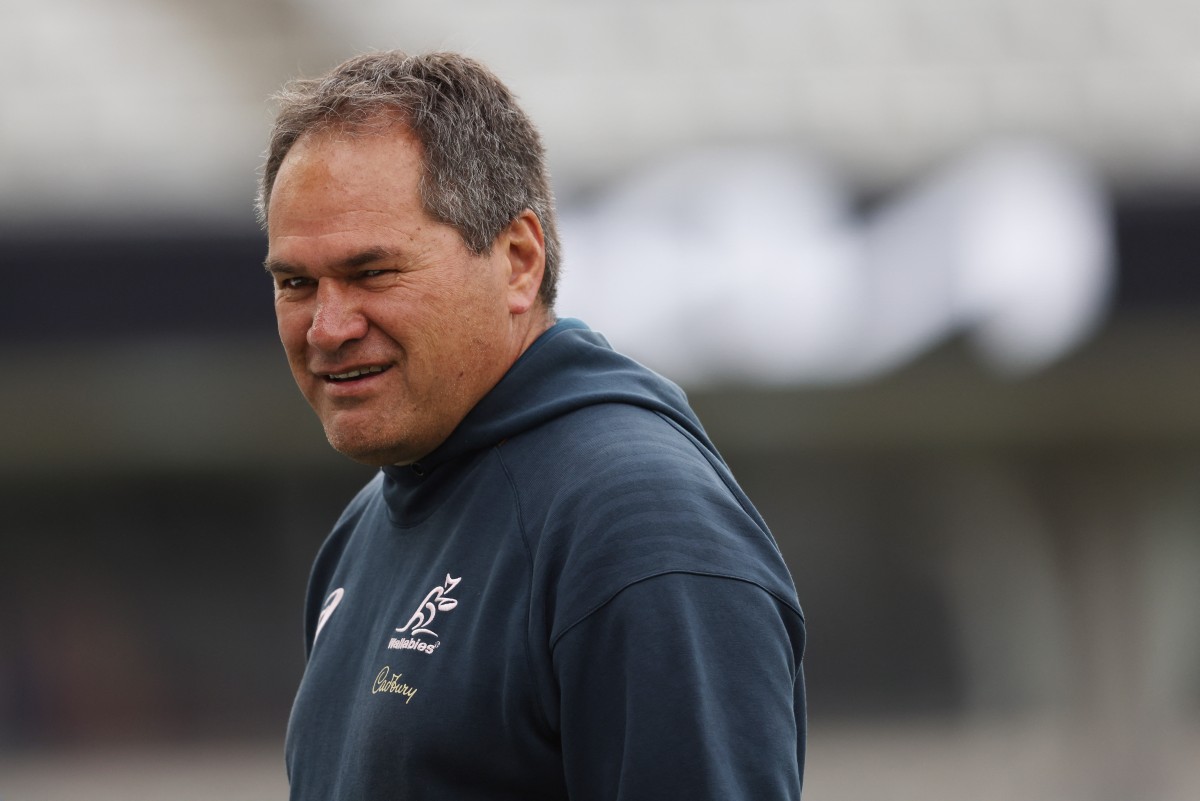
The psychological warfare has officially commenced. Dave Rennie is laying down markers, shaping narratives, and applying pressure on match officials ahead of the Greatest Rivalry series between the Springboks and All Blacks, and his message is crystal clear: speed up the game, cut out the time-wasting, and let rugby be played at proper Test match intensity.
Also read: Bulls to unleash new signings as Akkers confirms All Blacks selection boost
The All Blacks head coach has zeroed in on lineout delays and injury stoppages as his primary targets, praising English referee Matt Carley for implementing exactly the kind of officiating New Zealand want to see replicated when the heavyweight clashes begin. With Rennie’s side committed to playing high-tempo, rapid-transition rugby, slowing the game down becomes tactical kryptonite.
This isn’t just feedback to officials. This is narrative-building, pressure application, and the opening salvo in what promises to be a fascinating psychological battle between two coaching masterminds. Rassie Erasmus, meet your latest challenger.
Carley gets the Rennie seal of approval
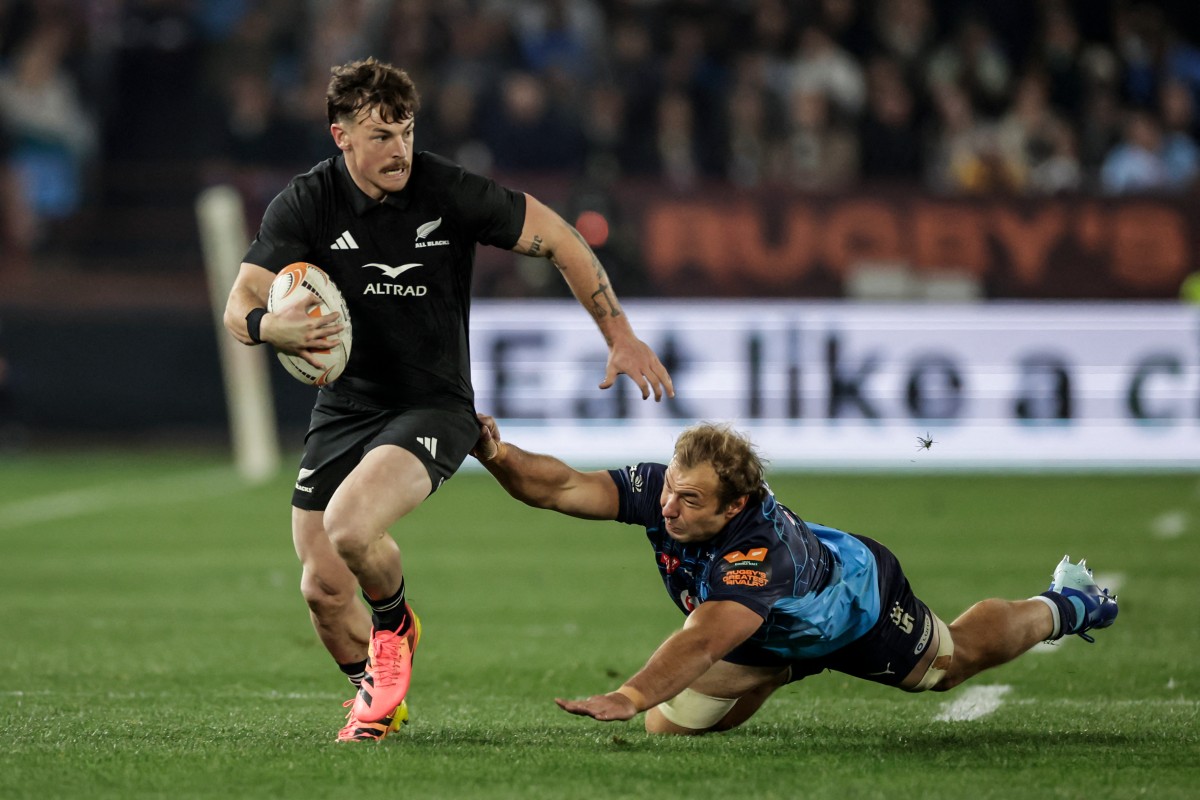
Following New Zealand’s 54-0 demolition of the Sharks in Durban, Rennie went out of his way to praise Carley’s handling of the contest, specifically highlighting the English official’s intolerance for dawdling at lineouts and his willingness to keep play moving despite minor injury stoppages.
“We know that if we can be accurate and disciplined, the ball’s going to be in play a lot, and we’ll be able to apply pressure,” Rennie told reporters after the Durban triumph.
“But every time you turn it over and give away a penalty, you give the opposition a chance to slow the game down. So I was pleased that Matt Carley put a bit of pressure on them to set their lineout quicker rather than taking a minute. That was good.”
It’s a calculated endorsement. By publicly praising Carley, Rennie sets the benchmark for what New Zealand expect from officials in the upcoming series. He’s creating an environment where referees who fail to police the pace of play will be seen as allowing tactical manipulation.
Playing through the pain
Rennie also lauded Carley’s approach to injury stoppages, highlighting instances where the referee forced play to continue despite players going down with “pretty minor injuries”, including an ankle knock sustained by All Blacks fullback Damian McKenzie.
“There’s a couple of times where guys are down with pretty minor injuries that he forced the game to play on, including Damian’s. So we’re really supportive of that,” Rennie said.
Also read: All Blacks coach fires shot at time wasting tactics
The subtext is unmistakable: teams use injury breaks to catch breath, reorganise defensive structures, and kill momentum. By keeping play moving, Carley prevented those tactical stoppages from disrupting New Zealand’s attacking flow. Rennie wants that standard maintained.
It’s also worth noting that Rennie praised Carley even when his own player was down. That lends credibility to his argument – he’s not asking for preferential treatment, just consistency and a refusal to allow gamesmanship to creep into injury protocols.
The discipline caveat
To his credit, Rennie acknowledged that New Zealand must hold up their end of the bargain. If the All Blacks want a fast-paced, free-flowing contest, they cannot afford to give away cheap penalties that hand opponents opportunities to slow the game down through set-piece resets and tactical kicks.
“We know that if we can be accurate and disciplined, the ball’s going to be in play a lot,” Rennie emphasised.
It’s a fair point. You can’t complain about time-wasting if you’re constantly coughing up penalties that allow the opposition to control tempo through lineouts and scrums. New Zealand’s discipline must be impeccable if their high-tempo strategy is to flourish.
Mind games with Rassie await
As the Greatest Rivalry series draws closer, there’s little doubt Rennie will continue hammering this narrative. He’s applying pressure on officials and setting expectations before a ball has even been kicked in anger.
But if Dave Rennie thinks Rassie Erasmus will be rattled by some pre-series posturing about lineout speed, he’s got another think coming. Erasmus is a grandmaster of rugby’s psychological chess game, a coach who’s weaponised social media, published referee analysis videos, and taken mind games to levels never seen before in the sport.
Rennie’s opening move has been registered. Erasmus will respond in his own time, in his own way, and it will be utterly compelling viewing. The Springbok mentor won’t lose a second of sleep over complaints about time-wasting, his side have won two World Cups playing rugby their way, and they’ll continue doing exactly that regardless of what opposition coaches think.
The battle lines are drawn. The narrative wars have begun. And we haven’t even reached kick-off yet.
What do you think? Is Rennie right to push for faster play, or is this just mind games ahead of the series? Drop your thoughts in the comments below.