
The Democratic Alliance has invited the Economic Freedom Fighters and uMkhonto weSizwe Party to coalition talks in a dramatic reversal of its previous stance, less than a week after local government elections left more than 130 councils without a clear winner.
Formal invitations sent to former rivals
DA federal council chairperson Ashor Sarupen confirmed the party sent formal letters to both the EFF and MK Party inviting them to coalition discussions in municipalities where no single party secured an outright majority.
The move marks a sharp departure from the DA’s long-standing position under former leader John Steenhuisen, who had called the EFF “political enemy number one” and warned against what he termed a “doomsday coalition” between the ANC, EFF and MK Party.
EFF elections spokesperson Sixolise Gcilishe confirmed the party received the letter and met with DA leadership on Tuesday. “They have asked us to work with them in municipalities, however, we have not yet responded to their proposal,” Gcilishe said.
MK Party leader and national negotiator Dali Mpofu confirmed the DA reached out to former president Jacob Zuma for possible coalition talks. “We have not yet formally responded, but a decision has been taken to accept the invitation. The two teams will be finalising the arrangements for the meeting to take place in the next few days,” Mpofu said.
Moonshot Pact abandoned under new leadership
Mpofu mocked the DA’s previous Moonshot Pact strategy, which excluded both parties from coalition talks. “You’ll remember that the so-called Moonshot Pact, everyone has forgotten about that now, since Steenhuisen went to the moon with it,” he said.
The change in approach comes under new DA leader Geordin Hill-Lewis, who took over from Steenhuisen in April this year. A DA insider told the Sunday Times that Hill-Lewis is “more open to conversations with everyone” compared to his predecessor.
Sarupen defended the shift, saying the party would not conduct negotiations through the media. “We are speaking to all parties interested in non-racialism, the rule of law, anti-corruption and service delivery, in good faith, to do what’s best for our citizens and to restore service delivery in municipalities,” he said.
ALSO READ: Coalition talks between ActionSA and DA turn messy
Election results force coalition reality
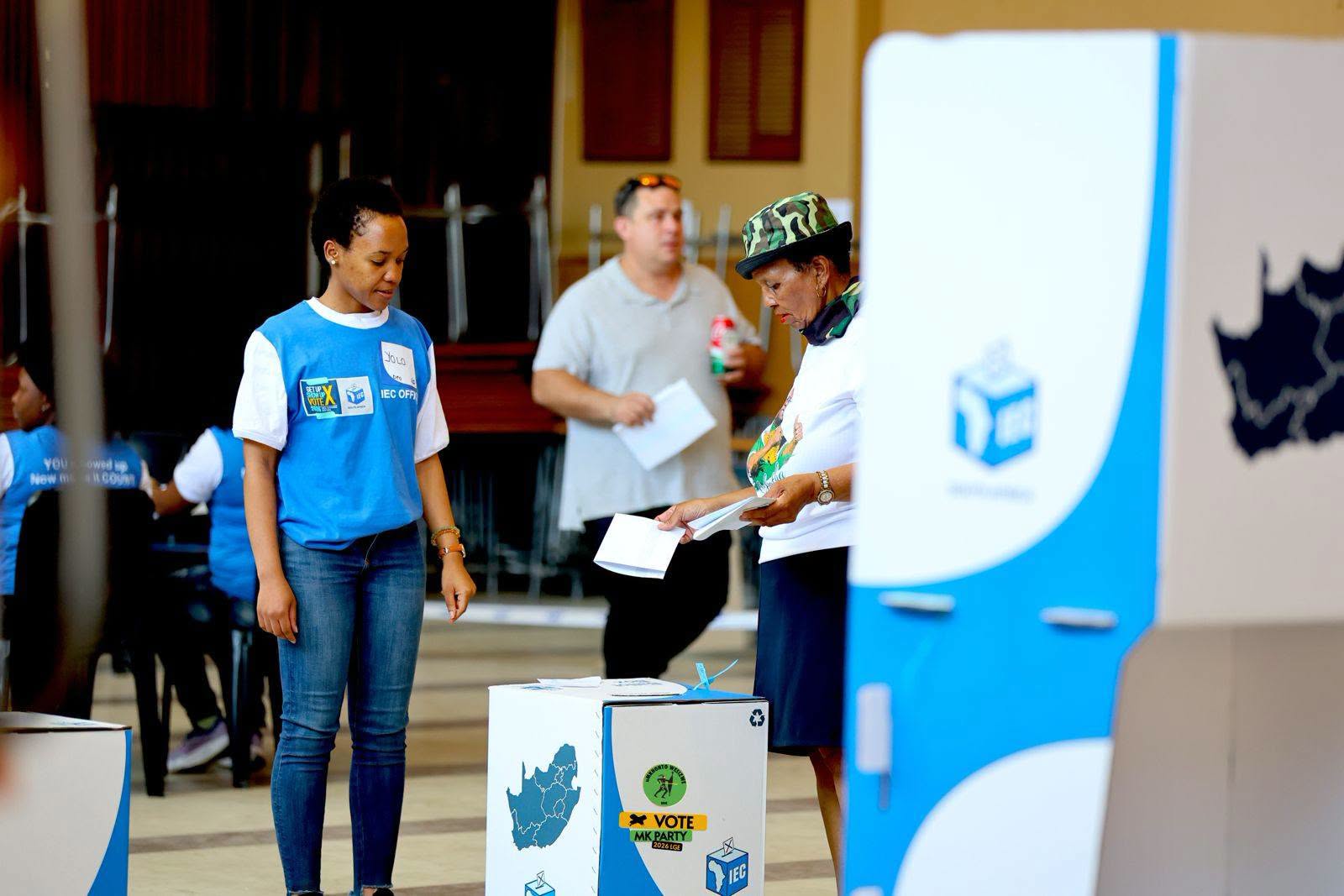
The 4 November local government elections left 127 of South Africa’s 213 municipal councils without an outright majority for a single party. The ANC recorded its worst-ever local election result with 30.76% of the vote, down from 45.59% in 2021. The DA secured 24.64%, the MK Party 9.76%, and the EFF 6.25%.
The DA finished first in the key metros of Tshwane, Ekurhuleni and Johannesburg but failed to secure a majority in any of them, making coalition arrangements essential to govern.
As recently as September, DA Johannesburg mayoral candidate Helen Zille had ruled out coalitions with both parties, saying their value systems were “too incompatible”.
MK Party open to talks with all parties
The MK Party’s negotiations team also held an exploratory meeting with ANC negotiators on 9 November. Mpofu said the party has no preconditions and is “prepared to talk to any political party which is willing to talk to us”.
ALSO READ: Five key takeaways from South Africa’s municipal elections