

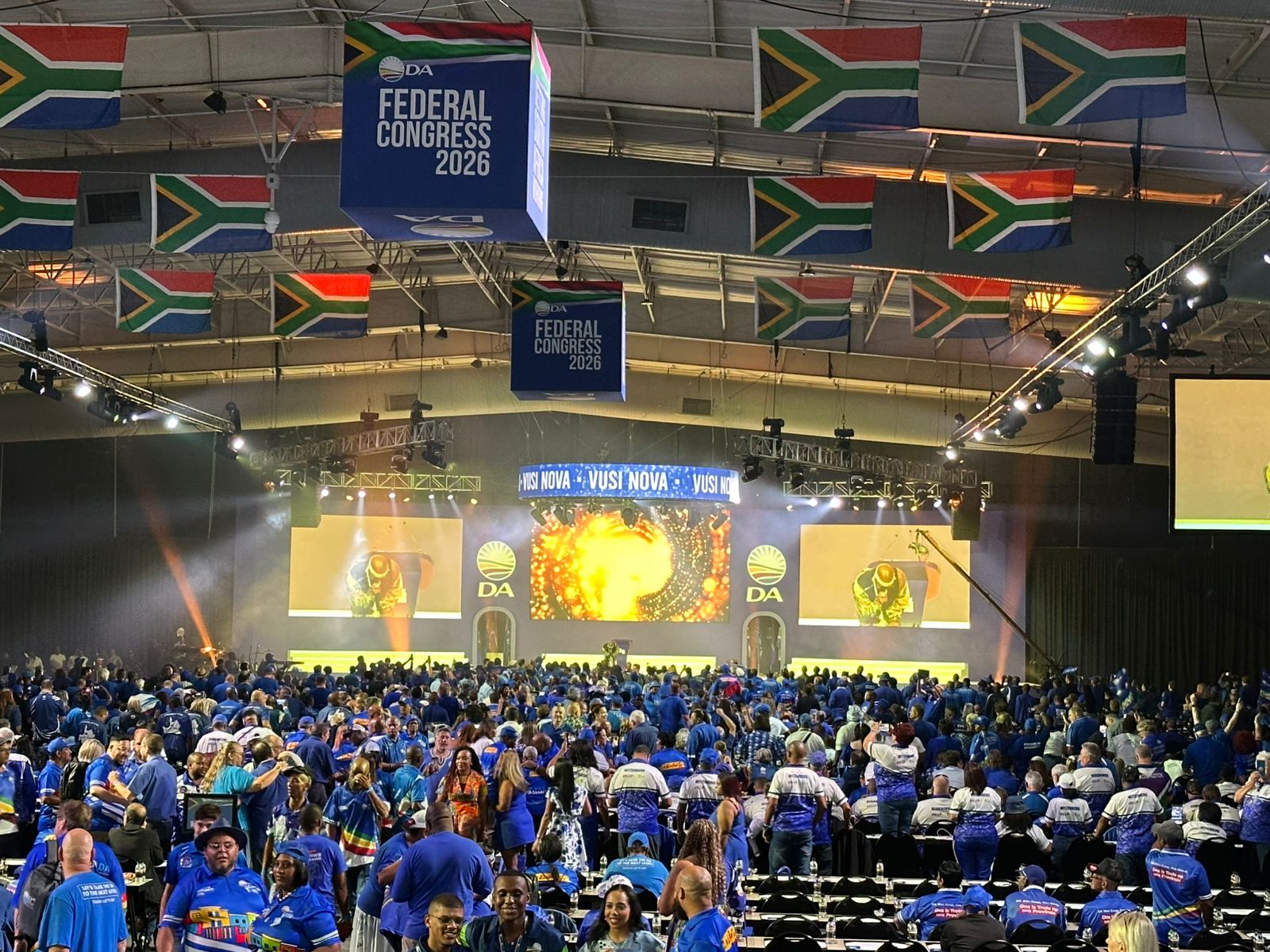
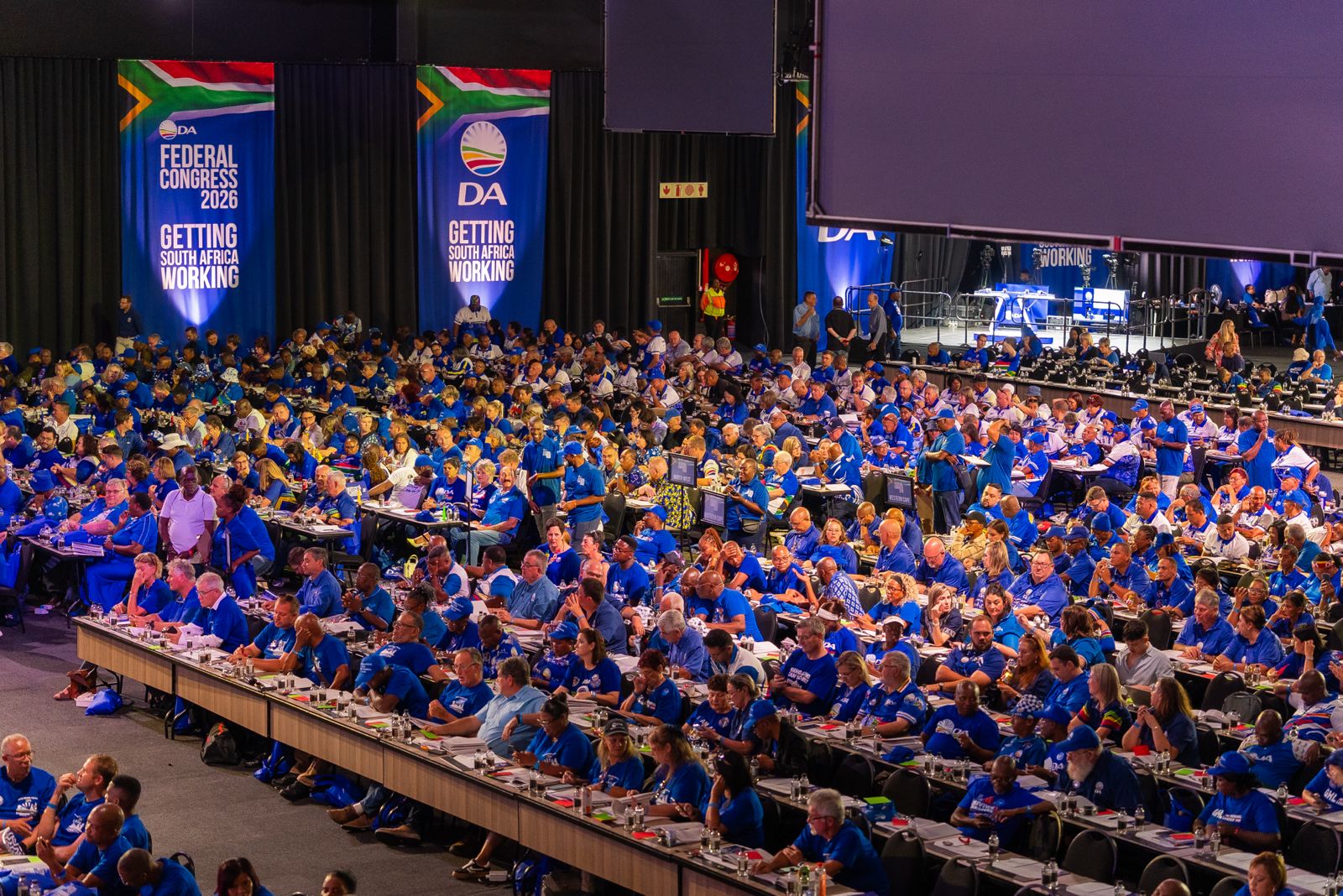
MIDRAND – The DA’s federal congress opened in Midrand on Saturday with a mix of reflection, internal debate and anticipation, as the party prepares to usher in a new era of leadership.
Delegates from across the country gathered for the first day of the congress, where outgoing leader John Steenhuisen delivered his final address at the helm of the party he has led since 2019. By Sunday, a new leader is expected to be elected, with Geordin Hill-Lewis widely tipped to take over.
Steenhuisen bows out
In an emotional farewell speech, Steenhuisen declared his leadership mission “accomplished”, saying he leaves behind a party that is “stronger, larger, more relevant, and more influential than at any point in its history”.
Reflecting on his tenure, he recalled inheriting a divided party polling at just 16% in 2019, and credited members with rebuilding it into what he described as a “national force for reform”.
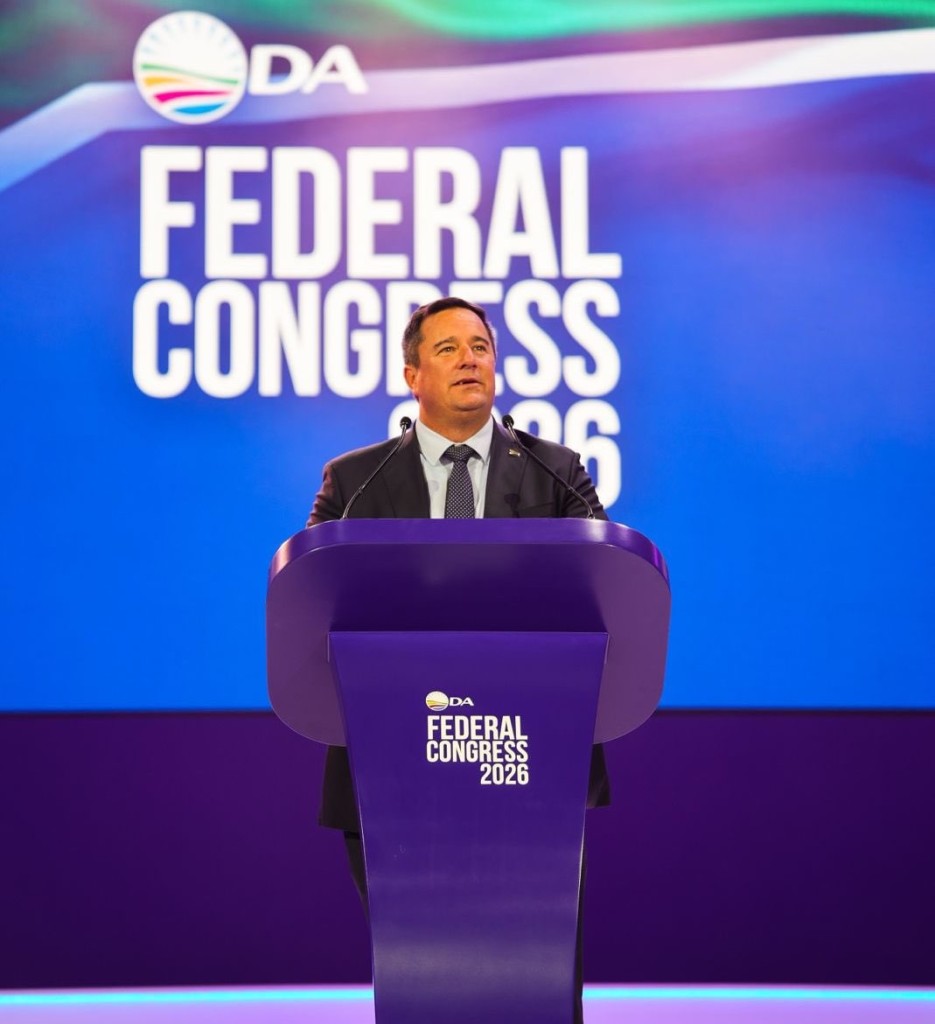
“Not only is the blue machine stronger and healthier than ever… but for the first time in the history of our party, the DA now co-governs the Republic of South Africa,” he said during his speech.
He highlighted the party’s role in the Government of National Unity (GNU), pointing to policy battles it has fought, including opposition to VAT increases, legal challenges to legislation and efforts to drive economic reform.
Steenhuisen also framed the DA’s participation in national government as a historic turning point, arguing it has proven the party can deliver for all South Africans across urban and rural communities.
Zille sets ideological tone
Opening the congress, outgoing federal council chair Helen Zille struck a firm ideological tone, warning against the global rise of identity politics and ethnic nationalism.
“We reject that path,” she said during her speech, cautioning that many political actors seek to “weaponise diversity” and divide South Africans along racial lines.
Zille emphasised the DA’s identity as a party rooted in shared values rather than race, describing members as “blue people” united by principles such as the rule of law, constitutional democracy and individual freedom.
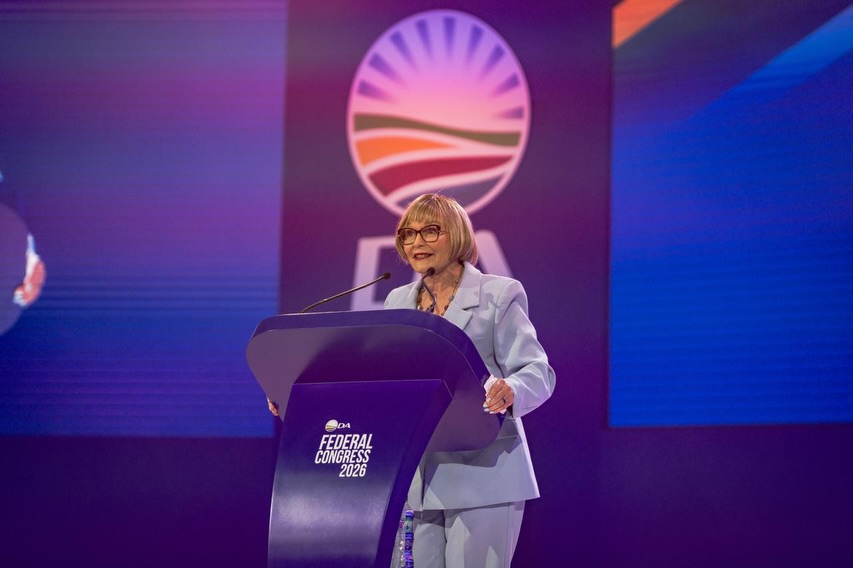
“We believe in a nation defined not by race, but by principles,” she said, adding that liberal democratic values are increasingly under pressure worldwide.
She also pointed to the party’s internal culture, saying the congress itself demonstrates the DA’s commitment to open contestation, fair elections and robust policy debate.
Internal debates continue
While the congress celebrated the party’s growth, it also highlighted ongoing internal debates.
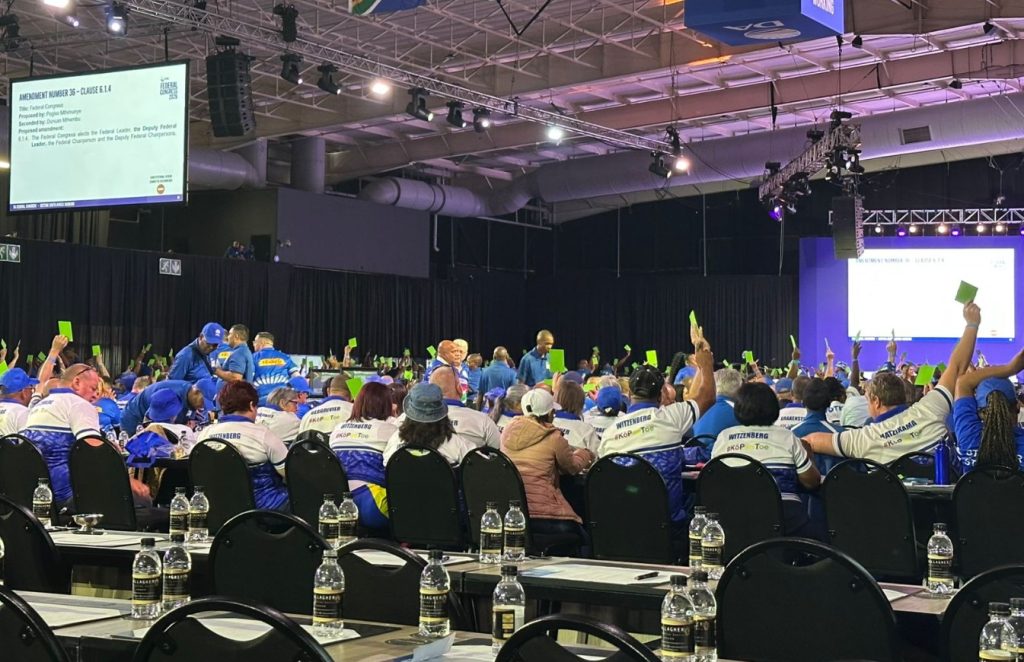
A proposed constitutional amendment to introduce a deputy federal leader failed to secure the required two-thirds majority. Just over half of delegates supported the motion—well short of the 66.7% threshold, according to Die Papier.
The proposal, brought by Gauteng deputy chair Pogiso Mthimunye, argued that a deputy leader could help fill a “vacuum” when the federal leader is occupied with responsibilities in national government, particularly within the coalition.
READ: DA Federal Congress gets underway in Gauteng
The role would have focused on strengthening party structures, engaging voters and coordinating between leadership, parliamentary caucus and grassroots formations.
Despite repeated attempts at previous congresses, the DA will continue without a deputy leader, Die Papier reported.
Leadership transition looms
The congress continues on Sunday, when the party is expected to elect Steenhuisen’s successor which marks a significant transition for the DA as it seeks to consolidate its position within national government.
With Helen Zille stepping down as federal council chair, attention is also turning to the race for the party’s federal chairperson position.
Solly Msimanga, the DA’s leader in Gauteng, and Ivan Meyer, Western Cape MEC for Agriculture, are contesting the role. Meyer currently holds the position.
Asked why he believes it is important for the federal chairperson to come from the northern part of the country, Msimanga had the following to say:
Zille, who is also standing as the party’s mayoral candidate for Johannesburg in the 2026 local government elections, described the moment as part of a longer journey.
“Democracy is never finally won. It must be defended – again and again – in every generation,” she said.
With leadership change imminent and the party now firmly embedded in national governance, the 2026 federal congress may prove to be a defining moment in the DA’s evolution from opposition to governing force.



You must be logged in to post a comment.