

PRETORIA – Although most violent crime categories, including murder, rape, robbery and most property-related crimes like theft and burglary continued to decrease, they remain at unacceptably high levels.
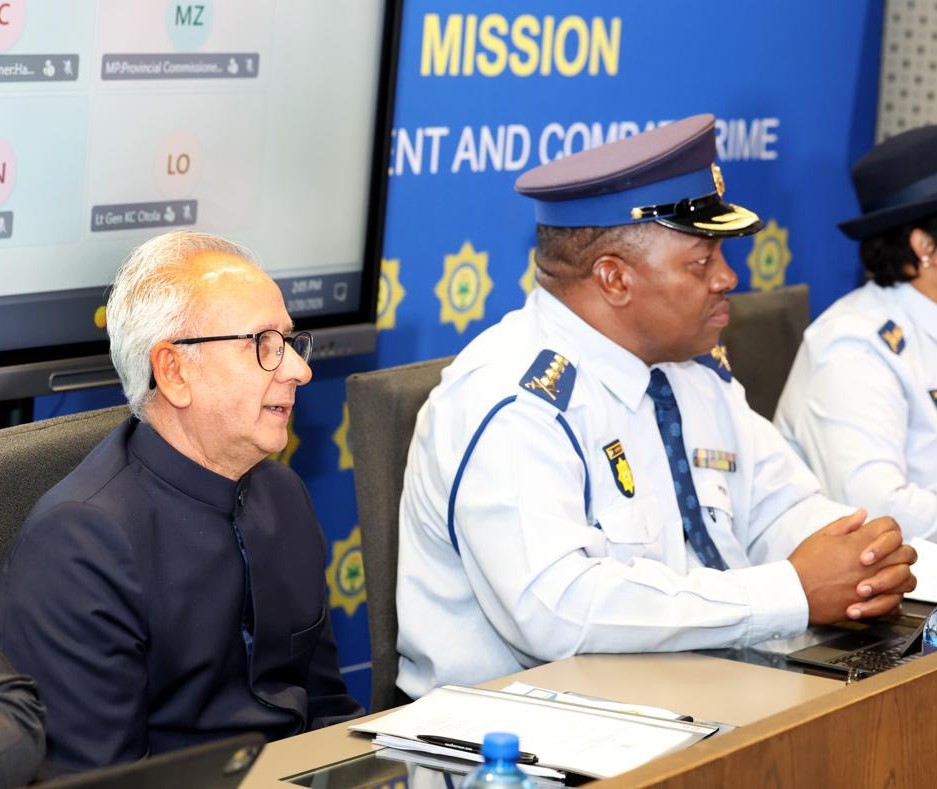
Speaking at the release of the quarterly crime statistics on Friday 20 February, acting Minister of Police, Firoz Cachalia, said that while most communities have recorded a decrease in violent and property crimes, there are still too many communities that have recorded increases. These statistics reflect on crimes that occur during the third quarter of the current financial year (1 October 2025 to 31 December 2025),
“This does not necessarily translate into a felt sense of security by individuals, families and communities,” Cachalia remarked.
Murder, after more than a decade of annual increases, started to decrease in the first quarter of 2023-’24 and over the past two years, the number of murders for the third quarter had dropped by 17,6% or 1 359 fewer murders. Also, violent crime decreased over the past two years by 8,3% or 15 763 cases.
“While we have seen double-digit reductions in murder in five provinces – KwaZulu-Natal, Gauteng, Mpumalanga, Free State and the North West – much smaller decreases were recorded in the Western Cape and Eastern Cape, with slight increases in Limpopo and the Northern Cape. The killings relating to gang violence in the Eastern and Western Cape in particular, remain worrisomely high,” said Cachalia.
A concerning and notable increase in the murder of police officials occurred in the third quarter, with almost 80% of the 23 police officials who lost their lives were off-duty.
Additional measures to address firearms
As before, firearms remain the single largest weapon driving murder, robbery and organised crime in South Africa. Additional measures will be taken to address this with a focus on removing illegal firearms and preventing legal firearms from falling into the wrong hands.
The classification of gender-based violence and femicide (GBVF) as a national disaster demands intensified efforts to deal with this. Much interpersonal, domestic and GBV takes place between people who live with each other or know each other.
Police management will also be looking at reinvigorating community policing by establishing a national community-patroller programme that will run in each province.
“I have tasked the Civilian Secretariat for Police to develop the concept and funding model, with the objective of enabling community members to receive training and stipends to assist with improving safety in their localities.”
Organised crime: Most immediate threat
Organised crime is seen as the most immediate threat to democracy, society and economic development.
“When public funds are stolen on a large scale, we feel it in various ways. Local level organised corruption in tendering and the copper cable theft syndicates contribute to water and electricity outages that cause havoc to our lives,” the minister said, whilst organised criminality has infiltrated the criminal justice system.
The approach towards tackling organised crime relies on two simultaneous approaches:
Identify those involved through vetting and lifestyle audits of the top ranks. Those who fraternise with criminals or involve themselves in criminality and corruption have no place in our criminal justice system.
Organised crime is sophisticated, well networked and enabled by professional lawyers and accountants. Specialised capabilities for identifying individuals and networks are being strengthened to dismantle their operations.
In the short term, where the effects of organised crime threaten lives and livelihoods such as gang violence and illegal mining, additional security resources will be enhanced by bolstering the Anti-Gang Units, deploying other specialised policing units and the South African Defence Force (SANDF).
Crimes showing a decrease
Crimes that showed a decrease in the third quarter, compared to statistics of the second quarter are among others:
- Murder: 8,7% (from 6 953 to 6 351 reported cases)
- Robbery with aggravating circumstances: 11,3%
- Sexual offences: 2,8%
- Hijacking: 8,1%
- Truck-hijacking: 15,5%
- Trio crimes (carjacking, robbery non-residential premises and robbery residential premises): 13,8%
- Burglary at non-residential premises: 12% and residential premises 8,2%
Increased crimes
Crimes that showed an increase in the third quarter, compared to statistics of the second quarter are among others:
- Attempted murder: 2.5%
- Robbery of cash in transit: eight counts higher
- Commercial crime: 2%
Causative factors for murder
- Arguments, misunderstanding, road rage, provocation: 1 158 cases
- Vigilantism, mob justice: 340 cases
- Robbery: 309 cases
- Gang-related: 276 cases
- Retaliation, revenge, punishment: 274 cases
- During commission of other crimes (not robbery or rape): 83 cases
- Taxi-related: 52
- Hijacking and attempts: 35
- Intervention in an argument: 33
- Law enforcement and security guards in the line of duty (excluding police murders): 29
- Rape-related: 17
- Illicit mining: 16
Mostly sedans hijacked
- Most murders occurred in public spaces (3 217), with eight reported at educational institutions and two in a prison or holding cell. Firearms were used in most murder cases, followed by a knife, and a sharp instrument.
- Regarding rape at educational premises, the following was reported: Nine cases at a day-care, crèche, nursery or pre-school; 52 at schools; 6 at special needs schools; and 7 at tertiary institutions
- Most carjacking cases were reported at Mamelodi East Police Station in Gauteng, followed by Alexandra and Kempton Park, also in Gauteng.
- A total of 1 883 sedan, hatchback or coupé vehicles were hijacked, followed by bakkies or panel vans (1 533), motorcycles (333), SUVs (319), micro or mini bus (248) and trucks over 3,500kg (44). One caravan was hijacked.
- Robbery of cash in transit is eight counts higher (from 29 to 37). Most took place in Gauteng, followed by KwaZulu-Natal.
- There was a decrease of truck-hijacking (from 413 to 349), with most incidents reported in Gauteng (223 cases).
- There was an increase of 27 cases of kidnapping (from 4 748 to 4 775).
ALSO READ: Kareedouw businessman sentenced to 10 years for guest house deaths





You must be logged in to post a comment.