

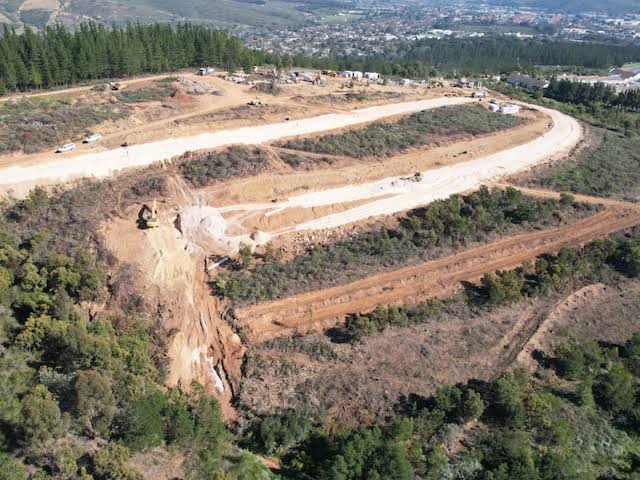
After months the Stellenbosch Interest Group (SIG) was dealt a significant blow when the Western Cape High Court ruled in favour of the proposed development on Botmaskop, saying it can go ahead.
On Tuesday (30 June) the Western Cape High Court delivered judgment on Part B on the legal challenge brought by the local interest group on the contentious, luxury development on the slopes of Botmaskop.
Judge Nobahle Mangcu-Lockwood dismissed the SIG’s application with costs.
In November 2024 the group brought an application to the High Court claiming the planned development of Botmaskop Fynbos Estate would lead to the loss of the environmental integrity of the site.
In Part A of the judgment last April, Judge Melanie Holderness ruled that work at the site was to temporarily halt while Mangcu-Lockwood deliberated on Part B.
The SIG challenged the project’s two environmental authorisations (EAs) and brought the application against 32 respondents, which included the provincial minister for Local Government, Environmental Affairs and Development Planning; Stellenbosch Municipality; Botmaskop Fynbos Estate; the previous developer Reset Properties; and 26 individual plot purchasers.
SIG argued the 2003 EA for a mountain resort and a 2021 amended EA converting the project into a residential estate was invalid.
The group claimed that both EAs had lapsed because the authorised planned development was not commenced within the prescribed two-year window, rendering ongoing construction unlawful.
The SIG also challenged Stellenbosch Municipality’s land-swap approval, which was granted by council in July 2024.
Central to Mangcu-Lockwood’s judgment was the SIG’s delay in launching formal legal proceedings.
The group had asserted the “lapsed EA” argument in correspondence with the department since July 2011 and the court adopted one respondent’s characterisation of the exercise as an attempt to “drag a cow that was long dead out of a ditch”.
According to the court it was “difficult not to agree with this assertion, given the failure by the applicant to advance any reason for its lateness”.
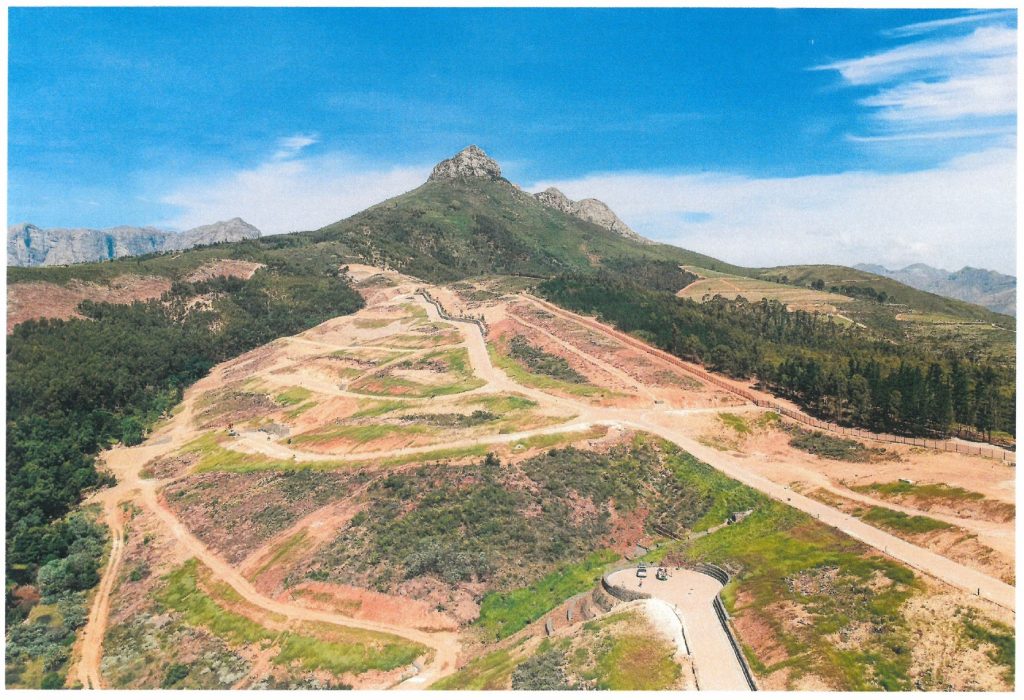
Applying established principles on unreasonable delay, the court declined to grant declaratory relief in respect of the 2003 EA, concluding that the “egregious and unexplained delay would be materially prejudicial to the parties and would severely undermine the principle of legal certainty”.
The court found that due to the tree felling and clearing of eucalyptus trees on site, a necessity to start construction, the 2003 EA did in fact not lapse.
With this activity commencing within the EA’s prescribed window, the court ruled activity had “commenced” and, as such, the 2003 EA was in place until the amended EA was granted in 2021.
The court was also satisfied that the 2021 amendment EA was lawfully processed, agreeing with the respondents’ reports that the proposed residential estate would generate “lower traffic, water, sewage, electricity and visual impacts” than the originally approved mountain resort, meaning no new public-participation process was required.
The ruling said “although the development that was approved in 2021 differed from the one approved in 2003 it used the same service infrastructure (eg roads and other infrastructure) that had already been constructed (i.e. commenced with) in terms of the 2003 EA.”
The court also dismissed the review of the municipality’s land-swap of portions of erf 3363 along with the remainder of farm 333, for portion 2 of farm 490.
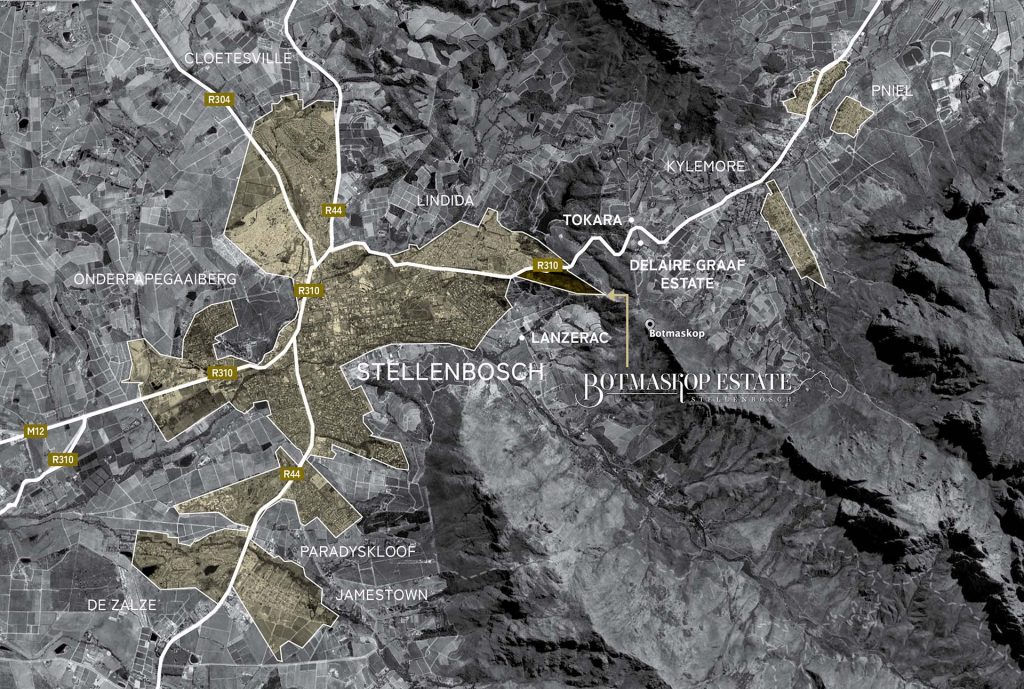
A professional valuer concluded the exchanged properties between the municipality and the developer, were of equal value, R1 950 000 per hectare, and with as the SIG offered no expert evidence to challenge this, the group’s claim was dismissed.
On the relationship between environmental and planning approvals, the court held the municipality’s zoning approval legislative scheme is not subservient to, or even subject to, the EA scheme.
The court dismissed SIG’s application to amend the notice of motion to include the review of the rezoning approval dated 28 November 2022 and related relief (the amendment application).
A big setback for the Stellenbosch group was its late application to add a review of the November 2022 rezoning approval – filed last December, more than three years after the decision, and not properly served on the 26 plot purchasers.
According to court documents these purchasers had collectively spent more than R9,5 million on their properties in the planned development.
The court dismissed the amendment as “wholly defective”, citing unreasonable delay, non-compliance with uniform rules, and material prejudice to property owners. With substantive, Part B relief was dismissed.
The SIG also suffered a financial blow, with the court ordering it to pay Botmaskop’s costs for parts A and B, and attorney-client scale costs to Botmaskop and Reset, as well as all purchasers for the amendment application.
ALSO READ: Botmaskop-storm vererger: Kriminele klagtes ingedien



You must be logged in to post a comment.