

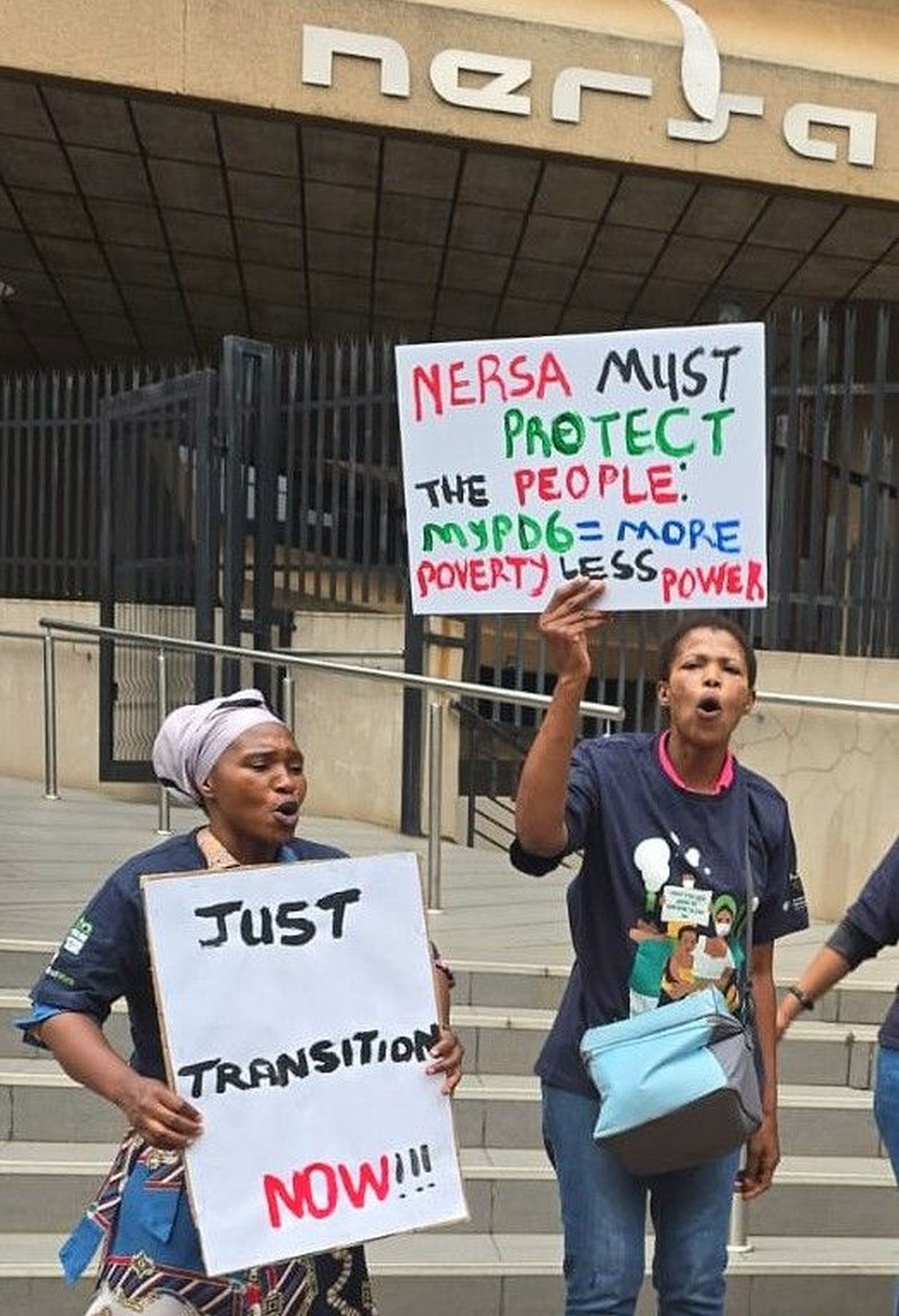
South African households face increased financial pressure from today as the National Energy Regulator of South Africa (NERSA) approved electricity tariff increases affecting 176 municipalities and local authorities across the country.
The tariff hikes, effective from 1 July, range from 7.5% to 14%, depending on the municipality. The increases come as consumers grapple with elevated fuel prices, a higher prime lending rate and rising inflation.
NERSA approved an average electricity tariff increase of 9.01% for municipalities, which applies to bulk electricity purchased from Eskom. However, individual municipalities have implemented varying final tariff structures.
Major city increases
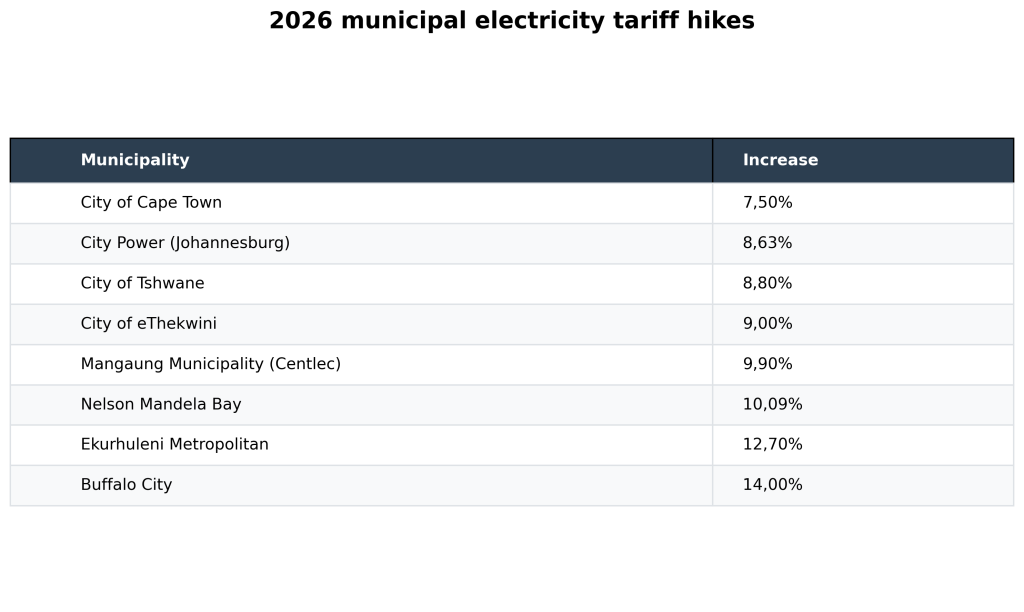
Buffalo City leads the increases with a 14% hike, while Ekurhuleni Metropolitan follows with 12.7%. The City of Cape Town has implemented the lowest increase among major metros at 7.5%.
Other significant increases include Nelson Mandela Bay at 10.09%, Mangaung Municipality at 9.9%, City of eThekwini at 9%, City of Tshwane at 8.8% and City Power in Johannesburg at 8.63%.
The approval process followed strict timelines dictated by High Court orders issued in February and May 2026. NERSA received and reviewed approximately 2 000 public submissions during the consultation process.
By 11 May, the regulator had approved 159 of the 176 tariff applications submitted by the 31 March deadline. The remaining 17 applications required a court extension, which was granted on 26 May, allowing NERSA to complete the evaluation by 27 May.
Property tax adjustments vary
Property tax rates for the 2026/2027 financial year also akes effect today, with municipalities implementing different rate-in-the-rand adjustments based on local budget requirements and property valuations.
ALSO READ: Nersa approves 8.76% Eskom tariff hike amid calculation error controversy
The City of Cape Town reduced its residential rate-in-the-rand by 2.09%, intended to offset property value increases following a new General Valuation roll. The city also raised the rates-free threshold for residential properties to R620 000, up from R450 000, for homes valued up to R8 million.
In contrast, Johannesburg approved a 3.6% increase in property rates as part of its R97.1 billion budget for 2026/2027. The city also implemented a 6.2% increase in refuse removal charges.
Other municipalities reported varying adjustments: eThekwini proposed a 5% increase, Nelson Mandela Bay 5.5%, Polokwane 4.7% and Greater Tzaneen 5.62%. Witzenberg approved an 8% increase across residential, business and industrial property categories.
Financial strain on households
The combined impact of electricity and property tax increases adds to existing financial pressures facing South African consumers. Economic indicators show households are already dealing with multiple cost increases across essential services.
Municipalities are required to follow National Treasury guidelines, including Municipal Budget Circulars, to align budget preparation with the Local Government: Municipal Property Rates Act.
Property owners are advised to review their specific municipal council resolutions and public notices, as individual bills are influenced by the implementation of new General Valuation rolls and local tariff structures.
ALSO READ: Cape Town faces R4.2bn shortfall if new fixed tariffs are overturned



You must be logged in to post a comment.