


South Africa’s construction industry continues to grapple with building failures following the George and Ormonde collapses in 2024 and 2026, with experts pointing to weak oversight and unregistered workers as key contributing factors.
The Building Industry Bargaining Council (BIBC) says building collapses often reflect breakdowns in labour compliance and site control, rather than just engineering failures.
“When workers are not registered, documented, and traceable, the system fails,” says Danie Hattingh, spokesperson for the BIBC.
According to the International Labour Organisation, up to 38% of South Africa’s construction sector operates outside formal systems, creating significant compliance risks.
The problem is worsened by complex labour structures involving subcontractors and labour brokers, where multiple employers operate without real-time visibility over site workers.
“Where systems are not integrated into a unified compliance framework, accountability fragments and traceability weakens,” Hattingh says.
Non-compliant contractors can undercut compliant firms by an estimated 25% to 35% by avoiding wages, benefits, tax and worker protections.
“Cheap labour is not a competitive advantage. It is a liability that undermines compliant businesses and weakens sector resilience,” he says.
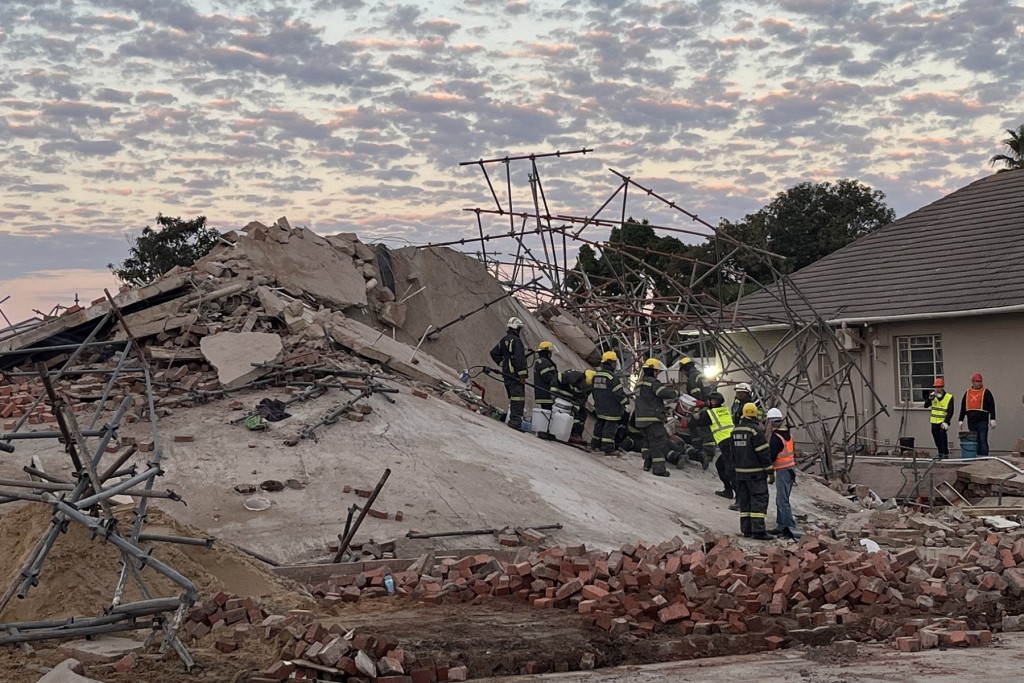
In the Western Cape, BIBC non-compliance often serves as an early warning sign. Contractors avoid levies by keeping workers off official records, triggering a chain reaction where workers lack UIF, PAYE, COIDA coverage, proper training and safety equipment.
The shift from traditional master builder models to layered contracting has complicated accountability. While work may be delegated through subcontractors and labour brokers, legal responsibility remains with principal contractors.
“You can delegate work, not accountability,” Hattingh says. “When things go wrong, the law looks past contracts. The principal contractor remains accountable.”
Under the Occupational Health and Safety Act and Construction Regulations, principal contractors retain ultimate responsibility, with joint liability under the Labour Relations Act.
The financial risks of using non-compliant labour extend beyond immediate cost savings. A single audit can trigger back-pay, penalties and interest reaching hundreds of thousands of rand. In fatal cases, unpaid benefit obligations can exceed R500 000 per deceased worker.
When subcontractors collapse following building failures, liability shifts to principal contractors, developers or other employers.
The inability to account for workers during emergencies stems directly from non-compliance practices.
ALSO READ: George building collapse ‘entirely preventable’, investigation finds
“Off-book workers don’t appear on site registers,” Hattingh says. “In a collapse, they become invisible, delaying rescue, complicating investigations, and deepening distress for families.”
While the BIBC does not regulate health and safety directly, its compliance framework enables worker traceability through registration and employment records.
“What is required is an integrated system where labour records, contractor registration, and site access control are aligned, ideally digitally and in real time,” he says.
Enforcement is shifting towards multi-agency High Impact Task Teams including the Department of Employment and Labour, SARS, Home Affairs, SAPS and the BIBC. These teams can issue immediate prohibition notices and shut down sites for serious non-compliance.
ALSO READ: Ormonde building collapse death toll rises to nine amid illegal construction allegations
Compliance requirements are being embedded in financial processes, with enforcement set to intensify in 2026, particularly targeting private estates and high-value developments.
The industry is moving towards a system-based compliance model with stronger powers and penalties, ending the “passive client” model where developers and project owners avoid responsibility for labour and safety compliance.
For those appointing contractors, Hattingh says three questions are essential: is the contractor registered, are workers documented and compliant, and who is actually on site?
“When cost-cutting replaces compliance, the consequences extend far beyond the construction site,” he says.





You must be logged in to post a comment.