


The government’s blacklisting of 52 construction companies for poor performance, fraud and contractual failures has exposed a systemic culture of non-compliance across South Africa’s building sector, according to the Building Industry Bargaining Council (BIBC).
The companies, barred from government contracts until 2029, were sanctioned for offences including falsified B-BBEE certificates and invoicing for work not done. But the BIBC says the blacklisting reflects a deeper problem that extends beyond individual cases.
“What we are seeing is a pattern where non-compliance in one area is almost always mirrored across others. It is rarely isolated to non-compliance with the BIBC only,” says Danie Hattingh, spokesperson for business at the BIBC.
By cross-referencing publicly available data, the BIBC identified 68 construction-related companies linked to the blacklist. Of these, only 12 were registered with the BIBC, with all 12 non-compliant at the time of assessment.
“This directly supports our contention that non-compliance with one regulation strongly indicates non-compliance everywhere else,” Hattingh explains. “Whether it is labour obligations, tax compliance, or contractual delivery, the same patterns repeat.”
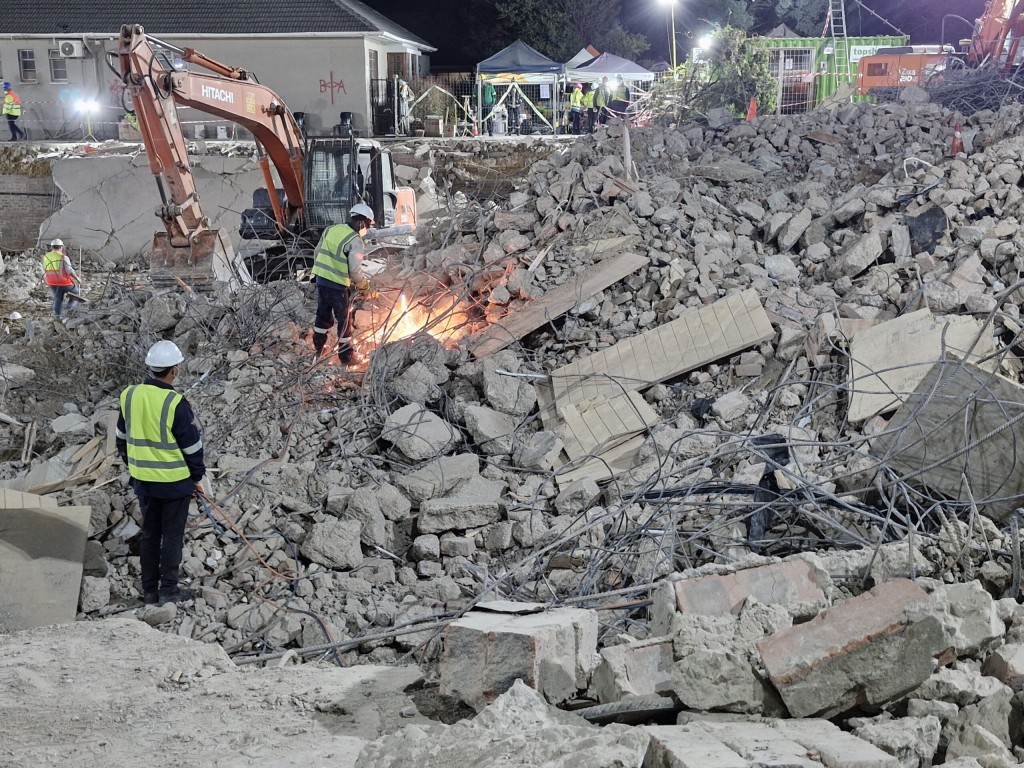
The implications include substandard work, project delays, site failures and safety risks, while unfair competition based on labour exploitation undercuts compliant contractors.
The problem is compounded by non-compliant contractors who deregister, rename or re-establish entities, sometimes using associates and family members as directors of new companies, to avoid detection.
“The trend towards ‘fronting’ companies is widespread and complex,” says Hattingh. “Even if a new entity has no record of non-compliance, it can still be the same operators making it difficult for clients and procurement officials to know who they’re really dealing with.”
This lack of visibility is particularly acute in high-volume public procurement, where scale makes tracking difficult. Problematic contractors can reappear under new guises, continuing cycles of poor delivery and non-compliance.
The BIBC points to procurement processes as a critical lever for change and, currently, a point of vulnerability. Weak or inconsistently applied tender requirements can allow non-compliant contractors to slip through.
“The role of ‘givers of work’ (government, municipalities, state-owned enterprises and private clients) is central,” says Hattingh. “From tender design to contract monitoring, procurement decisions either strengthen compliance or undermine it.”
The BIBC is working with the City of Cape Town and the Western Cape Department of Infrastructure to embed compliance into tender frameworks and strengthen oversight. The focus is on embedding BIBC registration and compliance in tenders, strengthening supply chain controls, and aligning labour allocation systems, including on Expanded Public Works Programmes.
Luyanda Mgqamqo, BIBC labour spokesperson, says tender processes face challenges that undermine efficiency and fairness. “These include retaliation against whistleblowers, political interference and weak pricing skills,” he says.
If left unaddressed, the risks extend beyond individual projects to economic losses, weakened institutions, declining investor confidence and growing public distrust.
ALSO READ: Construction sector faces continued scrutiny following fatal collapses
“Cutting corners for short-term profits creates long-term systemic risk,” warns Hattingh. “It undermines infrastructure quality and the credibility and sustainability of the entire industry.”
The BIBC says lasting reform will depend on a collective shift towards accountability. For clients, developers and public sector bodies, this means verifying contractor registration, insisting on compliance certification, and embedding this into procurement decisions.
For workers, it means confirming employer registration, checking payslips for contributions such as pension and leave, and engaging directly with the BIBC where necessary.
ALSO READ: Free State to blacklist contractors who abandon projects amid Matjhabeng water crisis






You must be logged in to post a comment.