


Minister in the Presidency for Women, Youth and Persons with Disabilities Sindisiwe Chikunga has condemned a Glenlivet advertisement that referenced the 1956 Women’s March, saying the campaign trivialised the historic struggle of South African women for freedom, equality, dignity and justice.
Chikunga’s comments follow criticism from the African National Congress (ANC) over the use of images and the legacy of struggle icons including Winnie Madikizela-Mandela, Lilian Ngoyi and Sophie Williams-De Bruyn alongside the historic march to promote an alcoholic product.
In a statement on Friday, Chikunga said the Women’s March was not a commercial slogan or marketing opportunity, but a defining moment in South Africa’s liberation history.
“The struggle of the women of 1956 cannot and must not be reduced to a marketing gimmick,” she said.
“Their courage, sacrifice and resistance were about freedom, dignity, equality and justice.”
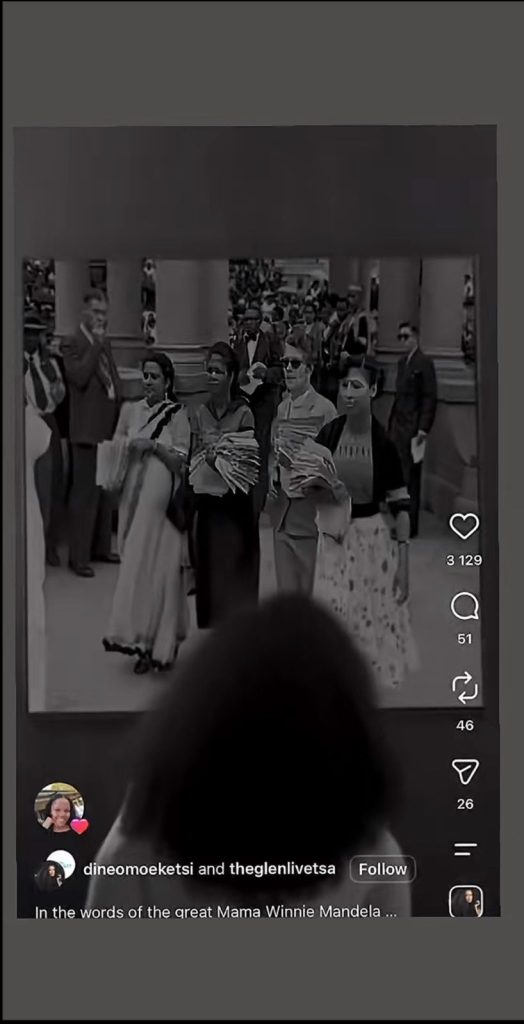
A defining moment in the liberation struggle
On 9 August 1956, more than 20 000 women marched to the Union Buildings to protest against the apartheid government’s pass laws. The march was led by women including Lilian Ngoyi, Rahima Moosa and Sophie Williams-De Bruyn and became one of the defining acts of resistance against apartheid.
The ANC, in a statement issued on 30 March, said the women of 1956 were “not cultural props or marketing symbols”, arguing that their sacrifices and struggles helped secure the freedom and democracy enjoyed by South Africans today.
The party said the Women’s March represented a national legacy built on courage, sacrifice and resistance and should not be reduced to a visual association or branding opportunity.
ANC raises concerns over historical context
The ANC also raised concerns about the historical association between alcohol and exploitation under colonialism and apartheid.
It pointed to practices such as the dop system, under which some farm and other workers were partly compensated with alcohol instead of receiving fair remuneration. The ANC said this entrenched dependency, undermined human dignity and contributed to long-term social harm, particularly among Black and working-class communities.
“It is therefore deeply troubling that a history of resistance against oppression is being associated with the promotion of alcohol without proper consideration of this painful context,” the party said.
The ANC called on Glenlivet to withdraw the advertisement, issue an unequivocal public apology and provide a transparent explanation of how the campaign was conceptualised, developed and approved.
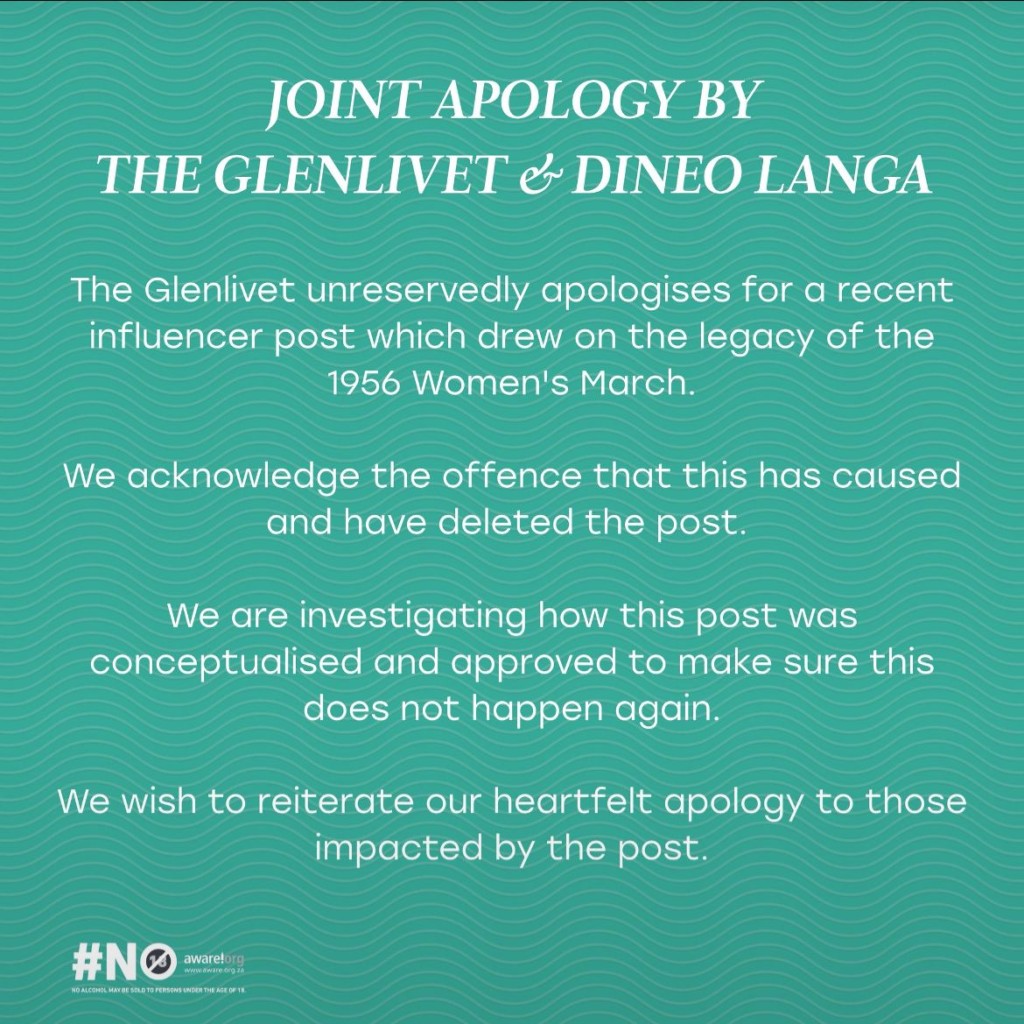
Glenlivet removes post and apologises
The advertisement has since been removed from social media and Glenlivet has apologised.
In a joint statement shared on X by influencer Dineo Langa, Glenlivet said it “unreservedly apologises” for a recent influencer post that drew on the legacy of the 1956 Women’s March.
“We acknowledge the offence that this has caused and have deleted the post,” the statement said.
The brand said it was investigating how the post was conceptualised and approved to ensure that a similar incident does not happen again.
“We wish to reiterate our heartfelt apology to those impacted by the post,” the joint statement said.
Langa also issued an apology, saying: “I am sorry for the harm I caused, I understand the gravity of this mistake and will be more mindful in future.”
Chikunga links alcohol to wider social harms
Chikunga said the use of alcohol in the campaign was particularly concerning given the social consequences associated with harmful drinking.
She said alcohol abuse can exacerbate gender-based violence and femicide, family instability, child neglect, interpersonal violence and other forms of social harm.
“Alcohol was never a symbol of the women’s struggle for freedom and should not be retrospectively presented as such for commercial purposes,” she said.
As South Africa marks 70 years since the Women’s March, Chikunga said the anniversary should provide an opportunity to reflect on the gains made since 1956 while confronting challenges that continue to affect women’s safety, dignity and economic and social wellbeing.
“We cannot celebrate the courage of the women of 1956 while simultaneously commercialising and trivialising their struggle,” she said.
Chikunga said the legacy of the women who marched to the Union Buildings should instead be used to advance a society in which women are safe, empowered, economically independent and treated with dignity.
She also called for civic education to ensure that younger generations understand that South Africa’s democracy was built through struggle, sacrifice, courage and collective action.
The Minister said her department remained committed to preserving the legacy of the women of 1956 and translating it into action towards achieving substantive equality and advancing the rights and empowerment of women and girls.
ALSO READ: WOMEN’S DAY | You are a rock and you rock



You must be logged in to post a comment.