

The organisers of the Sanlam Cape Town Marathon have released a detailed timeline defending their controversial decision to cancel Sunday’s race just 90 minutes before the scheduled 06:10 start, a move that has drawn sharp criticism from athletes and the running community.
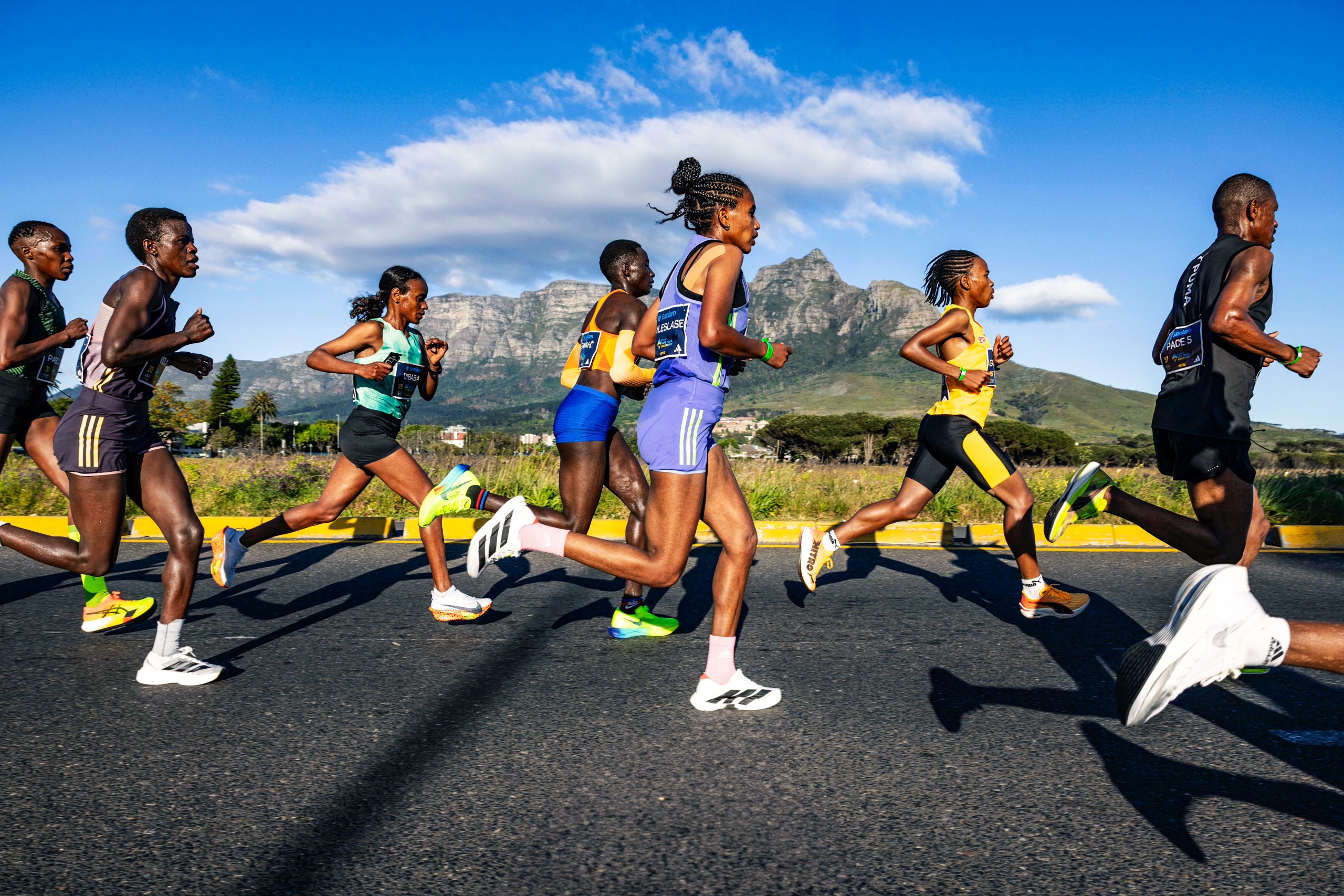
The cancellation affected 24,000 marathon entrants and their supporters, marking an unprecedented moment for what was set to be the largest edition of the marathon to date, featuring the strongest field ever assembled for a marathon on African soil.
“A bigger force had the final say,” said Sanlam Cape Town Marathon CEO Clark Gardner, acknowledging the disappointment felt across the running fraternity. “We once again apologise to all our marathon entrants and their supporters, as well as our sponsors and partners, that the race was not able to take place.”
According to detailed notes from Safety Officer Phil Prinsloo of Eyethu Events, the crisis began unfolding in the early hours of Sunday morning. By 00:15, the first reports of high winds were recorded at the Race Village in Green Point and along the route.
The situation deteriorated rapidly. By 02:15, safety inspections revealed significant infrastructure damage, with start line equipment blown over, fencing collapsed, and gazebos scattered across the hospitality area. Wind gusts of up to 48 km/h were recorded.

“The Race Village was officially shut down by safety officials at 02:30,” Prinsloo explained. Event staff, volunteers, and vendors were prohibited from accessing any part of the venue, leaving critical equipment and supplies stranded.
The damage extended far beyond the start and finish areas. In Woodstock, all signage was blown over by 04:30, while Observatory and Rondebosch experienced gusts exceeding 60 km/h that compromised fencing integrity.
At 04:40, with wind conditions showing no signs of improvement and continuing gusts of 46 km/h, the race’s structural engineer delivered the decisive blow: he could not certify the safety of key infrastructure including start towers, the scaffold bridge, medical tents, and hospitality marquees.
The Joint Operations Committee (JOC) – comprising representatives from race organizers, the City of Cape Town’s Disaster Risk Management, medical services, and South African Police Services – unanimously authorised the cancellation at 04:45.
“Although the Event Safety Plan endeavoured to balance risks with operational requirements, the decision to cancel was all about the safety and security of the participants,” Prinsloo emphasized, noting that the marathon’s World Marathon Majors aspirations played no role in the decision-making process.
Many runners and critics have questioned whether the cancellation was premature, pointing to the noticeably calmer conditions in Green Point by sunrise. However, organisers maintain this improvement was localised and temporary.
“The wind did die down in Green Point around sunrise, but that certainly was not the case on the elevated highway section of the route, nor in Woodstock,” Gardner explained. “The roads in Woodstock and on Main Road were still experiencing high winds until 07:00, blowing our fencing and water table furniture off the roads.”
General Manager Liz Kruger added that the Safety Committee witnessed the dangers first-hand: “They experienced tent poles crashing down around them and fences flying across the road. Colonel Christo Engelbrecht of the South African Police Services told me that we simply cannot send people into those areas.”
Any decision to merely delay would have meant receiving thousands more runners and spectators into the Race Village, which had been deemed unsafe.
The organisers revealed they had explored multiple alternatives, including delaying the start and altering the route. However, each option presented additional safety risks.
“Any decision to merely delay would have meant receiving thousands more runners and spectators into the Race Village, which had been deemed unsafe,” Gardner said. A delayed start would also have forced runners to compete during midday heat and extended city road closures for the entire day.
With one of two planned start areas completely compromised, the remaining venue would have faced dangerous overcrowding with 8,000 additional participants beyond its planned capacity.
The cancellation reinforces the organisers’ decision to move the marathon to a May date from 2026 onwards, hoping to avoid Cape Town’s notoriously windy October weather.
“This was our third year in a row of experiencing various degrees of wind on the weekend of our event,” Gardner noted. “Our marathon has a complex route that requires over 16 km of fencing, so we are vulnerable to winds that exceed 40 kilometres an hour.”
In response to runner disappointment, title sponsor Sanlam has announced it will offer sponsored entries for either 2026 or 2027 to all affected participants. Additionally, a special campaign will allow 2025 entrants to earn their marathon medals through alternative means.
The impact on the marathon’s bid to become Africa’s first Abbott World Marathon Majors event remains unclear, though Gardner expressed optimism following positive feedback from Major assessors about the organisers’ handling of the crisis.
“I am still hopeful that it’s just a matter of time before we get to announce that we are a Major,” Gardner said. “In the meantime, we will pick ourselves up from this disappointment, and do our best to ensure that we put on the best race possible next May.”
ALSO READ: Cape Town Marathon sells out again as Africa eyes historic world Major status




You must be logged in to post a comment.