
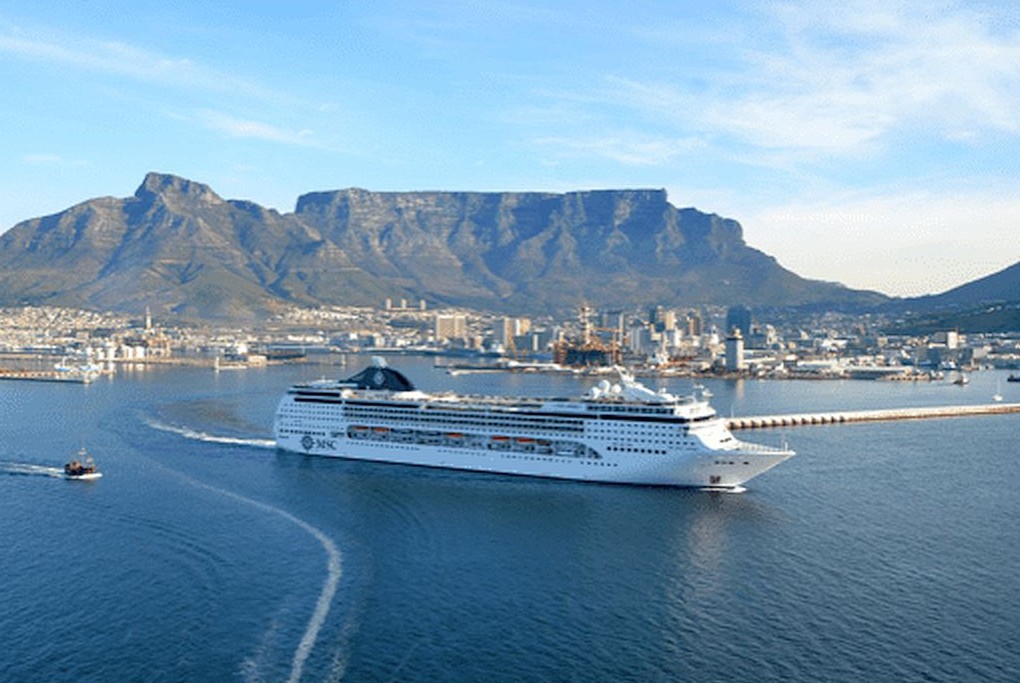
CAPE TOWN — Cruise tourism has cemented its position as a powerhouse for the regional economy, injecting a cumulative R5.7 billion into the Western Cape’s GDP over the past four cruise seasons.
The figures were revealed through an economic impact study by StratEcon, shared at Cruise Cape Town’s Annual Review 2026.
Despite facing headwinds and cancellations during the 2025/26 season due to ongoing conflict in the Middle East, the region’s cruise sector continued its stellar trajectory, outperforming international passenger numbers from the 2022/23 and 2023/24 periods.
Adding to the prestige, the Port of Cape Town was crowned Africa’s Leading Cruise Port at the World Travel Awards for the fourth consecutive year.
Key Economic Findings
The 2025/26 season alone brought remarkable returns to the province, welcoming 64 vessels, 106,240 passengers, and 37,200 crew members.
Over Four Seasons (2022/23 to 2025/26):
- R5.7 billion contributed to the Western Cape’s GDP
- 7,875 annual full-time equivalent (FTE) jobs supported
- R2.76 billion generated in household income
- R791 million contributed to the national fiscus
In the 2025/26 Season:
- R1.35 billion contributed to the Western Cape’s GDP
- R1.47 billion in total industry expenditure
- 1,700 FTE jobs supported locally (and 2,151 nationally)
- The second-highest number of embarking and disembarking passengers recorded to date.
While world cruises remained the dominant GDP contributor, smaller provincial harbours – including Mossel Bay, Hermanus, and Saldanha Bay—collectively generated an additional R11.2 million in visitor spending, spreading economic benefits across the wider coast.
Strengthening Partnerships and Regional Reach
Looking ahead, tourism leaders are focused on strategic investments and multi-country collaboration. Central to this vision is the Southern Africa Cruise Alliance, established alongside partners in Namibia, Angola, St Helena, and the Seychelles to develop unified multi-country itineraries and extend tourism benefits to more coastal communities.
Further bolstering the sector, Cruise Cape Town announced Rovos Rail as its newest private sector partner. The public-private partnership bridges maritime travel with luxury land-based rail experiences across South Africa, encouraging visitors to stay longer, spend more, and explore deeper inland.
What Leadership is Saying
Wrenelle Stander, CEO of Wesgro, said: “A cumulative contribution of R5.7 billion over four seasons shows what is possible when government, industry and private sector partners work together to unlock tourism growth.”
Every ship that docks brings visitors who spend money at our attractions, restaurants, shops and local businesses. By growing this sector, we can create more opportunities for small businesses and move closer to our vision of a job in every home.
— Alderman James Vos, Mayoral Committee Member for Economic Growth, City of Cape Town
Western Cape Minister of Agriculture, Economic Development and Tourism, Dr Ivan Meyer, said: “Cruise tourism is a clear example of the Western Cape Government’s Growth for Jobs Strategy in action. Over four seasons, the sector has generated R2.76 billion in household income, supporting economic growth and creating jobs across the province.”
ALSO READ: Cape Town Tourism wins three gold awards at international tourism film festival africa