


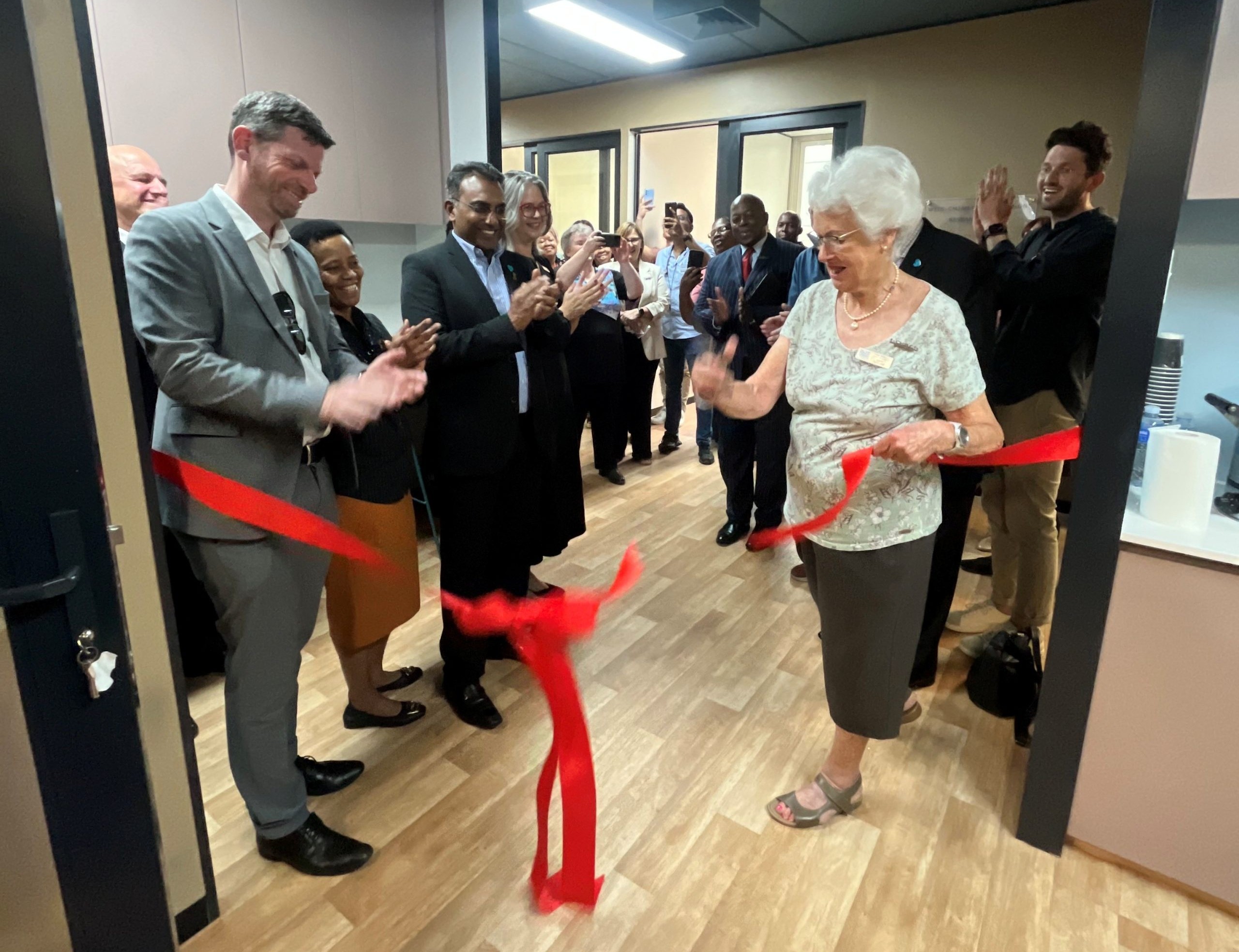
To mark International Childhood Cancer Day, on Sunday 15 February, Tygerberg Hospital and the Red Cross War Memorial Children’s Hospital raised awareness of the importance of early detection and timely treatment of childhood cancers.
Paediatric (or childhood cancer), though less common than adult cancer, requires timely recognition and intervention to improve outcomes. The most common types of paediatric cancer include brain tumours, acute leukaemia and tumours arising from primitive cells in deep-seated organs such as the liver, kidney and adrenal glands. Unlike adult cancers these cancers often grow quickly, but respond well to chemotherapy, the hospitals say.
Alliyah Lewis’ journey
In 2024 Alliyah Lewis, a 2-year-old from Darling, presented progressive abdominal swelling, pain and weight loss. She was diagnosed with Stage-4 neuroblastoma, a cancer affecting the adrenal glands and parts of the nervous system. Alliyah’s treatment included intensive chemotherapy, surgery, radiotherapy and nutritional support, the hospitals say. In December 2025 she joyfully rang the copper bell at the Tygerberg Hospital’s paediatric oncology ward, marking the completion of her treatment. She is now a happy little girl, running and playing.

Amber Michael’s journey
The story of 18-year-old Amber Michael from Heideveld illustrates the importance of vigilance and early detection. A lump, initially identified and treated in 2012 when she was 5 years old, returned in 2020 and grew rapidly. After tests and biopsies at Red Cross Amber was diagnosed with Stage-1 Hodgkin’s lymphoma. She underwent rapid chemotherapy and received exceptional care from doctors, nurses and hospital staff. Today, Amber is a first-year BA (Psychology) student at the University of the Western Cape, a testament to the life-saving potential of timely detection and effective treatment, the hospitals say.
Parents should be alert to persistent symptoms such as:
- Pallor and easy bruising or bleeding, often associated with bone or joint pain;
- Persistently enlarged lymph nodes;
- Unexplained lumps in the abdomen, head and neck, limbs or testes;
- White spots in the eye, new squints or bulging eyes;
- Neurological changes such as deterioration in balance or speech and prolonged headaches.
- Early medical consultation is crucial if any of these symptoms persist, the hospitals say.
When to seek medical care
“If you notice any warning signs persisting consult a physician or qualified health-care provider immediately,” advised Prof Alan Davidson, head of the haematology and oncology at Red Cross. “Early recognition allows for quicker diagnosis and better outcomes. While some symptoms may resemble common childhood illnesses, prompt investigation is essential.”
In the Cape approximately 100 children under age 15 are diagnosed with cancer annually. While certain types, such as acute lymphoblastic leukaemia, have shown increases in specific populations, overall childhood cancer rates remain relatively stable, with case numbers rising as the population grows.
Considering general practitioners and paediatricians encounter very few cases over a professional career the paediatric oncology units at Red Cross War Memorial Children’s Hospital, Tygerberg Hospital and Rondebosch Medical Centre work closely with the childhood-cancer charity, Childhood Cancer Foundation South Africa (CHOC), to educate medical professionals in recognising and act on the warning signs, the hospitals say.



You must be logged in to post a comment.