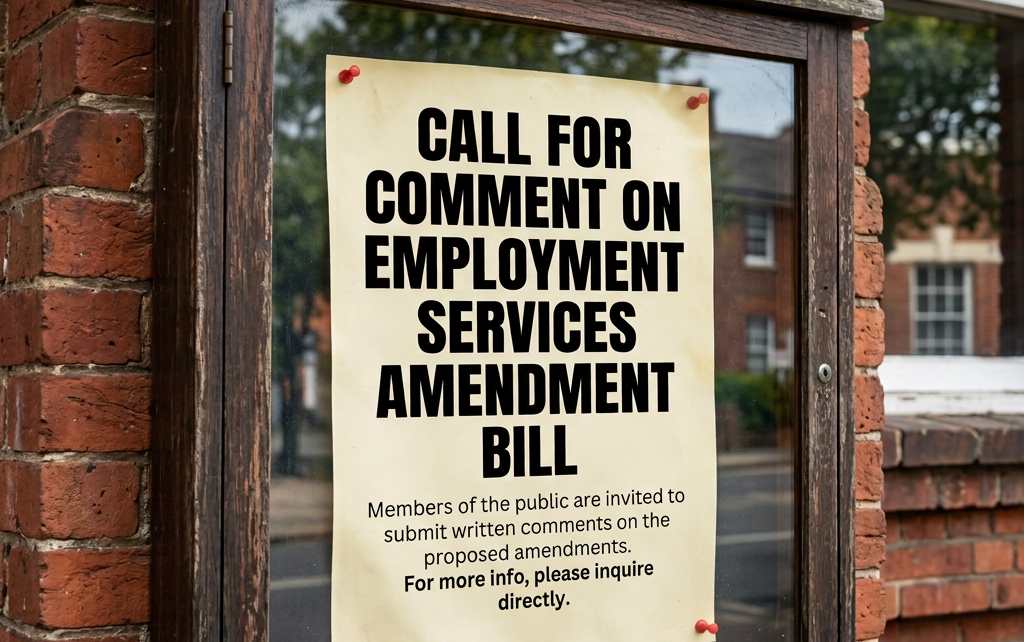
South Africans have until 6 November to comment on proposed laws that could limit how many foreign workers businesses can employ and impose fines of up to R1 million on violators.
Nomakhosazana Meth, minister of Employment and Labour, has introduced legislation that would give her unprecedented power to set quota caps on foreign nationals by sector, occupation or region.
Bill replaces sections in Employment Services Act
The Employment Services Amendment Bill, tabled in Parliament on 29 May, aims to create structured frameworks managing non-citizen employment while protecting South African jobs, according to Boyce Maneli, portfolio committee on Employment and Labour chairperson.
Under the bill, employers hiring foreign nationals must prove they searched for suitable South Africans first, create skills-transfer plans showing how foreign workers will train locals, and potentially limit their foreign workforce to government-set percentages.
ALSO READ: Government intensifies crackdown on illegal immigration with new quotas and deportations
The bill replaces two basic sections in the current Employment Services Act, with an entire chapter governing foreign recruitment and employment.
Effect of proposed laws outlined
The penalties are steep. Businesses violating the rules face escalating fines: R100 000 for first offenses, R200 000 for violations within three years, and up to R1 million or 10% of annual turnover for repeat offenders. Labour inspectors would gain powers to inspect workplaces without notice, demand records, check permit compliance and verify quota percentages.
The quota system would work through ministerial notices setting maximum foreign worker percentages after public consultation. Draft notices must be published in the Government Gazette for 30-day comment periods before the Employment Services Board advises the minister. Small businesses with fewer than 10 employees would be exempt unless specified otherwise.
Before hiring any foreign national, employers would have to verify work authorisation, document their search for local candidates, and prepare plans showing how foreign workers would transfer skills to South Africans through training programmes, mentorship and succession planning.
However, not all foreign workers would be affected. The bill explicitly excludes refugees, asylum seekers and permanent residents from the “foreign national” definition. Refugees have unrestricted employment rights under the Refugees Act and would not be subject to quotas or skills-transfer requirements.
Significant shift from current law implied
This represents a significant shift from current law. The Immigration Act controls who can work through visa and permit systems, while the Employment Services Act only requires employers to verify permits. The amendment now regulates how foreign nationals are employed once permits are granted, ensuring alignment with both the Immigration and Refugees acts.
Beyond quotas and skills transfer, employers would be banned from requiring foreign nationals to perform unauthorised work, violating quota limits, or failing to conduct local labour market tests. Foreign nationals employed unlawfully still retain rights to enforce claims against employers, with labour inspectors and bargaining council agents able to pursue claims on their behalf.
Comments need to be submitted to the Portfolio Committee at employmentservicesbill@parliament.gov.za by Friday 6 November at 16:00.
For more information contact Zolani Sakasa on 083 709 8488.