

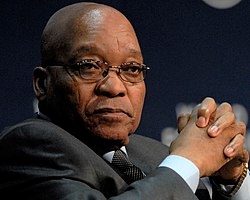
The Pietermaritzburg High Court has ruled that a long-delayed corruption case against former president Jacob Zuma and French defence firm Thales can proceed, dismissing attempts to further postpone the trial.
High Court judge Nkosinathi Chili, sitting in Pietermaritzburg, ruled on Thursday that the “interests of justice” required the case to move forward after years of procedural delays.
“Without this court’s intervention, there is a likelihood of grave injustice or the administration of justice being brought into disrepute,” Chili said in his judgement.
The case centres on a 1990s arms deal worth US$2 billion, in which South Africa purchased fighter jets, patrol boats and other military equipment from five European defence companies.
Zuma (84) faces accusations that he accepted bribes from Thales in exchange for shielding the firm from investigation into the deal whilst he served as deputy president. Thales, formerly known as Thomson-CSF, denies the allegations.
Both parties face more than a dozen charges including fraud, corruption and racketeering. Zuma was not present for Thursday’s judgement. A trial date has not yet been set.
The case has been repeatedly delayed through judicial and prosecutorial recusals and other procedural challenges in what has become known as the “Stalingrad” defence tactic, aimed at exhausting legal proceedings through constant appeals.
ALSO READ: Zuma’s name surfaces in newly released Epstein files over alleged 2010 London dinner
Judge Chili ruled there would be no “cognisable harm or grave injustice” if the trial proceeded.
Zuma, once nicknamed the “Teflon president”, led South Africa from 2009 until 2018, when the ruling African National Congress forced him from office amid mounting corruption scandals.
He faces separate accusations of enabling the looting of state assets during his presidency. In 2021, Zuma was sentenced to 15 months in prison after refusing to testify before a panel investigating financial corruption and cronyism under his administration.
He was released on medical parole after serving two months. His jailing triggered widespread protests, riots and looting that left more than 350 people dead in South Africa’s worst violence since the country’s first democratic election in 1994.
ALSO READ: Jacob Zuma ordered to repay nearly R29 million in legal fees

