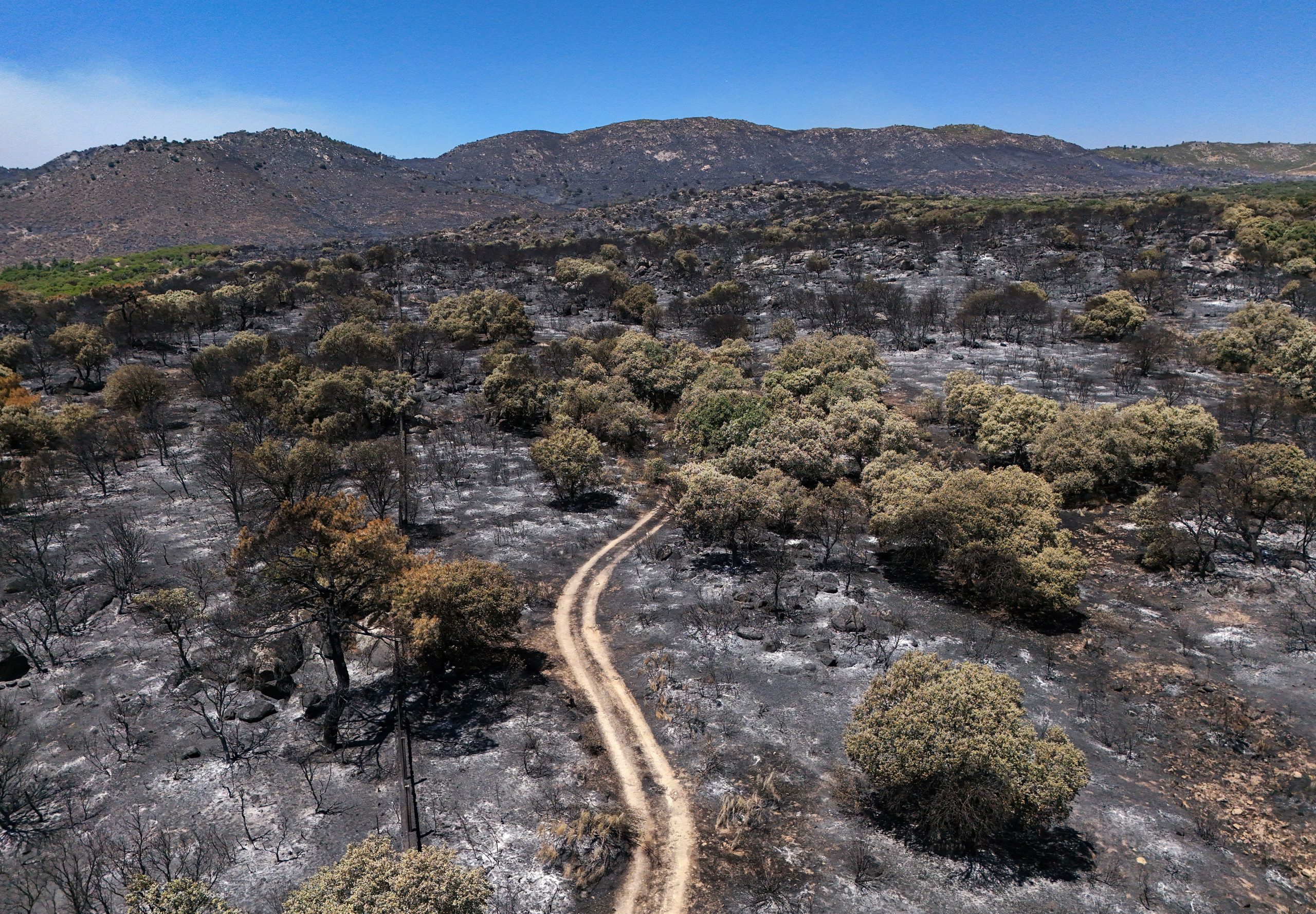
Deadly wildfires are devastating communities across the Southern Hemisphere, with Australian authorities confirming the first fatality from bushfires that have destroyed hundreds of buildings, while Argentina battles a major blaze threatening Patagonian towns.
Bushfires have razed more than 300 buildings across southeast Australia, including over 70 houses, as temperatures soared past 40°C during a heatwave blanketing Victoria state. The blazes have torn through more than 300 000 hectares of farming land and native forest.
Police confirmed one person died in a bushfire near Longwood, about two hours’ drive north of Melbourne. “This really takes all the wind out of our sails,” said Chris Hardman from Forest Fire Management Victoria. “We really feel for the local community there and the family, friends and loved ones of the person that is deceased.”
Emergency Management Commissioner Tim Wiebusch said conditions were beginning to ease on Sunday, allowing firefighters to gain control over some blazes. A state of disaster had been declared on Saturday as dozens of fires erupted across the region.
“There were embers falling everywhere. It was terrifying,” cattle farmer Scott Purcell told national broadcaster ABC, describing the fire near Longwood that glowed orange against the night sky.
Argentina evacuates thousands
Meanwhile, in southern Argentina, a major forest fire has burned more than 5 500 hectares in the Patagonia region, forcing the evacuation of about 3 000 tourists and 15 families from the area surrounding Epuyén, a town of 2 000 residents.
The fire broke out on Monday at Puerto Patriada, about 1 700km southwest of Buenos Aires, and has since surrounded the small community. More than 10 homes have been destroyed.
“There’s no way to describe what we’re living through. Every five minutes a new fire starts. It’s hell,” local resident Flavia Broffoni said on social media.
Chubut province Governor Ignacio Torres warned that the next 48 hours would be critical due to adverse weather conditions. Nearly 500 personnel are deployed fighting the blaze, with reinforcements expected from Córdoba province and Chile.
Climate concerns
Both countries are grappling with increasingly dangerous fire conditions linked to climate change. Australia’s climate has warmed by an average of 1.51°C since 1910, fuelling more frequent extreme weather patterns.
The current Australian fires have created some of the most dangerous bushfire conditions since the “Black Summer” blazes of 2019-2020, which raged across the eastern seaboard, destroying thousands of homes and blanketing cities in toxic smoke.
In Argentina, firefighters face growing challenges from higher temperatures and lower humidity brought by climate change, whilst contending with reduced government spending on fire services.
Australian Prime Minister Anthony Albanese said he was in discussions with Canada and the United States for possible additional assistance as hundreds of firefighters from across Australia have been called in to help. Fires remain active across multiple Argentine provinces, including Neuquén, Río Negro and Santa Cruz, which lost 32 000 hectares to wildfires in early 2025.
Local firefighters still battling multiple blazes
Back home emergency services across two provinces are still fighting multiple blazes in challenging terrain and volatile conditions.
In the Eastern Cape’s Kouga region, firefighters are entering their fourth day battling wildfires across the municipality, with some blazes under control whilst others continue burning dangerously. Fires along the Kabeljauws River remain out of control, with flames moving towards Sonop Farm and Hankey, whilst a fire north of Humansdorp proves difficult to contain due to challenging terrain.
The Western Cape is facing particularly intense firefighting operations, with the Wemmershoek fire near Franschhoek destroying one structure, damaging another, and destroying a tractor after spreading rapidly down the mountain overnight.
The eighth day of fighting the Pearly Beach fire has shown progress, with crews successfully containing the left flank, though dense alien vegetation poses ongoing flare-up risks. However, the Stanford fire continues to challenge crews working in inaccessible terrain thick with old vegetation and alien plants.
Emergency services have made some headway, with the Du Toitskloof fire brought under control on Friday and all affected roads reopened.
Authorities across both provinces have thanked community members and volunteers for their support whilst urging residents to remain vigilant, with road closures possible at short notice as conditions change.
ALSO READ: Western Cape wildfires: crews contain some fires, others rage on