


Alcohol abuse remains a serious contributor to rising crime in the Northern Cape, and laws regarding the abuse of alcohol must be revisited, as well as trading hours at liquor outlets.
Minors who frequent liquor outlets and liquor premises must not be tolerated and law enforcement must act immediately.
Also, according to the Northern Cape crime statistics for the third quarter of 2025-’26 – which is the period October to December 2025 – domestic violence and gender-based violence remains in the spotlight with 18 women and 7 children killed. Once again, alcohol abuse is a contributor towards these crimes.
These sentiments were shared by the provincial police commissioner, Lt Gen Koliswa Otola, and the Northern Cape MEC for Transport, Safety and Liaison, Limakatso Koloi, during the release of the latest crime statistics in the province on Friday 20 March at the office of the premier in Kimberley.
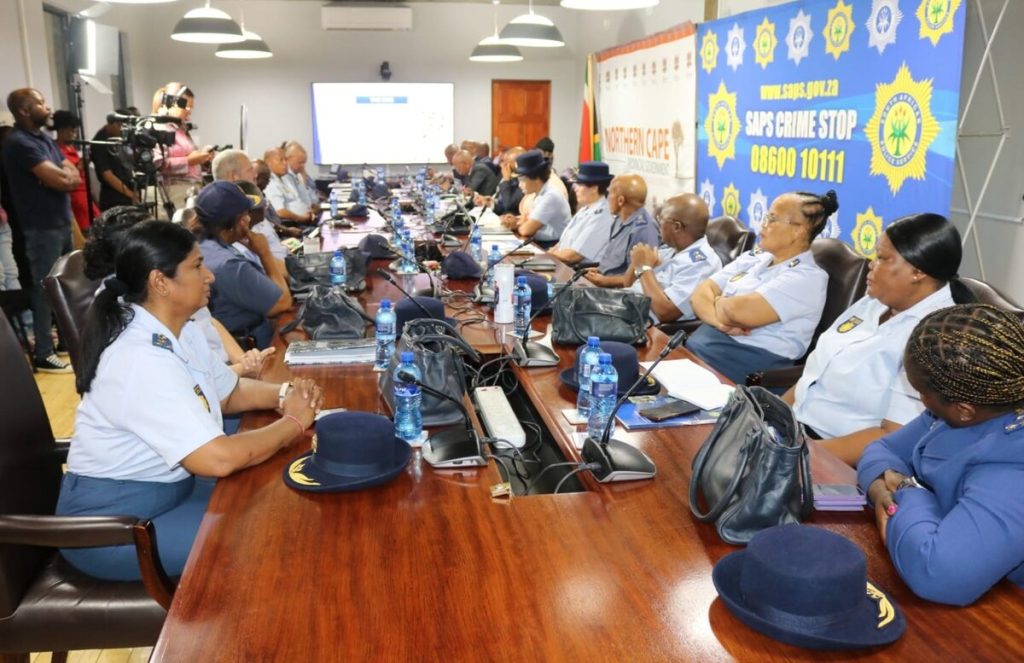
Eight Northern Cape police stations feature on national list
According to the statistics, eight police stations within the Northern Cape are appearing on the national list of the 30 top reporting stations for different crimes – these are Galeshewe, Kimberley, Roodepan, Kagisho, Upington, Mothibistad, Rosedale and Kakamas.
Furthermore, reported murder cases in the province increased by 3 counts (from 109 to 112). Attempted murder cases increased by 116 counts (from 630 to 746), while common assault decreased by 172 cases (from 1 724 to 1 552).
Fewer rape cases were reported, showing a decrease from 321 to 306 cases. Three rape cases were however reported at educational premises of which two occurred in Wrenchville in Kuruman and one at a student accommodation in the Kimberley CBD during which a female student was sexually assaulted. The occurrence of sexual offences at education institutions is unacceptable and it demands coordinated interventions, Otola said.
No bank robberies, truck hijacking or robbery of cash in transit were reported.

Drug and contact-related crime, as well as arson showed a decrease, while burglary at premises (non-residential and residential), theft of motor vehicles and motorcycles, commercial crime, and shoplifting increased.
Seven more cases of kidnapping were reported (from 43 cases to 50).
In this period, the damage to essential infrastructure and theft of copper cables was prioritised. The establishment of task teams within districts focuses on non-ferrous metals related crimes.
The multi-disciplinary illicit mining operation Vala Umgodi, comprising members of the police, defence force and Department of Home Affairs are among other confiscating instruments and equipment used by perpetrators during the commission of these crimes.
In the coastal area, Operation Phakisa focuses on crime to address marine related crimes, while Operation Shanela 2 executes disruptive actions in hotspot areas across all five districts, as well as compliance inspections.
‘Adopt a culture that rejects violence’
Commenting on the statistics, Reinette Liebenberg, DA MPL and Northern Cape spokesperson for Transport, Safety and Liaison, said they welcome the decisive action by the police to shut down illegal shebeens and implement a crime-prevention strategy for taverns.
“That 363 unlicensed shebeens and taverns were closed down just from October to December 2025, is a shocking indication of just how rampant alcohol-related unlawfulness has become,” she said.
During the presentation, Koloi added crime is a societal issue and that communities need to adopt a culture that rejects violence and values human life.
It was also mentioned that service delivery protests divert the police’s attention from preventing crime and urged all stakeholders to address the concerns of the community.
Otola reiterated that collaboration between the police, community policing structures and communities is imperative to combat crime.
Planned closure of Farr ‘leaves criticial gap’
In light of alcohol abuse recognised as a contributor towards these crimes, the planned closure of the Foundation for Alcohol Related Research (Farr) in the Northern Cape came into the spotlight again.
Farr is the only organisation offering specialised, evidence-based services for the diagnosis, prevention, and long-term support of individuals affected by Foetal Alcohol Spectrum Disorder (FASD).
In 2001, Farr revealed that the 11,9% FASD prevalence in De Aar was the highest documented prevalence rate in the world. Since then, Farr has conducted studies in Emthanjeni and Renosterberg, which have shown even higher rates of FASD, namely 28,2% in Renosterberg, 20,8% in Hanover and 21,4% in Britstown.
In a statement, Karen Jooste, DA MPL and Northern Cape spokesperson on Social Development, said the Democratic Alliance (DA) will intensify efforts to secure an urgent presentation by Farr to the legislature’s Social Development Committee.
“Its closure leaves a critical and irreplaceable gap, as substance abuse in the Northern Cape is widespread and increasingly normalised, particularly among young people, with alcohol abuse deeply entrenched across many communities,” Jooste said.
ALSO READ: Farr-sluiting: Ernstige gevolge vir bewustheid van fetale alkoholsindroom in
Also, the Department of Social Development underspent its Substance Abuse Prevention and Rehabilitation budget by R477 000. The department’s performance stands in stark contrast to the extensive reach of Farr, which has, over the years, supported thousands through community-based programmes.
The DA is deeply concerned that no steps have been taken to address the vacuum left by Farr’s closure, despite calls for intervention following its announcement in March last year.
“With Farr set to close its doors permanently in May, vulnerable communities will lose access to proven, long-term support systems that are replaced by programmes that are inadequate in scope and impact.
“The Northern Cape cannot afford a situation where the crisis is growing while the capacity to respond is shrinking,” Jooste concluded.


You must be logged in to post a comment.