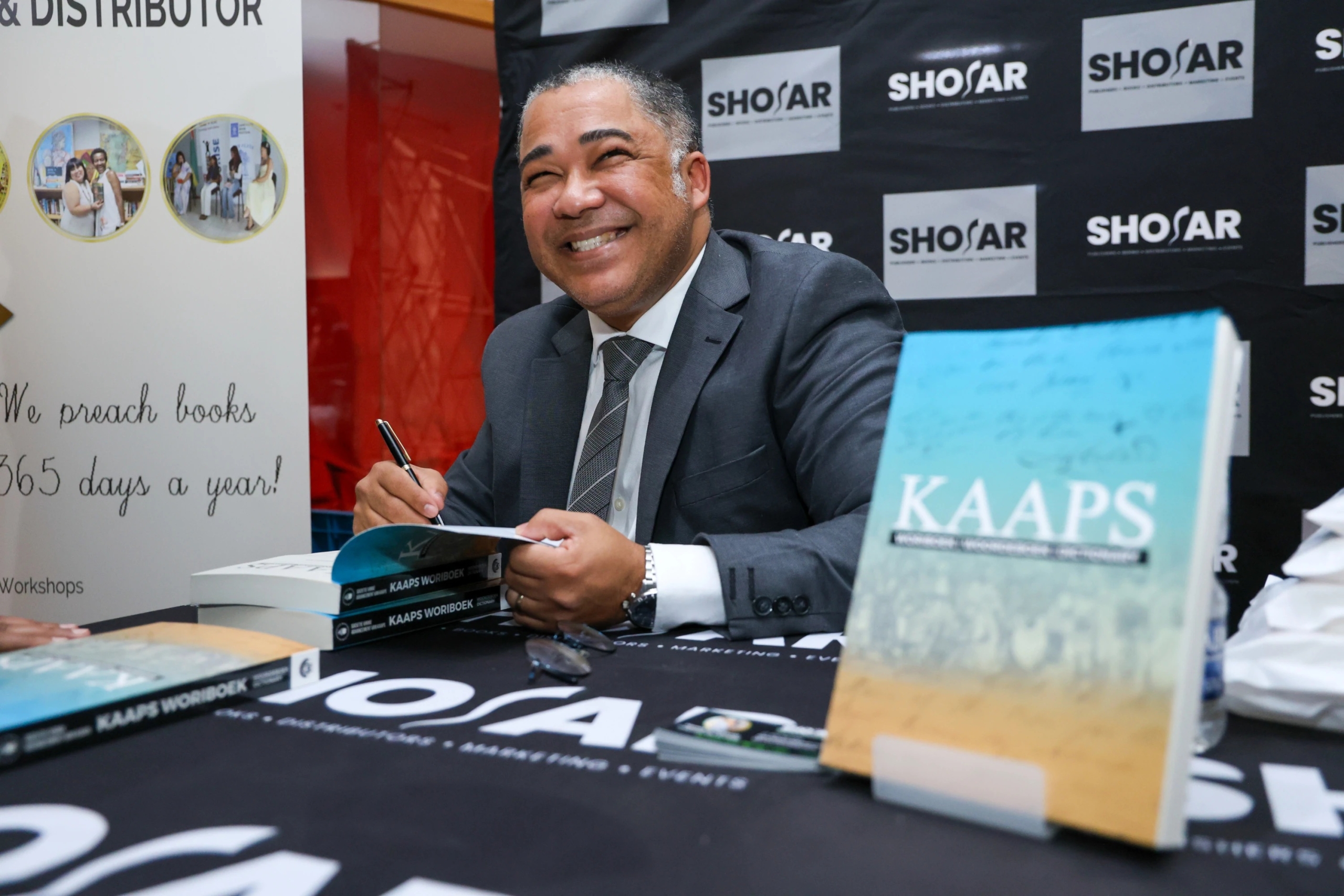
CAPE TOWN – Fourteen years ago, the first Kaaps Symposium was held at the Library Auditorium at the University of the Western Cape (UWC) — the same space that has now hosted the launch of the Kaaps Dictionary.
The dictionary is a project led by Prof Quentin Williams, who is the director of the Centre for Multilingualism and Diversities Research (CMDR) and a full professor of Linguistics in the Linguistics Department at UWC.
Importance
Deputy Vice-Chancellor: Academic, Professor Monwabisi Ralarala, was one of the keynote speakers at the launch and highlighted the importance of the dictionary both in higher education and beyond.
“It is true that UWC, like any other institution, is a knowledge-intensive organisation. And of course, this contribution by Prof Williams and the team is adding much more value to that commitment that our institution adheres to. I must also point out that this project speaks to the long-standing contribution of the Centre for Multilingualism and Diversities Research, and is of course not limited to areas like linguistic justice … the linguistic landscape, mother tongue and bilingual education.”
The Kaaps Dictionary is now an example of how marginalised languages can be made policy-possible and can be integrated into school and university curricula to inform multilingual knowledge production. Ralarala ended his address by reminding the audience that “If you lift the language, you lift the people.”
The event also featured a panel discussion led by linguists and emerita full professor, Charlyn Dyers, in conversation with Williams. “We have the proof — this language exists far deeper in history than people assume, going all the way back to the earliest generations, even into the 1600s and 1700s. This dictionary allows us to point to a resource and say: we have something that rightfully legitimises our language and affirms our identity,” said Williams.
Restoring dignity
The launch of the Kaaps Dictionary marked more than the publication of a linguistic resource, as it also signaled a turning point in the recognition of language, identity and intellectual belonging. Williams made it clear, this work was not only about documenting words, but about restoring dignity to speakers who had long been excluded from formal systems of knowledge.
“It speaks to a deeper project of equality, where the school reflects your linguistic reality and where language becomes a tool of empowerment rather than alienation. The momentum already generated by the dictionary, in classrooms, publishing and research, reflects a growing shift in how Kaaps is understood and valued.”
For UWC, this moment affirms its longstanding commitment to social justice, community-centred scholarship and linguistic inclusion.
ALSO READ: UWC reaches milestone with 30 SARChI Chairs