

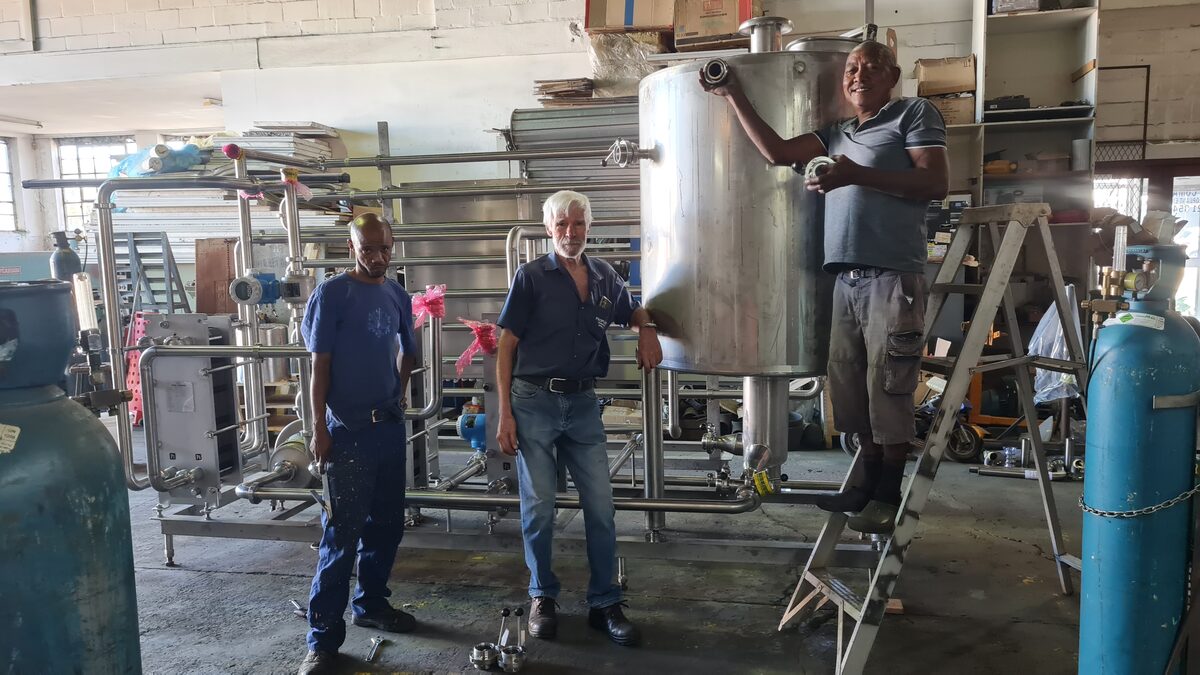
When foot and mouth disease (FMD) restrictions threatened to force a multinational food corporation to dump thousands of litres of milk daily, Strand manufacturing company Proplant Stainless Steel stepped in with an extraordinary solution.
Located on Gerber Boulevard in Gants Centre, the company completed what would normally be a weeks-long project in mere days, building an emergency pasteuriser plant under strict government regulations.
Local business owner Willy Strang, together with his four-member team, rose to the challenge, dedicating approximately 20 hours to complete the critical project. The plant was designed by Solutions Technology from Cape Town.
“The client told us they felt we were the only company they believed could pull it off under these conditions,” Strang recalls.
Upon learning the crisis was directly linked to the FMD outbreak, his response was immediate: “I was concerned and worried, and I knew I had to do everything in my power to get the pasteuriser built as soon as possible.”
While Strang admits he had never built something under such extreme time pressure, his philosophy remained unchanged: “We have always accepted a challenge – work is work.”
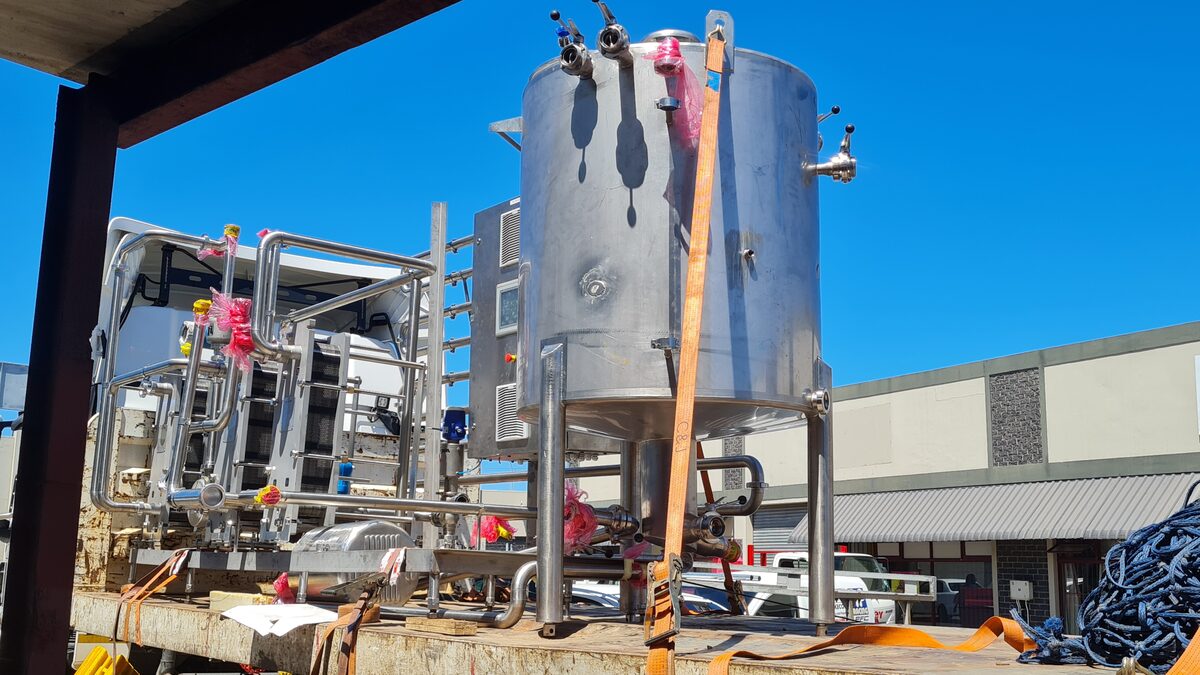
The custom-built pasteuriser heats milk to precisely 71,5° C for 15 seconds – killing harmful bacteria and making milk safe for consumption. With restrictions preventing unpasteurised milk from entering processing facilities, the emergency plant became a lifeline to avoid catastrophic daily losses.
Strang’s plant can process approximately 100 000 litres daily. “Basically, it’s heating the milk and holding it at high temperature,” he explains. “The key component is the ‘zig-zag’ tube at the back – a holding tube. It takes 15 seconds to pass through before being cooled down again.”
The 5-meter long, 2-meter wide and 2,5-meter high unit uses stainless steel throughout. “Stainless steel is always used for most food product lines” due to its hygienic properties, Strang notes. The compact unit integrates seamlessly with existing operations, pasteurising milk before it enters the client’s factory for food production.
Family played a crucial role, particularly Strang’s daughter Michelle Robert-Baxter, who served as communication link between client and company. “She kept me calm and grounded during the stressful time,” Strang reflects.
Michelle arrived before 06:00 daily, ordered materials and kept everyone fueled with refreshments.
Despite sourcing materials through “local suppliers, stock from our stores, and some supplied by the client,” the biggest challenge came during the final push: “Working until Sunday night late, being convinced we wouldn’t finish before transport arrived Monday morning – but we did!”
Strang is eager to thank his core team: Walter Brinkhuis, Andrew Williams, Shane Burricks, Johannes Tembo, and Michelle. “They pulled together like nothing I’ve seen before.”
According to Strang the emergency solution now saves “more than 90 000 litres per day” instead of dumping, representing significant victory for food security during the crisis.
The client was “very, very happy,” Strang reports, “and mentioned they did not think it was possible to do this job so quickly”. What strikes Strang most profoundly: “I’m most proud that at my age I can still do these nearly impossible contracts, and so proud of my team for what they have helped Proplant achieve.”
“My father and his team worked around the clock,” said Michelle. “They understood that every day of delay meant thousands more litres of milk going to waste while people need that nutrition.”

