


CAPE TOWN – The Western Cape government tabled a R285.8 billion three-year budget on Wednesday, with R93.5 billion allocated for the 2026/27 financial year, as the province seeks to accelerate economic growth while maintaining essential services amid mounting climate and fiscal pressures.
Minister of finance Deidré Baartman presented the budget to the provincial parliament under the theme “Delivering Growth with Discipline and Care”, outlining how the government plans to balance job creation, infrastructure investment and frontline service protection.
The budget places economic expansion at its centre, with R36.651 billion committed over three years to initiatives targeting water security, energy resilience, agriculture, tourism, entrepreneurship and critical infrastructure development.
This emphasis on growth comes as the province continues to outperform national employment trends. According to Premier Alan Winde’s recent State of the Province Address, the Western Cape created 93 000 new jobs in the last quarter of 2025, bringing the province’s unemployment rate down to 18.1% compared to the national rate of 31.4%.
Over the past five years, nearly 90% of all net jobs created in South Africa, 360 347 of 404 712, were in the Western Cape.
Health and education dominate spending
Frontline services remain the largest spending priority, with R208.643 billion, or 77.48% of the three-year budget, directed to the Educated, Healthy and Caring Society priority, which encompasses education, health and social services.
The education department is investing R1.5 billion in school infrastructure, with 15 new schools under construction and 175 additional classrooms being added. The province currently provides free school meals to 550 000 learners daily.
Health infrastructure receives R2.4 billion over three years, with major projects including a R255 million expansion of the Groote Schuur Hospital emergency centre and planning for the Tygerberg Hospital redevelopment. The department has 45 health facility projects under construction and is deploying 63 new mobile clinics.
The province is expanding mental health capacity with three new acute psychiatric units and an additional adolescent ward, adding approximately 100 beds. New initiatives include artificial intelligence-enabled screening for retinal disease in Khayelitsha and AI-assisted brain imaging for stroke diagnosis across hospitals.
The Khulisa Care pilot programme aims to reduce malnutrition and stunting in young children through nutrition vouchers and community health worker support during the critical first 1 000 days of life.

Safety receives R8.595 billion
Safety and security receives R8.595 billion over the next three years, funding the expansion of Law Enforcement Advancement Plan officers, ShotSpotter technology, K9 units and rural law enforcement support programmes.
The province is procuring two advanced vehicle scanners for checkpoints to detect hidden drugs, firearms and human trafficking victims. A Gang Observatory partnership with the Global Initiative Against Transnational Organised Crime continues monitoring gang activity.
The budget provides provincial funding for two lawyers to support detectives in Mitchells Plain and additional equipment for investigators.
Infrastructure investment pipeline
The department of infrastructure and public works has developed a single integrated infrastructure pipeline worth R152 billion, containing 52 investment-ready projects.
Flagship road projects include the R11 billion N1 Wingfield Southern Upgrade, the R300 Ring Road and the George Western Bypass. This year’s roads maintenance programme will resurface 2 275 000 square metres.
Port upgrades are planned for Cape Town, Saldanha Bay and Mossel Bay, with new freight rail links connecting the Overberg region to ports.
Housing projects include Conradie Park Phase 2, Leeuloop with approximately 341 social housing units, Founders’ Garden with about 1 178 units, and phases of the Ebenhaezer development in Bitou. The province is tripling Finance Linked Individual Subsidy Programme subsidies for first-time homebuyers to more than 3 000.
Water and energy security
The province aims to secure an additional 310 million cubic metres of water by 2035 through multiple projects.
The Clanwilliam dam wall raising will add 69.5 million cubic metres annually. The Plettenberg Bay desalination plant is operational, while George is receiving a new water and sewer system. Projects are underway in Overstrand, Saldanha Bay and at the Voelvlei treatment facility.
The provincial energy resilience programme added 819 megawatts of generation capacity in 2024/25, with approximately 1 000 megawatts anticipated this year. The province committed R46 million in 2025/26 to enhance municipal energy security.
The Riversdale Solar Photovoltaic and Battery Storage project, valued at R173 million, aims to make the town independent of Eskom supply.
Investment attraction
Five major investment projects are nearing closure following the province’s investment summit, including a R600 million green hydrogen facility, R1.8 billion manufacturing investment, R105 million technology project, R250 million electric vehicle and green economy venture, and a R400 million solar installation.
The province has launched Africa’s first commercial drones and unmanned aerial vehicle testing sandbox and continues supporting the aerospace and boatbuilding industries.
Building plan approvals in the province reached approximately R35 billion, the highest in the country, while exports increased 49% over three years from R43.1 billion to R64.1 billion.
Disaster and climate response
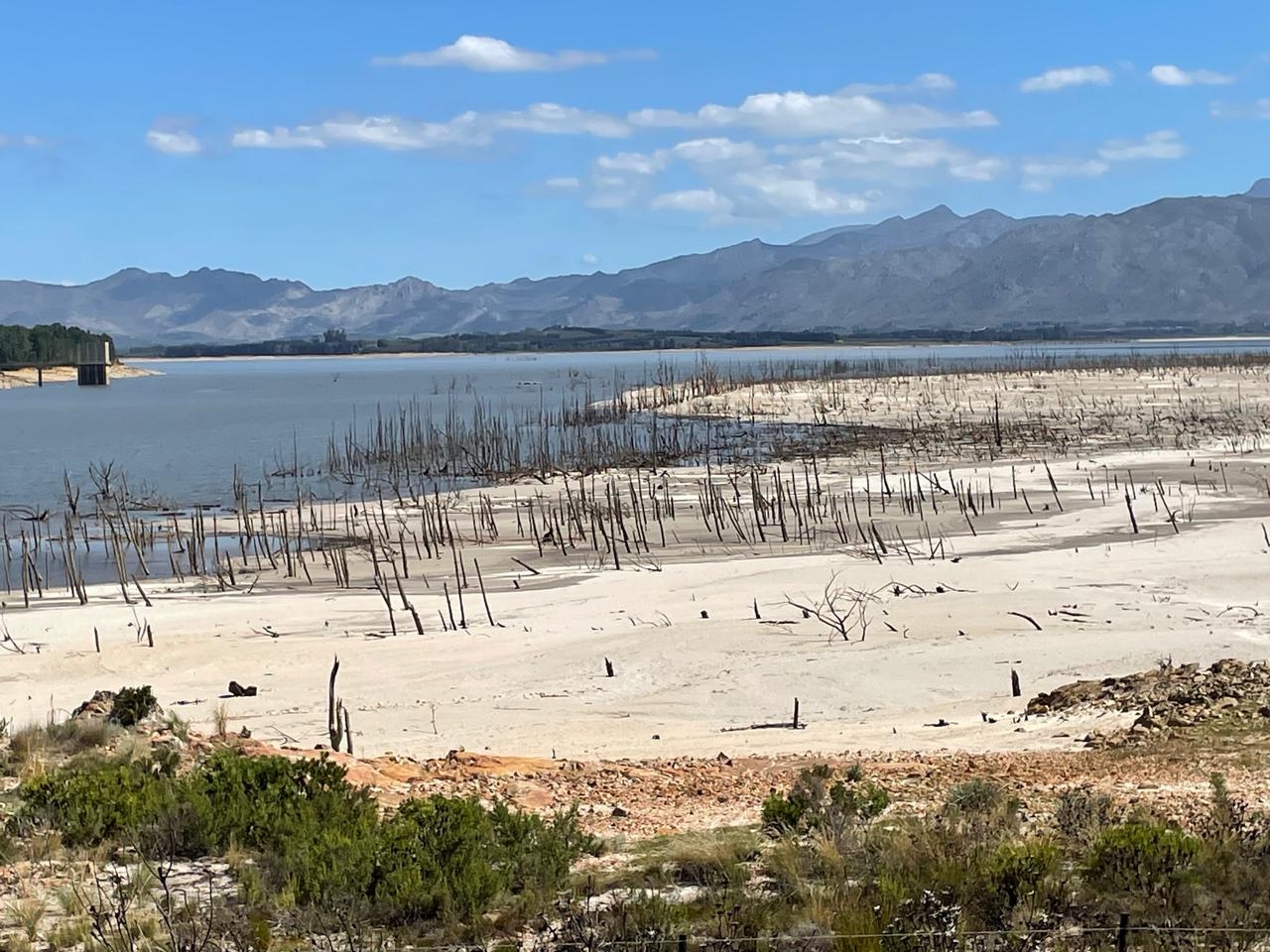
The budget allocates R949.8 million in provincial funding for unforeseen and unavoidable events over the three-year period, including drought relief, energy and water resilience measures, combating gender-based violence, foot-and-mouth disease response and firefighting.
The province invested more than R30 million in fire service augmentation and aerial firefighting capacity, deploying 27 helicopters and spotter planes. New firefighting vehicles are being supplied to municipalities, with support for Fire Protection Associations.
Ecological infrastructure programmes are rehabilitating 16 000 hectares through river protection and invasive alien plant clearing, potentially augmenting 113 million cubic metres of water.
Innovation and governance
Innovation, Culture and Governance receives R31.924 billion over three years to build what the province describes as an agile, innovative government that improves service delivery.
The province has expanded free Wi-Fi to 1 600 sites and established mobile e-centres to improve digital access. The social development department’s SWIMS application now provides digital client files with AI-enabled speech-to-text functionality.
The Jobseeker Travel Voucher programme has expanded from Cape Town to George, while the YearBeyond programme placed approximately 3 250 young people in work opportunities. The Chrysalis Academy continues youth upskilling interventions.
Social development support
The gender-based violence Ambassador Programme now has more than 860 volunteers operating 21 programmes. The province supports 27 shelters that assisted 1 584 beneficiaries last year.
Mobile social development offices cover more than 60 000 kilometres monthly, while the Moments of Dignity programme is expanding from 181 to 315 centres with a target of 500.
The Cape Care fund, a partnership between the department of social development and the Health Foundation, provides support to non-governmental organisations delivering frontline services.
Economic outlook
Winde noted that economic growth in the Western Cape has doubled over the past five years, with projections showing the province will grow faster than national expectations in 2026.
The budget framework reflects the government’s strategy to maintain fiscal discipline while investing in infrastructure and programmes designed to accelerate economic growth and job creation in the face of ongoing climate challenges and economic constraints.
ALSO READ: Budget 2026: Tax relief for savers and increased social grants as government spends R2.67 trillion



You must be logged in to post a comment.