


Cape Town’s dam storage levels have fallen to 51.8%, prompting officials to call for stricter water conservation as the city enters a critical period before winter rainfall.
The city is currently in an early warning phase, with dam levels 17.5% lower than the same period last year. Water consumption has risen to 1 018 million litres per day, exceeding the target of 975 million litres by 43 million litres.
While Cape Town is not officially in a drought and water supply remains stable, authorities warn that dam storage could drop to as low as 40% by May if this year’s rainfall is average.
“We cannot control and depend on what winter will bring in the face of unpredictable rainfall. We can only control the water we currently have,” said councillor Zahid Badroodien, mayoral committee member for water and sanitation.
Exceptional heat drives water demand
Areas around Cape Town are experiencing exceptional hot weather for March, contributing to increased water consumption across the region.
The mercury in Paarl, Stellenbosch, Worcester, Vredendal and Clanwilliam climbed to 40 degrees Celsius and beyond today. Even cooler coastal areas have sweltered, with Onrus and Hermanus reaching 30 degrees Celsius and Langebaan hitting 34 degrees Celsius.
The exceptional hot weather is expected to continue through until Sunday
Water usage increased from 1 012 million litres per day the previous week, a rise authorities attribute to the soaring temperatures. However, Badroodien said the higher consumption is typical during hot weather periods.
“With dam levels being 17.5% lower compared to last year, and unpredictable rainfall, we have to use water responsibly and be water wise at all times, especially this summer,” he said.
The city has urged residents to limit non-essential water use during peak heat periods, noting that current storage levels must sustain the city until the next seasonal rainfall cycle.
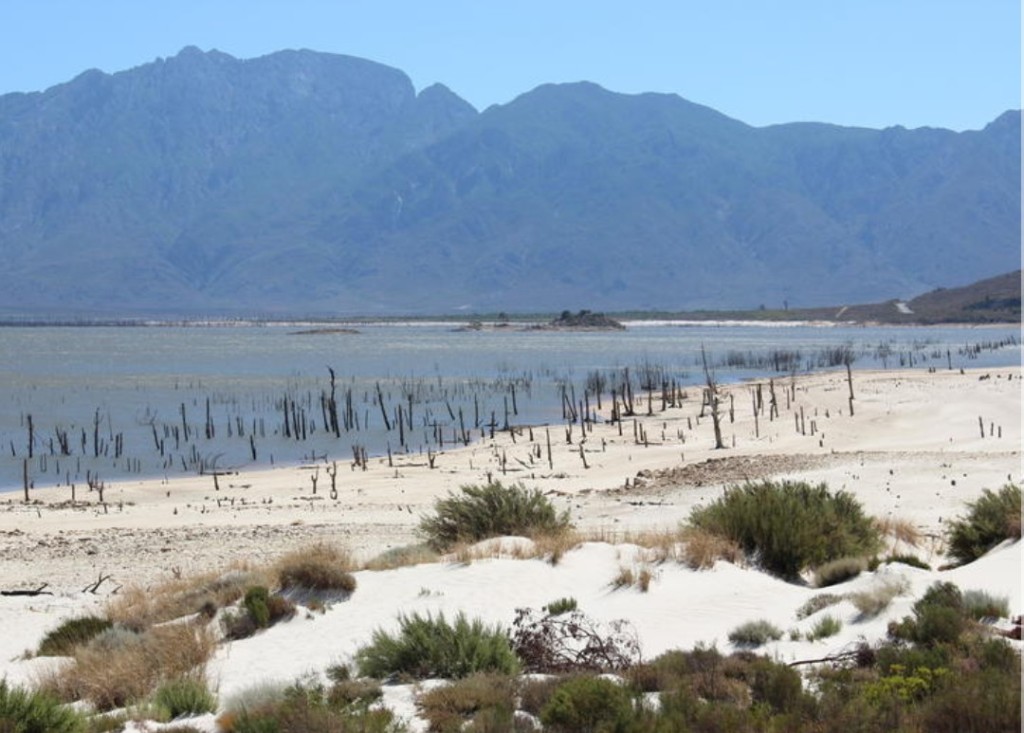
Western Cape faces broader water crisis
Cape Town’s water concerns form part of a wider provincial drought crisis, with several municipalities already implementing strict water restrictions.
The Western Cape dam levels are currently a concerning 47.90% of capacity compared to 64.10% last year.
Beaufort West in the Central Karoo remains the most severely affected town, with the Gamka Dam at just 14%. The municipality escalated to phase four water restrictions from 1 March, imposing a 200% surcharge on household usage exceeding 10 kilolitres per month.
Stellenbosch’s Idas Valley Dam has dropped to 30%, prompting authorities to urge residents to reduce consumption by 15%. Provincial officials have recommended the municipality implement formal water restrictions.
Laingsburg and Prins Albert are also affected, with both municipalities relying heavily on groundwater sources. Laingsburg has installed prepaid water meters and implemented night-time water throttling, resulting in a 25% reduction in usage.
Knysna remains in a state of local disaster with very low storage levels and faces the threat of day zero.
The Western Cape government has classified the drought as a national disaster to enable greater coordination and support. Western Cape premier Alan Winde warned municipalities must prepare for three years of drier and longer summers.
“We must invest in long-term solutions and proper management to mitigate the risk,” Winde said.
The South African Weather Service has forecast below-normal rainfall for the southern Western Cape through autumn, with a drier winter season expected.
Water-saving tips
About 70% of all water used in Cape Town is consumed in homes. Officials recommend residents fix water leaks, monitor their usage, water gardens at night to prevent evaporation, and avoid unnecessarily topping up swimming pools.
Residents are also asked to report burst municipal pipes immediately to their local municipality.
ALSO READ: Garden Route water crisis deepens as multiple municipalities implement emergency restrictions


You must be logged in to post a comment.