


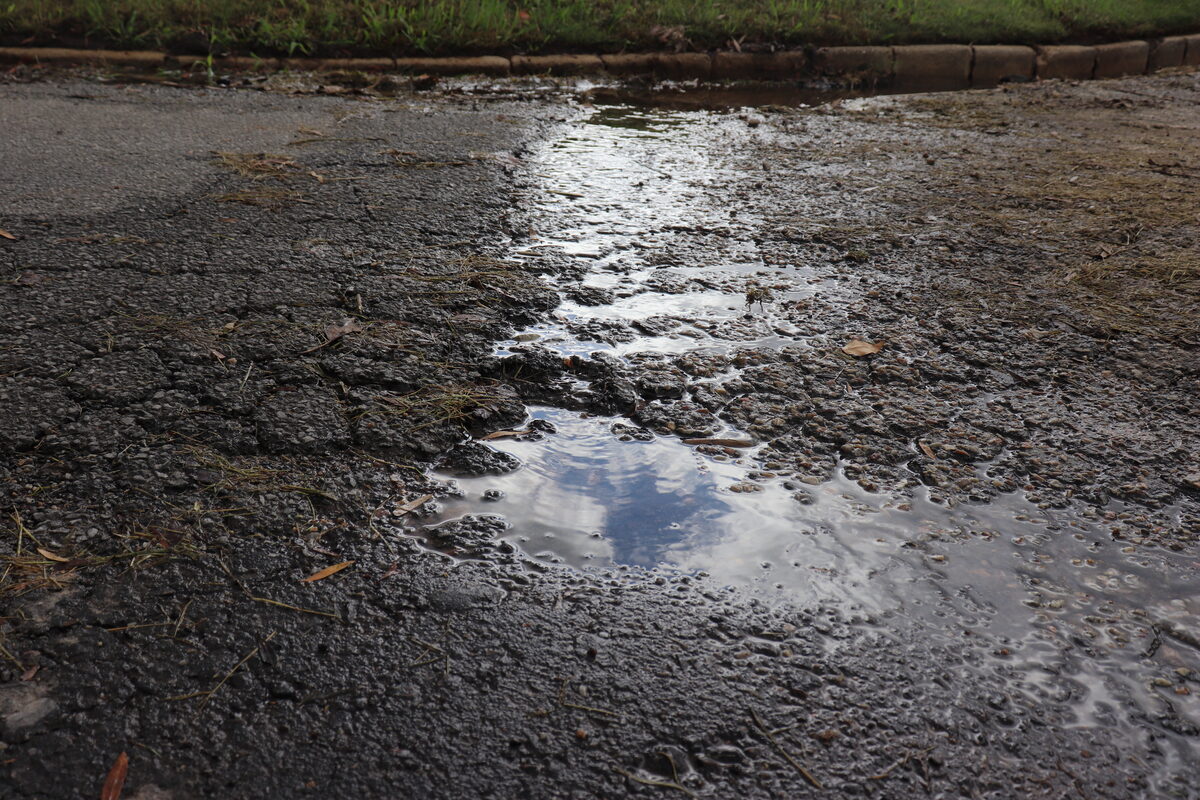
KARIEGA – Residents of Kariega, particularly in Mosel, shared their dissatisfaction with the level of service delivery they receive.
A resident, Rudi Thirion, said that he has noted a deterioration in the response time it takes the municipality to attend to matters, the level of professionalism of the contractors hired by the municipality, and their ability to produce quality service delivery to ratepayers.
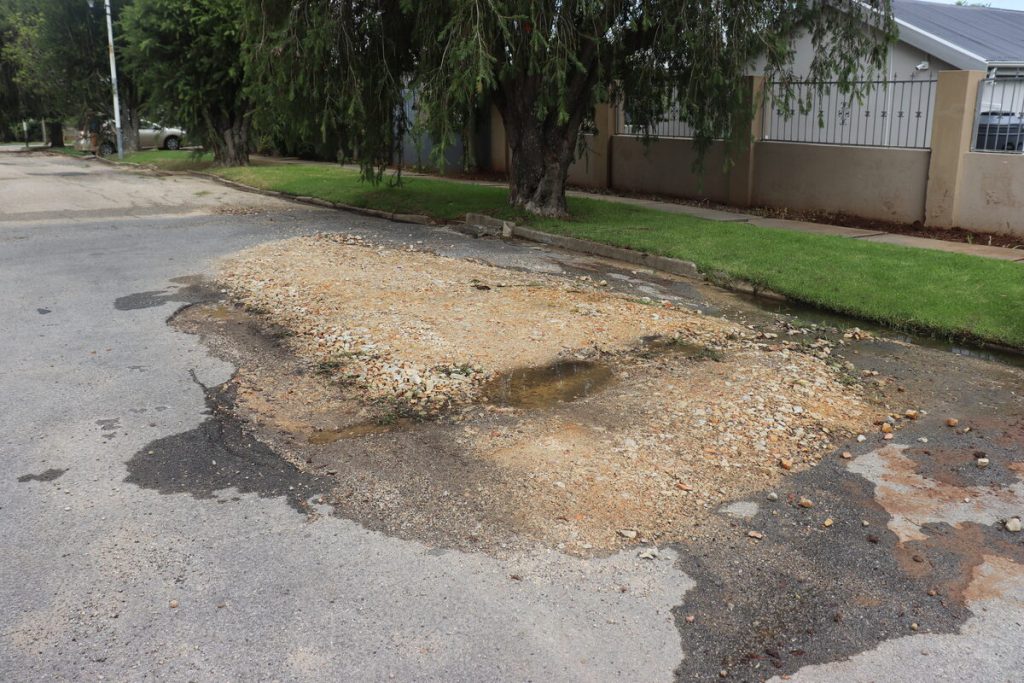
His street, Springs Street, has experienced a worsening water leak for months, with no communication from the municipality as to when the matter would be attended to.
“The water has been flowing for months and the leak is running down my street.” The simple water leak has severely affected the street, causing major potholes on a street frequently used as it is situated in a school zone.
Thirion said, “This is a busy street because there are two schools on the block. The morning transport drop-off is a nightmare for road users having to dodge potholes and witness water flowing down the stormwater drains in the middle of a drought.”
He added, “We are told to use water sparingly but it takes the municipality months to fix a leak? How does that make sense?”
He noted that the matter was reported through the proper channels, but has not yet been fixed.
“I went to my Ward Councillor and he is also aware of the matter.”
ALSO READ: Nelson Mandela Bay water crisis deepens as demand exceeds capacity
Ward 51 councillor Roelf Basson said that both the potholes in Springs Street and water leaks are a proverbial thorn in his side as they get reported and followed up weekly.
Sharing the response he got from the municipality, Basson said, “With potholes, we are informed there are either no tar contracts or no contractor,” making him question how the metro fixes potholes in Gqeberha and Despatch but not in Kariega.
“Springs Street is riddled with potholes, so that you need a 4×4 to drive there,” Basson said. “The Municipality must explain what they plan to do, but it can’t carry on like this. Residents are paying taxes and expect returns.”
He added that the water division does not have the labour or equipment to do the work.
“They make use of a private contractor who also must share digging equipment amongst its teams. At present, we have an average of about 50 outstanding leaks, ranging from water meter trickles to small trickles to large ones, causing us to lose a lot of water. It is so bad that the residents now opt to engage private contractors to fix leak damage to their properties.
“As a result of the above, the Ward councillors of Kariega had a meeting with senior management of the water division about two weeks ago to get answers to the challenges and are awaiting a workable plan of action,” he concluded.
The Nelson Mandela Bay Municipality spokesperson, Sithembiso Soyaya, said in a statement, “The Nelson Mandela Bay Municipality is intensifying its response to water leaks across the metro as part of its drought mitigation programme and broader efforts to reduce water losses under severe and prolonged drought conditions. As an immediate intervention, the Municipality is in the final stages of appointing additional plumbing contractors to supplement existing municipal repair teams, with a specific focus on high-loss and high-impact areas across all clusters.”
He added that as of last week, the Municipality is concluding the objections committee phase and is in the final stages of appointing additional plumbing contractors to supplement existing municipal teams, with a strong focus on high-loss and high-impact areas.
Subject to final contracting processes, additional capacity will be deployed within the coming weeks.
This additional capacity is intended to accelerate leak repairs, increase weekly completions, and stabilise the system while longer-term infrastructure renewal continues.
In the statement, Soyaya stated that recruitment for vacant plumber and artisan posts is already under way, “with posts advertised and processes progressing to strengthen internal capacity within the Water and Sanitation Directorate. Additional operational capacity will continue to be budgeted for annually, in line with service delivery demands and infrastructure renewal planning.”
Adding statistics, Soyaya said that, “Between 1 July 2025 and 16 February 2026, the Municipality received 25,427 water leak complaints, of which 18,657 have been resolved. A total of 6,770 leaks remain outstanding.”
Executive Mayor, Councillor Babalwa Lobishe, acknowledged the seriousness of water losses while reaffirming the Municipality’s commitment to protecting residents under extremely difficult conditions.
“We are deeply concerned about every litre of water lost in a city facing severe and prolonged drought. The reality is that we are operating under immense pressure, with ageing infrastructure and very limited resources, but we want to assure residents that within these constraints, the Municipality is working relentlessly to stabilise the system, reduce losses, and protect water supply for communities,” said Lobishe.
“We also welcome and fully support the national water crisis committee announced by President Cyril Ramaphosa during the recent State of the Nation Address.
“This is a critical intervention that recognises the scale of the challenge facing municipalities across the country.”
Soyaya emphasised that water leak numbers are not static.
“They fluctuate daily as new leaks are detected, repaired leaks are closed, and additional reports are logged through community reporting platforms and enhanced network monitoring. Prolonged drought conditions have required aggressive pressure management, valve operations, and zone reconfigurations to preserve dam levels. While necessary, these interventions place added strain on ageing infrastructure, particularly older asbestos cement and steel pipelines, causing latent weaknesses to surface as visible leaks.
“Leak repairs are prioritised using a risk-based approach that focuses on major water losses, supply interruptions, and infrastructure at risk of failure. Urgent underground leaks affecting reservoirs, pressure zones, and overall system stability receive immediate attention. Repair teams remain active across the metro, with increased visibility expected as additional contractor capacity is deployed,” he concluded.
ALSO READ: Kariega water woes for some schools persist



You must be logged in to post a comment.