A hefty fine or up to five years imprisonment can be imposed on an educator or any other adult who is aware of a child being abused but fails to report it to the relevant authorities.
This according to Adv Cindy Abdol from the National Prosecuting Authority (NPA).
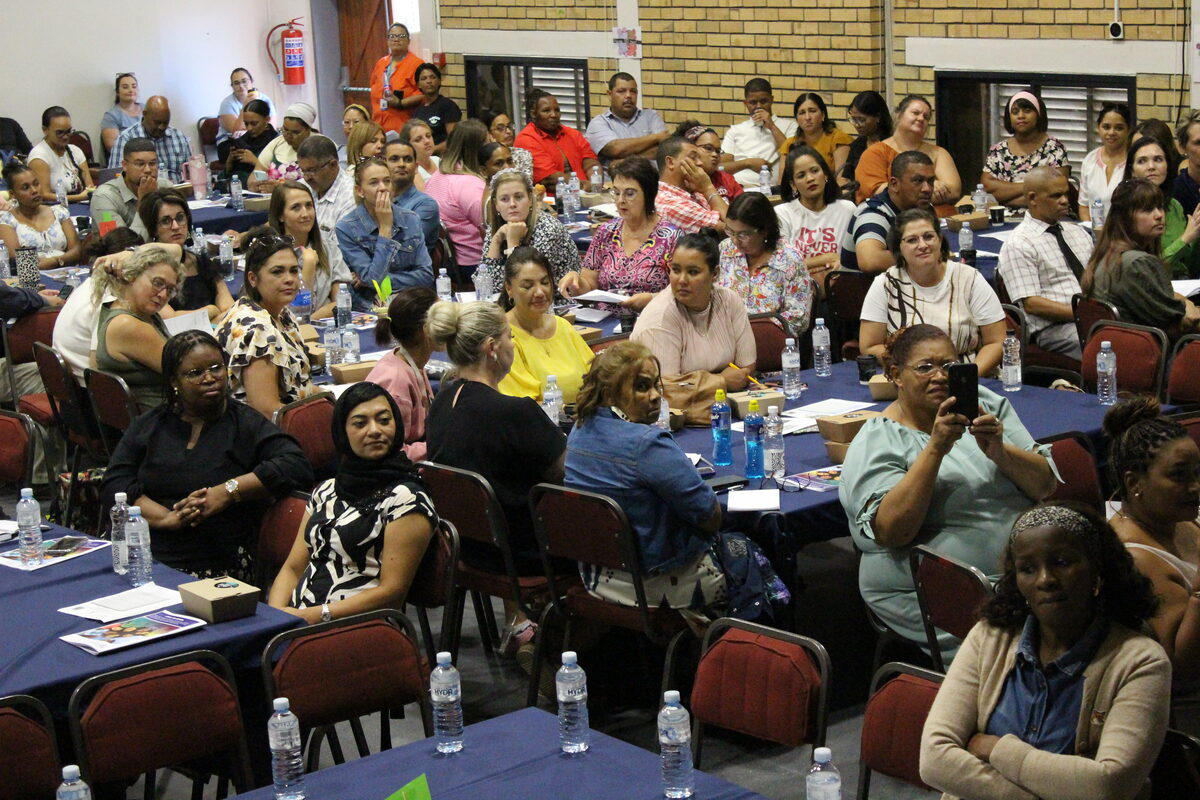
On Thursday (26 February) Abdol was keynote speaker at the launch of the amendments in the Western Cape Education Department’s (WCED ) Abuse No More Protocol held at the Cape Winelands Education District Office in Worcester where she addressed various school representatives.
Abdol’s responsibility is to manage all sexual offences and gender based violence related matters for the Breede Valley, Witzenberg and Langeberg sub districts.
According to her the department is in terms of the Abuse No More Protocol trying to make it easier for teachers to see where they fit in in addressing gender based violence matters when it arises at their schools, families or extended friendship circles.
Abdol says that, according to the amended Sexual Offences Act 32 of 2007 (SORMAA), adults have a duty to report if they have knowledge, suspicion or reasonable belief that a vulnerable person is a victim of sexual abuse in terms of Section 54 of the Act.
She says a child under the mental and biological age of 18 years is considered vulnerable.
Abdol says if a child reports a sexual offence committed against her or him to an educator the matter should not be “sorted out” in the principal’s office.
According to her that is not how it is done.
“The NPA is heavily involved with the Education Department in ensuring that this protocol tells you exactly what is expected of you in terms of legislation.
Comply with legislation
“If you do not comply with the legislation then you could potentially be prosecuted in terms of the Sexual Offences Act when it comes to your duties.
“We have a duty to ensure our childrens’ constitutional rights are protected and the law must see to it that it is further protected.”
Abdol says a female under the age of 25 years who studies at a tertiary institution is also considered vulnerable.
She says if a woman who falls into this category gets raped, goes for medical attention and tells the health practitioner assisting her she is not going to report the matter to the police, the health practitioner has a duty to report the matter.
“If the health practitioner does not report the rape, he or she is committing a crime because they have knowledge of a crime that was committed.”
Abdol says the same duty to report does not apply to for example a 21 year old female who gets raped on her way to work.
She does not have to report the matter if she does not want to.
The definition of who is considered “vulnerable persons” in terms of the Act, determines which cases must be reported to a police official.
Fined or sent to prison
According to her, persons 60 years or older that receive support services other than by a family member, as well as those with intellectual and sensory disabilities are also considered vulnerable.
“You can be criminalised for not reporting a sexual offence against a vulnerable person. “If you fail to report the matter you can be fined or sent to prison for five years.
“The person made a report to you. That was a cry for help.
“If you are not a witness and not the first report witness there is a likelihood that you will not be called to testify.
“The act has a disclaimer to protect you.
“It says the person who reported the matter did so in good faith, so they will not be held liable – criminal or civil.”
According to Abdol, School Governing Bodies also have a duty to report these sexual offence matters committed against children.
‘Have my baby’
“The employer must make sure that any person who is employed at their school’s name is not contained in the national register for sexual offenders.
“If the employer fails to comply, he or she can be held liable.
“The person who is employed at the school must prove that his or her name is not in the national register for sexual offenders.”
Abdol says a new offence in the Act is that of sexual intimidation.
It relates to a threat being uttered or conveyed to a person that there is a reasonable, imminent belief of harm to the victim.
According to her these threats include for example ‘I want to have sex with you,” “You could have my baby…”, being said by a much older person in an aggressive or threatening manner.
“Imagine saying stuff like those to a 10, 11 or 12 year old, that child could believe they are about to be harmed.
“So when a child makes a report around that it could potentially be a criminal offence already and that criminal offence can be sexual intimidation – whether it is verbal or via social media.
“If a report to you is made a criminal case can be opened.”
According to Abdol the age of consent to engage in a consensual sexual relationship is 16 years old and this is not gender specific.
Child pregnancies
She says the rate of child pregnancies is also very high.
“If you have a pregnant child under the age of 16, that is already a prima facie crime. There is now a duty on you to report the matter to the police.”
Abdol goes further by saying there is also a duty to report if you suspect a child is a victim of human trafficking – not only for sexual but for economic purposes for example working on farms.
“You have a duty to report if you see a child being abused or maltreated at home.
“Child labour practises can also be regarded as a form of abuse for example a 13- or 14 year old that is forced to work.”
Abdol says the manner in which to report all these forms of abuse is to report it to the police or to fill out Form 22 for the social worker.
“The WCED’s Abuse No More Protocol that was launched, gives educators the exact manner in which to do their reporting in terms of the law.”